Epoxy Resin Floor Paint vs Professional Coating: Which Wins?
Epoxy resin floor paint is a DIY product sold in hardware stores that contains a small percentage of epoxy solids, typically 40 to 60 percent, mixed with water or solvent. A professionally applied epoxy floor coating uses 100 percent solids epoxy, applied in controlled layers with proper surface preparation. The professional system is thicker, harder wearing and lasts significantly longer, making it the better investment for most homeowners and businesses.
What exactly is epoxy resin floor paint, and why do people confuse it with professional coatings?
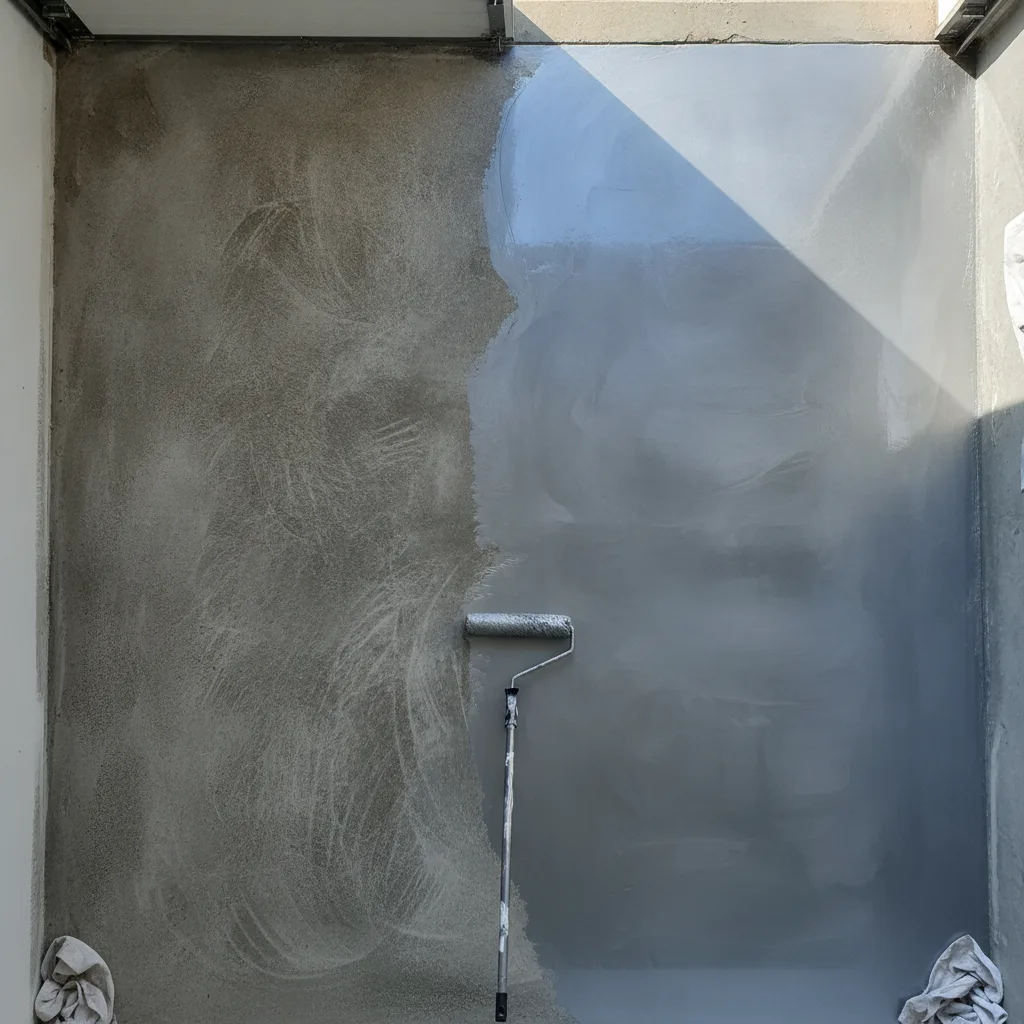
Epoxy resin floor paint is a water-based or solvent-based paint with a partial epoxy resin component blended in. Because the label says “epoxy,” buyers assume they are getting the same result as a professionally installed floor. They are not. The epoxy content in shelf products is diluted enough to give the paint better adhesion than standard floor paint, but not enough to form a true cross-linked epoxy film that can handle heavy traffic, oil spills or tyre loads without peeling.
The confusion is understandable. Both products look similar in the tin and both go on with a roller. The difference is in the chemistry and the film thickness. A typical DIY epoxy paint dries to around 0.1 to 0.2 millimetres thick. A professionally applied two-part 100 percent solids epoxy system is usually laid at 3 to 5 millimetres when you factor in the base coat, broadcast layer and topcoat. That thickness difference is where durability lives.
Hardware stores stock these products because there is a genuine market for them: rental properties, garden sheds, low-traffic laundries. For those jobs, a shelf product might be perfectly fine for two or three years before it needs a refresh. The problem comes when people apply the same product to a garage that parks two SUVs, or a workshop that sees forklift traffic, and then wonder why it is bubbling and peeling within twelve months.
What are the real differences in surface preparation between epoxy resin floor paint and a professional install?
Surface preparation is the single biggest factor separating a floor that lasts a decade from one that fails in a season. With DIY epoxy resin floor paint, the instructions usually say to clean the slab, etch with acid, rinse and let dry. That process opens the concrete pores slightly, which is better than nothing. A professional applicator uses diamond grinding or shot blasting, which mechanically profiles the surface to a concrete surface profile (CSP) of 3 to 4, meaning the epoxy has a much larger surface area to bond into.
Moisture is the other critical variable. Concrete slabs in Melbourne, especially older ones in suburbs like Frankston or Dandenong, often have moisture vapour transmission rates that will cause an epoxy film to delaminate if not properly assessed. Professionals use a moisture meter and, where needed, apply a moisture-tolerant primer before any coating goes down. A DIY product has no room for that step in its instructions because the product is not designed to handle it.
Crack and joint treatment is also skipped in most DIY installs. A professional will route out cracks, fill them with a semi-rigid polyurethane filler, and allow that to cure before coating. Skip that step and every crack you had before the epoxy went on will telegraph straight through the new surface within months.
How long does epoxy resin floor paint actually last compared to a professional coating?
Based on common real-world experience reported by tradespeople and facility managers, a DIY epoxy resin floor paint product in a domestic garage typically shows wear, peeling or hot-tyre pickup within one to three years. A professionally installed 100 percent solids epoxy system, with correct prep and a quality polyaspartic or polyurethane topcoat, routinely lasts ten to fifteen years in a similar environment with basic maintenance.
Hot-tyre pickup is worth a separate mention because it catches a lot of Melbourne homeowners off guard. When you park a car after a drive, the tyres are warm and slightly soft. On a thin, water-based epoxy paint, that warmth is enough to soften the coating and allow the rubber to bond to it. When the car moves, the coating lifts with the tyre. Professional coatings, particularly those finished with a polyaspartic topcoat, are formulated to resist heat and chemical softening so hot-tyre damage simply does not occur.
Cost over time tells the real story. A DIY kit for a standard double garage might run $200 to $400, plus your weekend. If it needs redoing every two to three years, you have spent $1,000 to $2,000 over a decade, plus multiple weekends, and your slab has been through repeated acid etching cycles. A professional install costs more upfront, but done once and done right, it is the more economical choice across a ten-year window.
What finish options do you get with a professional epoxy floor coating that you cannot get from a tin?
This is where professional coatings really separate themselves from the shelf product. A professionally applied epoxy system opens up the full range of decorative finishes: metallic epoxy with swirling depth effects, vinyl flake (sometimes called flake flooring or chip flooring) where coloured flakes are broadcast into the wet base coat for a terrazzo-style look, and quartz aggregate systems for slip resistance in commercial or wet areas.
Metal and Flake, based in Melbourne, specialises in exactly these kinds of decorative epoxy and flake floor systems for residential garages, commercial spaces and everything in between across Melbourne and surrounds. The name says it all: metallic and flake finishes are the heart of what a quality professional installer can deliver, and neither look is achievable with a roller and a tin from the hardware aisle.
Colour consistency is also far better. Shelf products can vary batch to batch, and rolling technique affects the final sheen dramatically. A professional sprays or lays the coating in controlled passes, ensuring an even film thickness and consistent gloss across the entire floor. The finish photographs well, adds genuine perceived value to a home, and holds up to daily abuse without looking tired after a year.
When does it actually make sense to use DIY epoxy resin floor paint?
To be fair, there are situations where a DIY epoxy paint is the right call. A low-traffic garden shed, a temporary fix on a rental property before a sale, or a casual arts-and-crafts studio floor are all candidates. If the area sees foot traffic only, has no vehicle or chemical exposure, and you are comfortable refreshing it every couple of years, a shelf product is serviceable.
Where it stops making sense is anywhere that takes real punishment: a garage, a workshop, a commercial kitchen preparation area, a gym floor, or any slab that is exposed to UV (most shelf epoxies yellow badly in sunlight). For those applications, the DIY option is a false economy that costs you more time and money in the long run than getting it done properly the first time.
If you are genuinely unsure which category your project falls into, the easiest thing to do is talk to a professional who can look at your slab, assess the traffic load, check for moisture and give you an honest opinion. You might walk away deciding the DIY route is fine. Or you might realise the job warrants a proper system and save yourself a lot of frustration down the track.
Book a consult for professional epoxy floor coating