Bunnings Garage Floor Coating vs Professional Epoxy: Which Wins?
A garage floor coating from Bunnings costs between $80 and $250 for a standard kit and is a genuine option for a small shed or a very tight budget. For a typical double garage, however, the DIY route usually produces a peeling, patchy result within two years, while a professionally applied epoxy or polyaspartic system lasts a decade or more with far better resistance to oil, heat and abrasion.
What does a garage floor coating from Bunnings actually include?
A Bunnings garage floor coating kit typically contains a single-part water-based epoxy or enamel paint, a basic etch solution, a roller and sometimes a bag of decorative flake chips. These are one-part systems, meaning the resin and hardener are pre-mixed at the factory, which limits the chemical cross-linking that makes professional two-part epoxies so tough. You get a thin film, usually around 100 to 150 microns dry film thickness, applied in one or two coats. That sounds reasonable on paper, but the performance gap compared to a properly installed system becomes obvious quickly once cars, motorbikes and heavy trolleys are rolling over the surface every day.
The etch solution included in most kits is dilute hydrochloric acid, which does open up the concrete pores a little. The problem is that concrete moisture, laitance (the weak dusty layer on top) and existing contamination all need more thorough preparation than a quick acid wash can provide. Diamond grinding, the method professional installers use, physically removes that weak surface layer and creates a consistent mechanical profile for the coating to grip. Without it, adhesion is always compromised.
How does the cost of a Bunnings kit compare to professional garage floor coating?
A Bunnings garage floor coating kit for a double garage (around 40 to 50 square metres) will cost roughly $150 to $300 in materials. Add a concrete degreaser, masking tape, a decent roller frame and extension handle, and you are closer to $400. A professionally installed two-part epoxy or polyaspartic system for the same area runs from roughly $2,500 to $4,500 depending on the product, the number of coats and the finish. The price difference is real and it matters, especially if budget is tight.
Where the comparison shifts is over time. A DIY kit that peels in 18 months means sanding back the failed coating, purchasing materials again and losing another weekend. Professionals who use diamond grinding and high-build two-part systems regularly see floors hold up for 10 to 15 years with only basic maintenance. When you spread the cost across those years, the professional job often works out cheaper per year of usable life. It also protects your concrete slab, which is a structural asset worth several thousand dollars to repair if it deteriorates from moisture ingress or chemical spills.
What are the biggest reasons DIY garage floor coatings fail?
Moisture is the number one culprit. Concrete slabs in Melbourne and surrounds frequently hold residual moisture, particularly in older homes or garages built on ground level without a proper vapour barrier. Water-based single-part coatings applied over damp concrete will blister and peel within months. A professional installer will conduct a moisture test before quoting, and where moisture is elevated they will select a moisture-tolerant primer or recommend addressing the source first.
Surface preparation is the second major failure point. Laitance, oil stains from cars and old paint all prevent proper adhesion. A single acid etch does not remove embedded oil contamination. Professional crews use diamond grinders fitted with concrete-specific tooling to physically abrade the surface to a consistent profile, typically around a CSP 2 to CSP 3 (Concrete Surface Profile) as defined by the International Concrete Repair Institute. This is the prep standard that two-part epoxy manufacturers require to honour their product warranties.
Finally, curing conditions matter more than most people realise. Applying a coating when the concrete surface is below 10 degrees Celsius or when relative humidity is above 85 percent will cause adhesion failure or a cloudy finish. Melbourne winters can hit those limits easily, particularly in an unheated garage overnight. Professional installers monitor ambient and surface temperature before they start and choose products formulated for the conditions on the day.
Which situations actually suit a Bunnings garage floor coating?
There are genuine use cases where a DIY kit is a sensible call. A small single-car garage in a rental property where you cannot justify the spend. A garden shed floor. A workshop space that sees foot traffic only. If the area is under 20 square metres, the surface is in good condition and you are comfortable accepting a 2 to 4 year lifespan, a kit product can do the job.
The other situation is staging. Some homeowners apply a cheap kit to a garage floor while they save for a professional installation. That is fine, as long as you understand the professional crew will need to grind the kit coating off before applying the real system. Most experienced installers factor that into their quote if you tell them upfront, so transparency saves money.
For a primary garage floor that takes daily vehicle traffic, chemical spills, point loads from car jacks or gym equipment, or where you want a showroom finish with metallic or flake effects, a single-part kit is not going to cut it. The finish simply cannot replicate what a multi-coat professional system delivers, and the longevity is not in the same conversation.
What does a professional garage floor coating system actually involve?
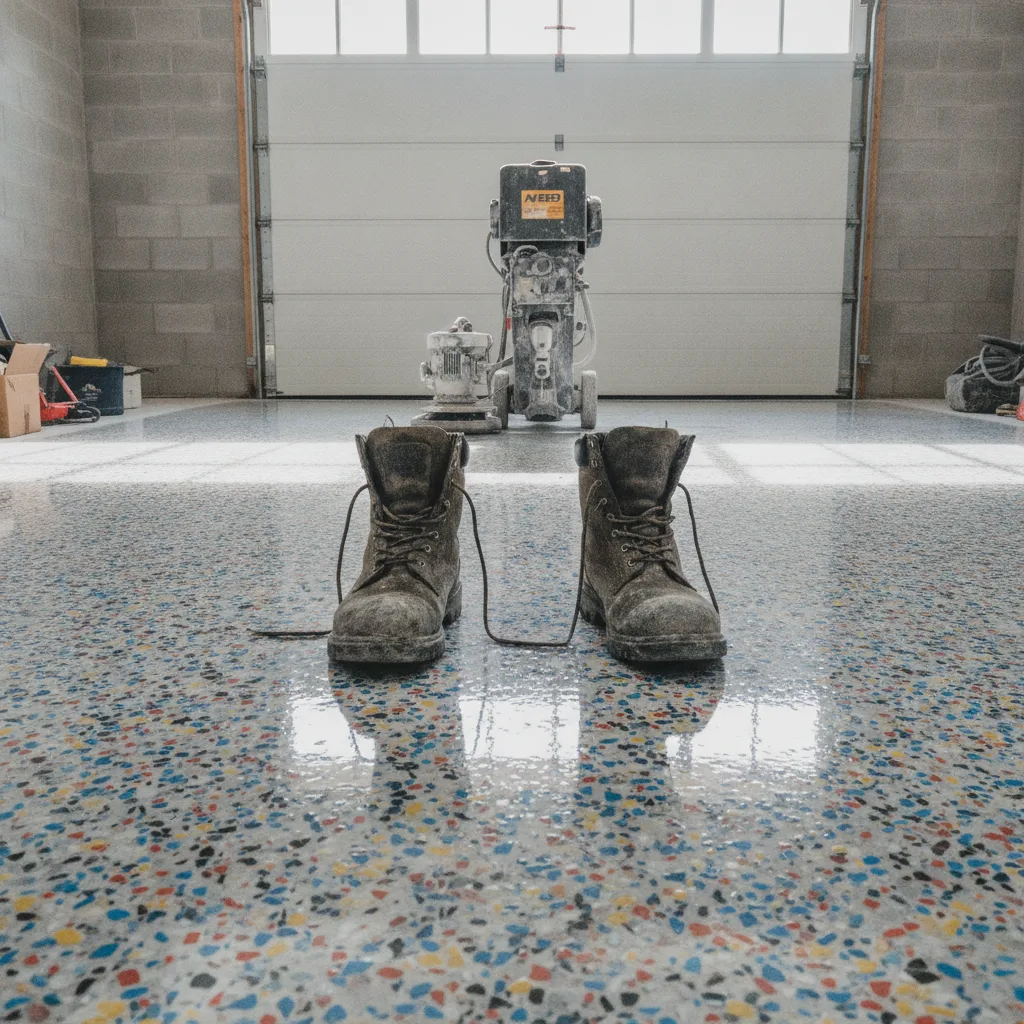
A quality professional installation follows a clear sequence. Diamond grinding first, to open the concrete and remove any contamination or weak surface material. Then a two-part epoxy primer coat, rolled and back-rolled to ensure penetration. Over that goes a build coat, usually a 100 percent solids two-part epoxy at 250 to 400 microns, where flake or metallic pigments are broadcast if the client wants a decorative finish. The final layer is a clear polyaspartic or polyurethane topcoat, which provides UV stability, chemical resistance and the gloss level the client has chosen, from satin through to high gloss.
The total dry film thickness of a proper system sits at 500 microns or above, often significantly higher with a heavy flake broadcast. Compare that to the 100 to 150 microns from a kit and you can see why the wear characteristics are so different. Polyaspartic topcoats also cure fast enough to allow light foot traffic the same day, which means minimal disruption to the household.
The finish options available through a professional installer include solid colours, vinyl flake systems in dozens of chip blends, and full metallic epoxy looks. These are simply not achievable with an off-the-shelf kit, regardless of how carefully you apply it.
If you have been comparing a Bunnings kit against a proper installation and want a floor that looks sharp, holds up to real use and does not need redoing in a couple of years, the decision is straightforward. Book a professional garage floor coating installation with Metal and Flake.