Two-Part Epoxy Garage Floor Coating: How It Actually Works
A two part epoxy garage floor coating is a resin-and-hardener system that chemically bonds to concrete, forming a surface far tougher than paint or single-component sealers. When the two components are mixed, a chain reaction called cross-linking creates a rigid, plastic-like layer that resists oil, tyre marks, heavy foot traffic and most household chemicals for many years.
What actually makes a two part epoxy garage floor coating different from regular floor paint?
Regular floor paint dries through evaporation, which leaves a film sitting on top of the concrete. A two part epoxy garage floor coating cures through a chemical reaction between a resin (Part A) and a hardener (Part B). That reaction creates a molecular bond with the concrete itself, producing a coating three to five times harder than a water-based floor paint and far more resistant to peeling, bubbling and tyre-induced hot-tyre pickup.
Hot-tyre pickup is the ugly phenomenon where a car parks on a fresh single-part coating, heats the surface as the tyres cool, then peels strips of coating away when it leaves. Two-part epoxies cure to a higher cross-link density that resists this problem. That is why you will see them specified on commercial workshop floors and showrooms, not just residential garages.
The practical difference shows up quickly. A water-based single-part paint might last two or three years before it starts flaking near the entry apron. A correctly installed two-part epoxy system, prepped on a properly profiled slab, routinely lasts a decade or more under normal domestic use.
How do the two parts actually work when you mix them together?
Part A is the epoxy resin, a viscous liquid containing epoxide groups at each end of its molecular chains. Part B is the hardener (usually an amine or polyamide compound). When combined in the correct ratio, the amine groups in the hardener react with the epoxide groups in the resin, linking them into a dense three-dimensional network. This process generates mild heat and is irreversible once started. The mixture goes from a pourable liquid to a solid you cannot scratch with a fingernail.
The ratio matters enormously. Most professional-grade systems specify a 2:1 or 3:1 mix by volume. Guessing the ratio or eyeballing it instead of measuring precisely will give you a coating that never fully cures, stays tacky and has almost no chemical resistance. This is one of the most common reasons DIY epoxy jobs fail within months.
Temperature and humidity also affect the cure. Below about 10 degrees Celsius the reaction slows dramatically, leaving you with an under-cured floor. In Melbourne, this is a real consideration through winter. Applying the product on a cold concrete slab (below 15 degrees at the surface) risks a patchy, dull cure. A good installer checks slab temperature with a contact thermometer before mixing a single gram of product.
Why does concrete preparation matter so much for two part epoxy?
Concrete preparation is the single biggest factor in whether a two part epoxy garage floor coating sticks and stays for years or peels within months. The concrete surface must be mechanically profiled so the epoxy has something to grip. Grinding or shot-blasting opens the pores of the slab, creating a texture often described as fine-grain sandpaper. This profile is measured in CSP (Concrete Surface Profile) units, and most epoxy manufacturers specify a CSP of 2 to 3 for a standard broadcast system.
Beyond profile, the slab must be free of contamination. Oil soaked into concrete from years of car use is the enemy here. A single-pass acid etch, which is what many hardware-store kits recommend, will not remove embedded oil. A diamond grinder fitted with the right tooling will cut through the contaminated layer and expose clean concrete underneath.
Moisture is the other killer. Concrete releases moisture vapour from below, and if that vapour pressure is high enough, it pushes between the epoxy and the slab and causes blistering. A moisture vapour transmission test before any coating work goes down saves a lot of grief later.
What does a professional two-part epoxy install actually look like from start to finish?
A professional install typically follows a clear sequence. Day one is all preparation: the floor is ground using a walk-behind diamond grinder, cracks and spalls are patched with a compatible filler, and the surface is vacuumed clean. The installer checks for any remaining contamination and tests surface moisture.
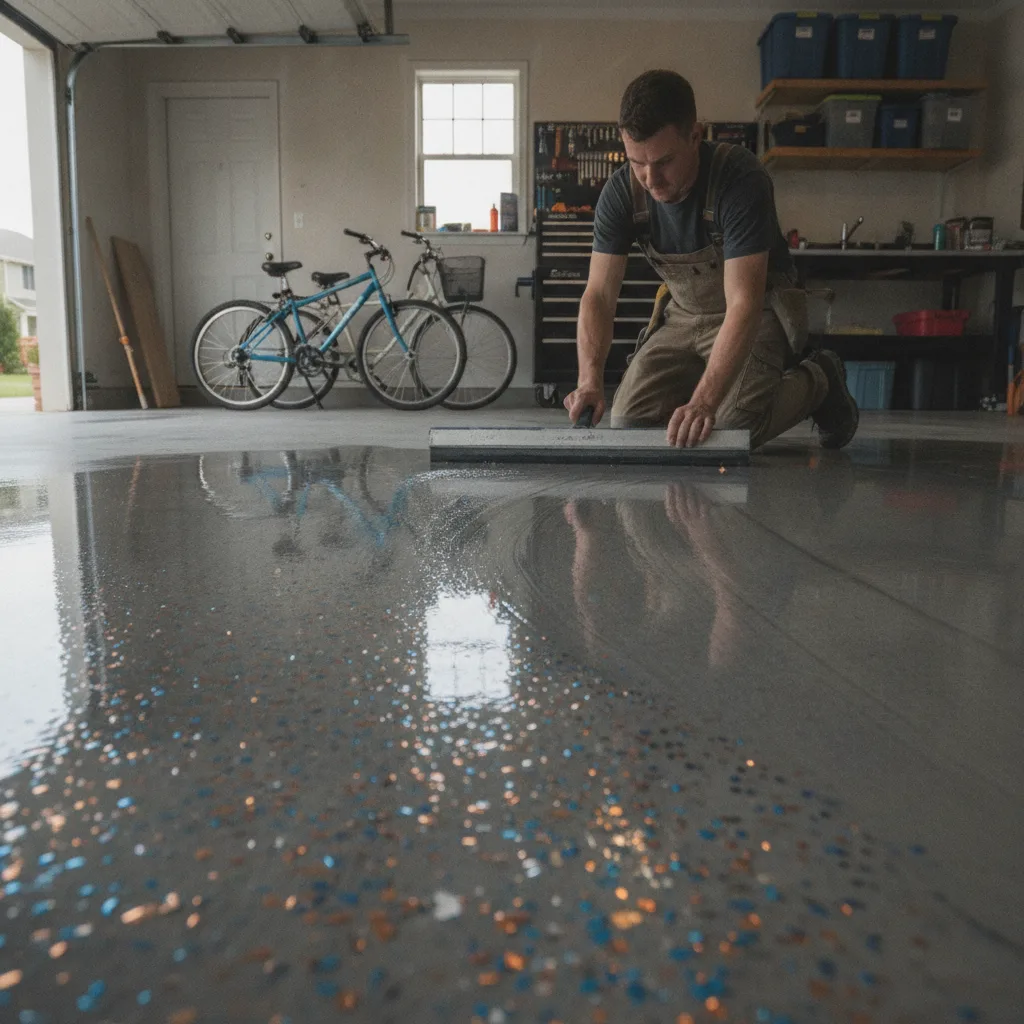
Once prep is signed off, the primer coat goes down. A thin, penetrating epoxy primer soaks into the open concrete pores and creates the foundation for the build coats. After the primer has cured to the point where it is firm but still has some tack (the “recoat window”), the broadcast coat is applied. This is where metallic flakes, colour flakes or quartz aggregate get scattered into the wet epoxy. The flakes not only look sharp, they add anti-slip texture and extra build thickness.
After the broadcast coat cures, any loose or standing flakes are scraped back and the surface is lightly sanded to knock down high spots. Then the topcoat goes on, typically a two-part polyurethane or polyaspartic clear. This topcoat is what gives the floor its UV stability, scratch resistance and that finished gloss or satin look. Most systems need at least 24 hours before light foot traffic and 72 hours before vehicles return.
The full system, from primer through to topcoat, can add anywhere from 2 to 4 millimetres of build to the slab, which is enough to bury minor surface defects but not so much that it creates a trip hazard at doorways.
How long will a two part epoxy garage floor coating last in a Melbourne home?
With proper prep and a quality two-part system, a Melbourne homeowner can realistically expect eight to fifteen years of service before any significant maintenance is needed. Wear tends to show first in high-traffic zones near the entry apron and around workbench areas. A scuff coat of fresh topcoat in those areas can extend the life of the floor considerably without needing to redo the whole job.
What shortens that lifespan is predictable. Skipping the primer, using a single-part product labelled as epoxy (many hardware-store kits contain very little actual epoxy resin), applying over contaminated concrete or coating in cold conditions will all produce a floor that starts failing within two or three years.
Sun exposure matters too. Many standard two-part epoxy resins are not UV-stable and will amber or yellow near roller-door openings where sunlight hits. A polyaspartic or aliphatic polyurethane topcoat over the epoxy base solves this, which is exactly why professional systems use multiple layers rather than a single thick coat of epoxy alone.
If you want a garage floor that looks good, handles everything you park or work on it, and does not need to be redone in three years, the chemistry behind a professional two-part system is what gets you there. Book a two-part epoxy floor install with Metal and Flake.