Concrete Floor Sealing in Reservoir: Options for Local Homes
Concrete floor sealing in Reservoir protects bare or polished concrete from moisture, stains, oil and everyday wear. The right sealer depends on whether your slab is indoors or outside, how much foot traffic it takes, and the look you want. Most residential jobs use an acrylic, penetrating, or epoxy-based product, each with different lifespans and price points.
What types of concrete sealers are used on Reservoir homes?
The four most common options for residential concrete floor sealing in Reservoir are acrylic topical sealers, penetrating silane or siloxane sealers, polyurethane coatings and epoxy floor coatings. Acrylics are the budget-friendly entry point, penetrating sealers are best for outdoor paths and driveways that must breathe, while polyurethane and epoxy systems give you a hard, glossy or satin finish that stands up to heavy use indoors.
Here is a plain breakdown of each option so you can weigh them up properly before spending any money.
Acrylic sealers
Acrylic is the most affordable and quickest to apply. Water-based versions dry in a couple of hours and give a clear or slightly shiny finish. They sit on the surface rather than soaking in, which means they wear off over time and typically need a recoat every two to three years. Good choice for covered patios, laundries and interior slabs that see light traffic.
Penetrating sealers (silane/siloxane)
These soak into the concrete pores and repel water from within. You cannot see them once they cure, so the concrete looks exactly the same as before. They are the go-to for external driveways and paths around Reservoir homes because they allow vapour to escape, which prevents the peeling and bubbling you sometimes get with topical products on outdoor slabs.
Polyurethane coatings
Polyurethane sits above acrylic in durability. A two-part polyurethane will resist scratches, UV and chemical spills far better than an acrylic, and on interior floors it can last five to ten years with minimal maintenance. It comes in matte, satin and gloss sheens, making it popular for living areas and home workshops.
Epoxy coatings
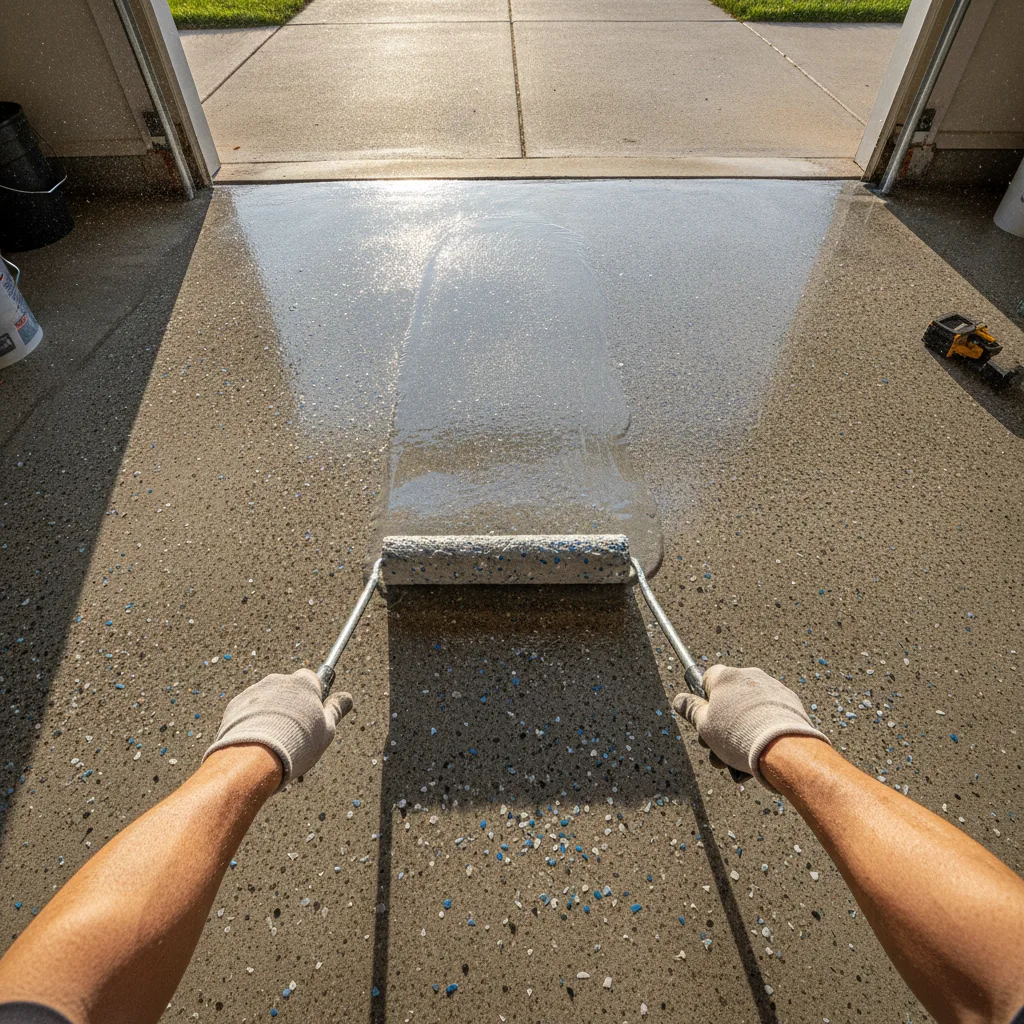
Epoxy is a two-part system (resin plus hardener) that bonds chemically to concrete and creates a surface harder than almost anything else available to homeowners. It handles vehicle traffic, heavy tools and constant cleaning without complaint. In garages and high-use areas it is genuinely the most cost-effective option over the life of the floor. Metallic and decorative flake finishes are applied within an epoxy system, giving you a high-end look alongside serious protection.
How do you prepare a concrete slab in Reservoir for sealing?
Surface preparation is everything in concrete floor sealing. No sealer, regardless of price, will bond correctly to a slab that is dusty, contaminated with oil, or has a laitance layer on top. The concrete must be mechanically prepared, which usually means diamond grinding or shot blasting to open the surface pores, followed by patching any cracks or holes with a flexible filler.
Older Reservoir homes often have slabs laid in the 1960s and 1970s. Those slabs can be softer and more porous than modern concrete, so they sometimes need a concrete hardener or densifier applied before the main sealer goes down. Skipping that step on a soft slab leads to dusting and premature sealer failure.
Moisture is the other major issue. If your slab sits on ground without an adequate vapour barrier underneath, rising moisture will cause a topical sealer to bubble and peel within months. A professional will do a simple plastic sheet test: tape a 600mm square of plastic to the slab overnight and check for condensation underneath before committing to a product.
What does concrete floor sealing cost in Reservoir?
Costs for concrete floor sealing in Reservoir vary depending on the sealer type, the slab condition and the area being covered. As a rough guide for the Melbourne northern suburbs market, acrylic sealing runs from around $15 to $25 per square metre, penetrating sealers are similar, and a full epoxy coating system with decorative flake or metallic pigment typically starts from $50 to $80 per square metre installed. Heavily damaged slabs requiring crack repair and grinding add to the cost.
Those figures assume a slab in reasonable condition. If the surface needs extensive patching or chemical removal of old coatings, budget for additional prep time. It is also worth noting that the cheapest quote is rarely the best value. A well-applied epoxy coating done right the first time will outlast a poorly applied premium product every single time.
For a standard double garage of roughly 36 square metres, a basic acrylic seal might cost around $700 to $900 all in, while a full decorative epoxy system with flake broadcast could come to $1,800 to $2,800 depending on what the slab needs beforehand. These are ballpark figures to help you have an informed conversation with a tradie, not firm quotes.
How long does sealed concrete last and what maintenance does it need?
Lifespan depends almost entirely on which system was used and how well the surface was prepared. Acrylic sealers on an outdoor driveway in Reservoir might need a refresh every two years because UV and rain traffic wear them down quickly. A properly applied two-part epoxy in a garage can run ten to fifteen years before it needs attention, provided you are not dragging heavy machinery across it every day.
Day-to-day maintenance is simple for any sealed concrete floor. Sweep or blow off grit regularly because fine particles act like sandpaper underfoot and dull the surface. Mop with a pH-neutral cleaner rather than harsh acids or alkaline degreasers, which can soften certain coatings. For epoxy floors, avoid dragging metal legs across the surface without felt pads underneath.
Watch the edges and expansion joints. Sealers often lift first at joints because movement opens a gap for water to get under the coating. A quick inspection once a year lets you catch small problems before they turn into a full recoat job.
Is epoxy flooring a better option than standard concrete sealing for Reservoir garages?
For garages and workshops in Reservoir, epoxy flooring generally outperforms a basic concrete sealer on almost every measure: hardness, chemical resistance, ease of cleaning and finish quality. A penetrating or acrylic sealer will protect the concrete from moisture and light staining, but it will not give you the same hard surface that handles car tyres, oil spills and workshop chemicals. If the space sees any vehicle traffic or is used as a functional workspace, an epoxy system is the more practical long-term investment.
For indoor living areas, the answer is more nuanced. Some homeowners prefer the natural look of a penetrating sealer with a light grind and polish, which keeps the raw concrete aesthetic without adding a visible film on top. Others want the high-gloss or satin sheen of an epoxy or polyurethane. Both are valid choices. The key is matching the product to how the space will actually be used, not just how it looks in a showroom photo.
Decorative options also extend well beyond plain grey. Metallic epoxy and vinyl flake systems let you introduce colour and texture into a garage or indoor concrete floor without sacrificing any of the performance benefits. A broadcast flake finish, for example, disguises minor imperfections in the slab, adds grip underfoot and looks sharp in a residential garage or rumpus room.
Metal and Flake works across Melbourne’s northern suburbs, including Reservoir and surrounding areas, applying decorative epoxy and flake flooring systems to garages, workshops and interior slabs. If you have been looking at your bare concrete and wondering what the best option is, a site visit and quote is the fastest way to get a straight answer.
Get a concrete floor sealing quote in Reservoir from Metal and Flake