Flake Epoxy Flooring: Colours, Finishes and Costs Explained
Flake epoxy flooring is a multi-layer resin system where decorative vinyl flakes are broadcast into a wet epoxy base coat, then sealed under a clear topcoat. It delivers a hard-wearing, seamless surface that hides dirt, resists chemicals and looks sharp in a garage or commercial space. Colours range from subtle neutrals to bold blends, and installed costs in Melbourne typically sit between $50 and $100 per square metre depending on prep, flake density and topcoat grade.
What exactly is flake epoxy flooring and how does it work?
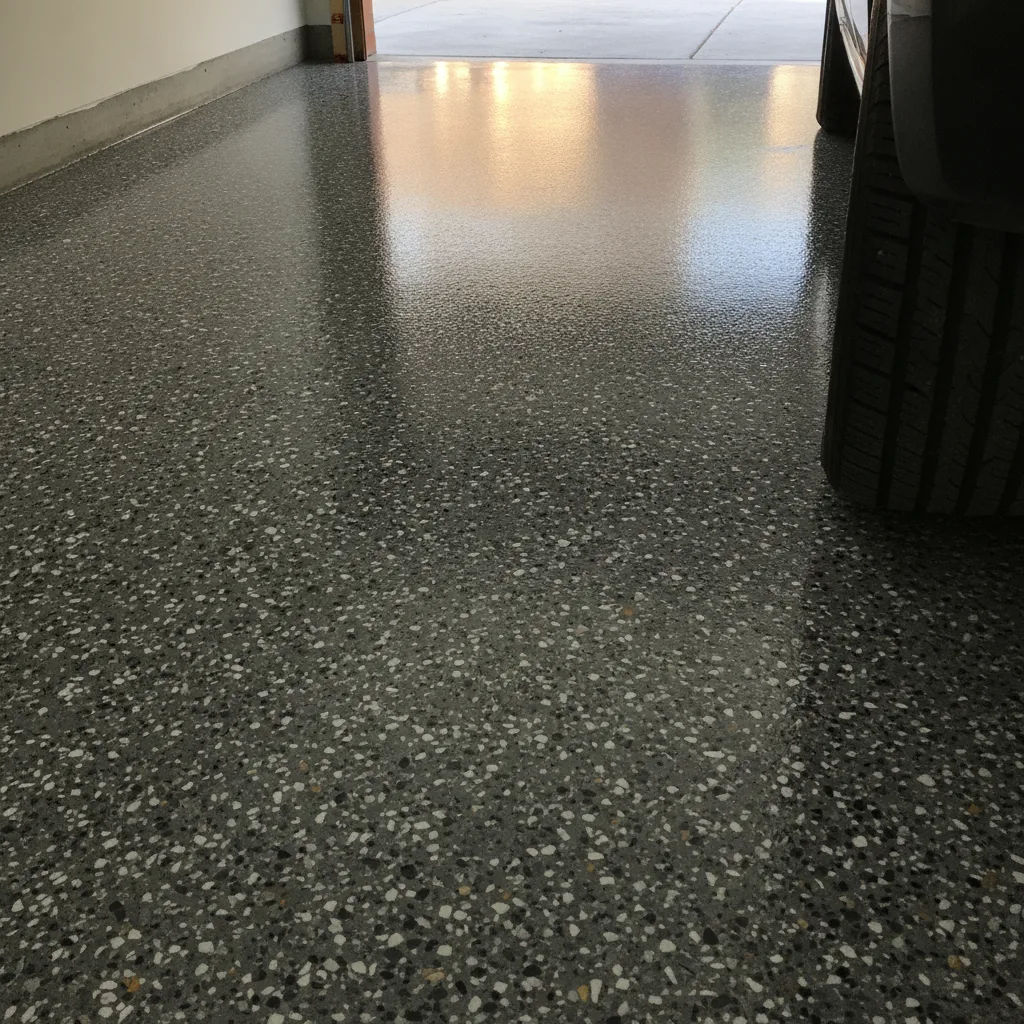
Flake epoxy flooring is a three-stage coating system: a pigmented epoxy base is applied to the concrete, vinyl colour flakes are scattered across it while it is still wet, and once cured, excess flakes are scraped back and a polyurethane or epoxy clear topcoat is rolled over the top. Each layer serves a purpose. The base bonds to the concrete and provides colour depth. The flakes add texture, grip and visual interest. The topcoat protects everything and determines the final sheen level.
The vinyl flakes themselves are made from acrylic or polyester chips, typically cut into 1 mm, 4 mm or 6 mm sizes. Smaller chips create a finer, more uniform pattern. Larger chips give a chunkier, more textured look that many people prefer for garage floors because the surface variation is good at hiding tyre marks and small scuffs. The flakes are broadcast in one of two ways: a partial broadcast, where gaps in the base coat remain visible between chips, or a full broadcast, where chips are thrown until the base is completely covered and no solid colour shows through.
What colour options are available with flake epoxy flooring?
Flake epoxy flooring comes in hundreds of pre-blended colour combinations and can also be custom blended on request. The most popular blends for residential garages in Melbourne are earthy neutrals like grey and beige mixes, classic black and white combos, and slate-style blends that mimic the look of natural stone. Commercial spaces often go bolder with high-contrast mixes or single-colour full broadcasts for a cleaner industrial finish.
The base coat colour matters too. A darker base coat under a light flake blend gives the surface a richer depth, almost like looking into layers. A white or off-white base keeps things bright and works well in workshops or gyms where natural light is limited. Most installers stock standard colour chips in bulk, so common blends cost no more than custom ones, but if you want something very specific, allow a couple of extra days for the chips to be sourced.
It is worth noting that the colour you see on a sample card will look slightly different once sealed. A gloss topcoat intensifies and deepens colours. A satin topcoat tones them down a touch. A matte topcoat can make even a bold blend feel understated. Always ask to see a sealed sample in the actual finish you are choosing, not just the raw flake blend on its own.
What finish options does flake epoxy flooring come in?
Flake epoxy flooring is available in three main sheen levels: gloss, satin and matte. Gloss is the most popular choice for residential garages because it reflects light well, makes the space feel larger and is the easiest to keep clean. Satin sits in the middle ground and suits people who want a polished look without the mirror-like reflectivity. Matte finishes are less common on garage floors but work well in commercial kitchens, workshops or gyms where glare reduction matters.
Beyond sheen, the topcoat material itself affects performance. A standard epoxy clear topcoat is cost-effective and durable but can yellow over time when exposed to UV light, which is worth considering if your garage gets direct afternoon sun through an open door. A polyurethane (PU) topcoat costs a little more but resists UV yellowing far better and is harder underfoot, making it the preferred choice for most outdoor-adjacent spaces. Some installers also offer a polyaspartic topcoat, which cures faster and offers excellent UV stability, though it comes at a premium price point.
Slip resistance is another finish consideration. A standard sealed flake floor already has natural grip from the chip texture, but if the area gets wet regularly, such as a car hoist bay or a workshop near a laundry, a fine anti-slip aggregate can be mixed into the topcoat to increase traction without affecting the visual result much at all.
How much does flake epoxy flooring cost in Melbourne?
Flake epoxy flooring in Melbourne generally runs between $50 and $100 per square metre for a professionally installed, multi-coat system. A standard two-car garage of around 36 square metres would typically land between $1,800 and $3,600 all up. That is a wide range, and it comes down to a handful of key variables: the condition of the concrete, the flake density, the topcoat grade and the accessibility of the site.
Concrete preparation is where costs can shift unexpectedly. A floor that has never been coated and has a solid profile will need diamond grinding to open up the surface and create a mechanical key for the epoxy. A floor with old paint, oil contamination or a previous failed coating needs more work, sometimes two rounds of grinding or chemical etching, and that adds time and labour to the quote. Any cracks or spalling in the slab should also be patched and feathered before coating begins, which is generally charged separately depending on the extent of damage.
Flake density is another lever. A partial broadcast uses fewer chips and costs less in materials. A full broadcast uses significantly more chips, sometimes two to three times the volume, and adds to the total. The full broadcast finish is worth the extra cost for most people because it completely hides the base coat, giving a more consistent and high-end result. The topcoat choice adds roughly $5 to $15 per square metre to move from a standard epoxy clear to a quality polyurethane or polyaspartic finish.
Is flake epoxy flooring a good choice for a Melbourne garage?
Flake epoxy flooring is one of the most practical choices for a Melbourne garage because it handles the full range of local conditions: summer heat, winter moisture tracked in from the driveway and the everyday abuse of vehicles, bikes and workshop equipment. The sealed surface resists oil, petrol, brake fluid and most household chemicals, so spills wipe up without staining the concrete beneath. And because the flake texture breaks up the visual plane, the floor hides dust, tyre scuffs and minor surface marks between cleans.
Compared to a plain epoxy paint or a solid-colour coating, flake systems are also more forgiving over time. If a section needs touching up years down the track, the flake blend can be matched reasonably closely and the repair blends into the overall pattern in a way that a solid-colour repair rarely does. It is not invisible, but it is far less noticeable.
The main thing to get right from the start is the concrete prep. A flake floor that is installed over inadequately prepared concrete will peel, usually within a year or two, and no amount of topcoat quality will fix a bad bond at the base. Hiring an installer who uses a diamond grinder rather than just acid etching is the single biggest factor in getting a floor that lasts ten years or more.
If you are ready to get a hard-wearing, good-looking floor installed properly the first time, Book an epoxy flake flooring installation with Metal and Flake.