Resin Flooring Options for Melbourne Homes and Businesses
Resin flooring covers a family of hard-wearing, seamless floor coatings that bond directly to concrete. The main types available to Melbourne homes and businesses are epoxy, polyurethane and metallic systems. Each suits different budgets, traffic levels and looks, so choosing the right one comes down to how the floor will actually be used day to day.
What exactly is resin flooring and why do so many people choose it?
Resin flooring is a liquid-applied coating that cures to form a hard, seamless surface over an existing concrete slab. People choose it because it is far more durable than paint, easy to clean, resistant to oil and chemicals, and it can transform a dull grey slab into something that looks genuinely sharp. It suits garages, warehouses, showrooms, kitchens and living areas alike.
The appeal is pretty straightforward. A bare concrete floor soaks up oil, stains easily and turns to dust under heavy use. A properly applied resin system seals the surface completely, so spills sit on top and wipe away. That matters a lot in a working garage or a busy commercial kitchen where hygiene and maintenance time are real concerns.
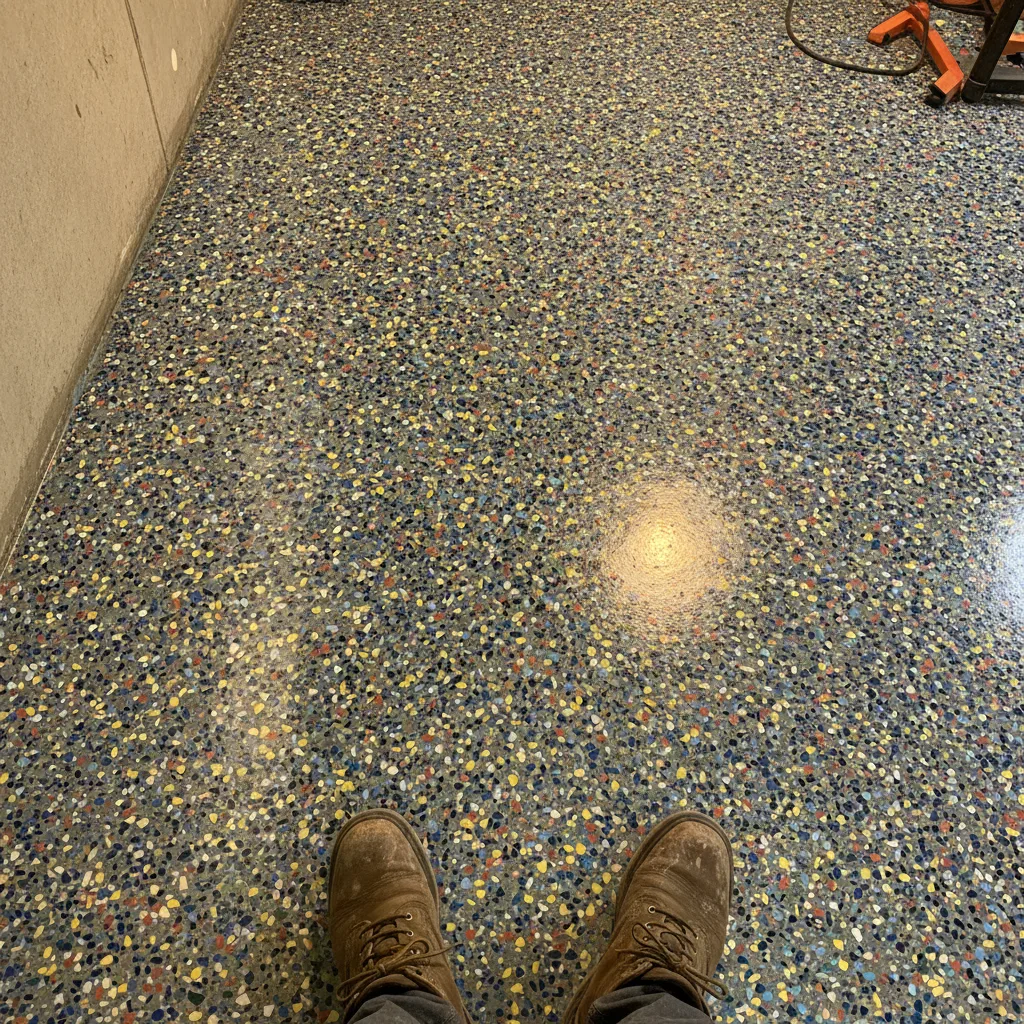
Beyond practicality, the visual range has expanded enormously. You can go from a flat, single-colour finish to a full metallic swirl with copper and charcoal tones. Decorative flake systems, sometimes called chip or broadcast systems, sit somewhere in the middle: they add texture and visual interest while hiding minor imperfections in the substrate.
What are the main resin flooring systems used in Melbourne?
The main resin flooring systems used in Melbourne are epoxy (the most common), polyurethane (more flexible and UV-stable), and metallic epoxy (a decorative, high-gloss option). Each uses a two-part resin chemistry, but the end result, the durability profile and the recommended applications differ meaningfully between them.
Epoxy flooring
Epoxy is the workhorse of the resin world. It bonds aggressively to concrete, builds up in thick layers and handles heavy foot traffic, forklifts and vehicle tyres without complaint. A standard two-coat epoxy system typically cures hard enough for light foot traffic within 24 hours and reaches full chemical resistance around the seven-day mark. That curing timeline matters if you are planning a garage or warehouse job and need to plan around the downtime.
Epoxy does have one well-known limitation: it can amber or yellow when exposed to direct UV light over time. For indoor spaces with no direct sunlight, that is rarely a problem. For areas that get a lot of sun through windows or open roller doors, it is worth discussing a UV-stable topcoat with your installer.
Polyurethane flooring
Polyurethane (PU) coatings are more flexible than epoxy, which makes them better at handling thermal movement in slabs. Melbourne’s temperature swings between summer and winter are significant, and in spaces like open carports or semi-outdoor areas, a PU topcoat holds up better over the long run. Polyurethane is also harder-wearing on the surface, which means it resists fine scratches and scuffs better than a straight epoxy finish. Many installers use epoxy as the base build coat and polyurethane as the final sealing layer to get the best of both systems.
Metallic epoxy
Metallic epoxy is the decorative end of the spectrum. Metallic pigments are broadcast into a clear epoxy base and manipulated with tools, air movement or specific application techniques to create swirling, three-dimensional patterns. No two floors look identical, which is part of the appeal for homeowners doing a showroom-style garage, a retail space or a feature floor inside the home. The finish is high-gloss and visually striking, but it requires a skilled applicator to get right. Poor prep or rushed technique shows up immediately in a metallic floor in a way it might not in a standard single-colour epoxy.
Flake and chip systems
Decorative flake systems, like those Metal and Flake specialise in, involve broadcasting coloured vinyl flakes into a wet epoxy base coat and then sealing with a clear topcoat. The result is a textured, speckled finish that hides surface variations well and adds grip underfoot. Flake systems are popular for residential garages, commercial kitchens and gyms because the texture reduces slip risk and the full-flake coverage makes the floor look full and finished without the price tag of a high-end metallic system.
How do Melbourne’s conditions affect which resin flooring you should pick?
Melbourne’s variable climate, its older housing stock with concrete slabs of varying quality, and the mix of residential and commercial use cases all influence which resin system performs best. Moisture in the slab is the single biggest risk factor: a slab with high moisture vapour transmission can cause resin coatings to blister and delaminate if it is not properly assessed and treated before installation.
Concrete prep is where most DIY and cheap-quote jobs fall apart. A professional installation starts with diamond grinding or shot blasting the slab to open the surface and remove any laitance, old coatings or contamination. Without that mechanical profile, even a quality product will not bond properly and can peel within months. This is one of those areas where the prep time on the day is a direct indicator of the quality of the job.
For Melbourne homes with in-slab hydronic heating, the thermal cycling through the slab is another factor. A flexible PU topcoat handles that movement better than a brittle straight-epoxy system. If your home has hydronic heating and you are planning a garage or laundry floor, flag it with your installer before they quote.
Commercial spaces have their own set of considerations. A food manufacturing facility needs a system that meets hygiene standards and handles regular wet cleaning with caustic chemicals. A showroom needs something that looks good under artificial lighting and stays scratch-free under foot traffic. Matching the system to the actual use case, not just the budget, is what separates a floor that lasts a decade from one that needs remediation after two years.
What should you ask before getting a resin flooring quote?
Before getting a resin flooring quote, ask about the surface preparation method, the number of coats included, the specific products being used and what the warranty covers. These four questions will tell you quickly whether you are comparing apples with apples across different quotes, because resin flooring pricing varies enormously based on what is actually included.
A few practical things to clarify upfront:
- Prep method: Diamond grinding is the industry standard. A quote that does not mention mechanical prep is a red flag.
- Moisture testing: Ask whether the installer will test the slab for moisture before starting. A basic calcium chloride test or a relative humidity probe reading gives a concrete number to work with.
- Product spec sheet: Reputable installers can name the specific epoxy or PU system they use. Knowing the brand and product means you can look up the technical data sheet and understand what you are actually getting on your floor.
- Cure times and access: Understand when you can walk on the floor, when you can drive on it and when it reaches full chemical cure. Planning around this avoids a lot of stress on installation day.
- Warranty terms: What does the warranty actually cover? Adhesion failure from poor prep is a common exclusion in cheap quotes. Get the warranty terms in writing.
Resin flooring is not a small investment. A quality installation on a standard double garage in Melbourne typically runs from around $2,000 upward depending on the system and the condition of the slab. That price reflects the prep time, the materials and the skill involved. A quote that comes in dramatically lower almost always means something is being cut somewhere, usually in prep time or product quality, and those shortcuts show up within a year or two.
For Melbourne homeowners and business owners who want a floor that actually lasts, working with an installer who is transparent about their process and products is the most reliable path to a good result. Metal and Flake are Melbourne-based epoxy flooring specialists with a focus on decorative flake and resin systems for garages, commercial spaces and residential interiors. Get a quote for resin flooring in Melbourne