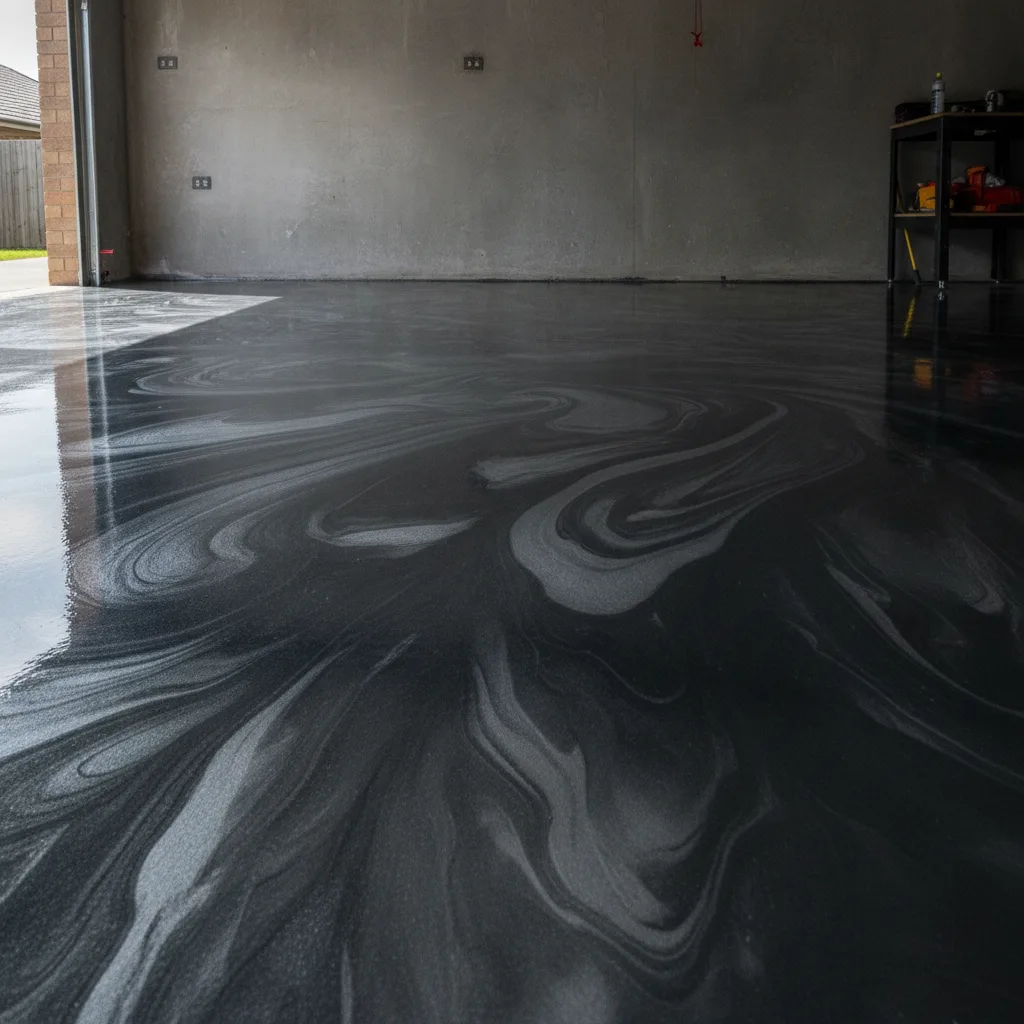
Metallic Epoxy Floors in Hoppers Crossing: What Local Homeowners Choose
Metallic epoxy in Hoppers Crossing is one of the most popular garage floor upgrades homeowners in Melbourne’s west are asking about right now. It combines a high-gloss, marbled finish with a tough resin surface that handles car tyres, oil spills and foot traffic without complaint. Most residential installs take one to two days and the floor is walk-ready within 24 hours of the final coat.
What makes metallic epoxy different from standard epoxy flooring?
Metallic epoxy uses fine metallic pigment powders suspended in a clear or tinted epoxy resin. As the installer spreads the mix, the pigments swirl and pool in organic patterns, so no two floors look exactly alike. Standard solid-colour epoxy gives you a flat, uniform colour. Metallic gives you depth, movement and a finish that looks closer to polished stone or liquid metal than painted concrete.
The practical differences are worth knowing too. Both systems bond directly to the concrete slab and create a seamless, non-porous surface. The metallic layer sits beneath a clear topcoat, usually a polyurethane or polyaspartic sealer, which is what protects the pigment from UV yellowing and abrasion. That topcoat is what makes the floor genuinely durable rather than just pretty.
For a double garage of around 40 square metres, the metallic system typically adds a modest premium over a standard broadcast flake floor, mostly because the metallic pigment work requires more skill and takes longer to manipulate correctly before it sets. The result, though, is a floor that genuinely looks custom rather than off-the-shelf.
Why are Hoppers Crossing homeowners choosing metallic epoxy for their garages?
Hoppers Crossing homeowners are choosing metallic epoxy because it solves two problems at once: it protects the concrete slab from moisture, stains and cracking, and it dramatically improves the look of the garage as a usable room rather than just a car park. With many homes in the area built on reactive clay soils, concrete slabs can develop surface dusting and minor cracking over time. Sealing with epoxy stops that deterioration in its tracks.
The western suburbs of Melbourne have seen a real shift in how people use their garages. A lot of blokes out this way are turning the garage into a proper workshop, a gym or a second living space. When that’s the goal, a bare grey slab just doesn’t cut it. Metallic epoxy gives the space a finished, intentional feel without the cost of tiling or polished concrete.
Colour choices matter out here too. The most popular metallic tones in the western suburbs tend to run toward charcoal and graphite blends, deep bronze and champagne golds, and cool silver-greys. These tones complement the brick and rendered facades common across Hoppers Crossing, Werribee and the surrounding estates. A good installer will bring physical colour samples to the quote so you can hold them against your existing fitout before committing.
What does surface preparation involve before a metallic epoxy install?
Surface preparation before a metallic epoxy install means mechanically grinding or shot-blasting the concrete to open its pores, remove any existing sealers, and create a profile the epoxy can grip. This step is non-negotiable. Skipping prep or using acid etching alone is the single biggest reason epoxy floors peel, and it usually voids any workmanship warranty on the job.
For a standard residential garage in Hoppers Crossing, the prep sequence looks like this. First, the installer checks moisture content with a calcium chloride or Tramex-style meter, because epoxy applied over a damp slab will blister. Next, a diamond-tipped floor grinder opens the surface. Any cracks or spalls get filled with an epoxy or polyurea filler and left to cure. The floor is then vacuumed clean before the primer coat goes down.
This whole prep stage typically takes the better part of day one on a double garage. It’s noisy, dusty work, which is why professional installers use industrial vacuums attached directly to the grinder. By the afternoon of day one, the primer is usually down and curing. The metallic basecoat and clear topcoat follow on day two. Rushing any of these stages is where corners get cut, so ask any installer to walk you through their prep process before you sign anything.
How long will a metallic epoxy floor last in a residential garage?
A properly installed metallic epoxy floor in a residential garage will typically last 10 to 20 years before it needs more than basic maintenance, provided the surface prep was done correctly and a quality polyurethane or polyaspartic topcoat was applied. The topcoat is the sacrificial layer that takes the daily wear, and it can be recoated after several years to restore the gloss without stripping the whole floor.
Day-to-day care is straightforward. Sweep out grit regularly, because fine particles act like sandpaper underfoot and will dull the topcoat over time. Wipe up oil or chemical spills quickly, not because epoxy is vulnerable to them, but because pooled fluids become a slip hazard on a high-gloss surface. A damp mop with a pH-neutral cleaner every few weeks is all the maintenance most homeowners ever do.
One honest word on UV: standard epoxy resins will amber slightly under direct sunlight over years. If your garage gets strong afternoon sun through an open roller door, ask specifically for a UV-stable polyaspartic topcoat rather than a standard polyurethane. It costs a little more but the colour stays true for much longer, which matters especially with lighter metallic tones like silver or champagne.
What should you ask a metallic epoxy installer before booking?
Before booking a metallic epoxy installer, ask four things: what grinding profile they work to, whether they test for moisture before priming, what topcoat product they use and what warranty they offer on the finished floor. Any installer who can’t give a clear, specific answer to all four is worth skipping, regardless of price.
Get at least two quotes and ask each one to specify the number of coats, the products used by brand name, and who actually does the work on the day. Some businesses quote the job and then subcontract it to a crew you’ve never met. That’s not necessarily a problem, but you want to know in advance.
Photos of completed local jobs are useful but not the whole story. Ask to see a job that is at least two or three years old, not just fresh installs. A floor that still looks sharp after a few Melbourne winters and the rubber tyre marks of daily use tells you far more than a just-finished photo taken in perfect light.
Hoppers Crossing is well within the service area for qualified Melbourne installers, and the suburb’s mostly residential character means most jobs are accessible without the access complications that come with inner-city or commercial sites. Getting booked in during the cooler months, roughly April through August, is often easier as demand is lower and conditions for curing are generally stable.
Book a metallic epoxy floor installation in Hoppers Crossing with Metal and Flake