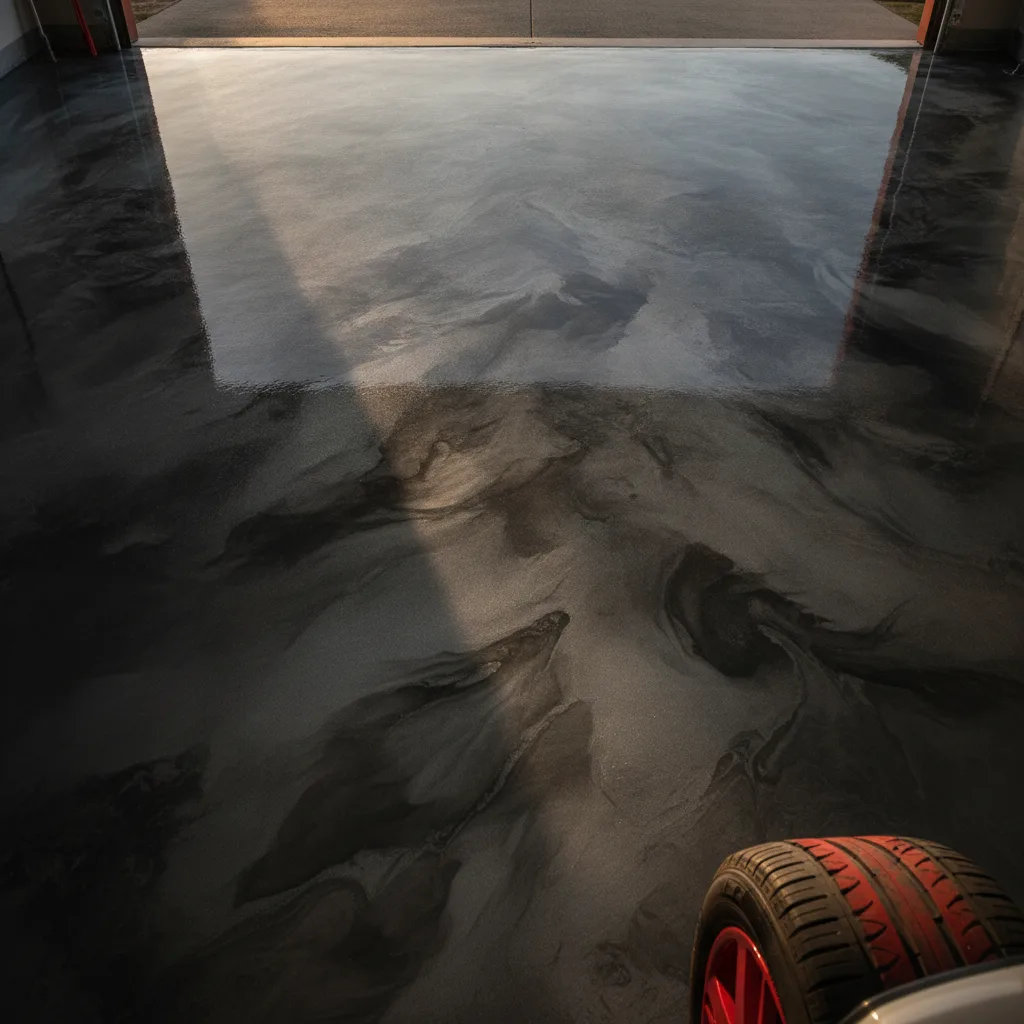
Metallic Epoxy Flooring in Epping: Design Options for Local Garages
Metallic epoxy flooring in Epping gives homeowners a hard-wearing, high-gloss garage floor that looks far more expensive than it is. A metallic pigment is blended into a clear epoxy coat, then manipulated with air or a squeegee to create swirling, three-dimensional patterns. The result is unique to every pour, genuinely tough, and built to handle cars, tools and decades of foot traffic.
What makes metallic epoxy flooring different from standard epoxy?
Standard epoxy lays down a solid, single-colour layer that is durable but fairly plain. Metallic epoxy uses fine metallic or pearlescent pigments suspended in the resin. When the installer works the wet coat, the pigments shift and flow, producing depth and movement that no two floors share. The finish reads almost like polished stone or poured liquid metal, depending on the colour chosen.
There are a few practical differences worth knowing about too. Metallic systems are typically applied in a clear or tinted base coat followed by the metallic broadcast layer, then sealed with a UV-stable topcoat. That topcoat is what stops the pigments from yellowing under sunlight coming through garage windows, which is a real concern in Epping’s north Melbourne climate where summer sun is intense. A quality UV-resistant seal keeps the colour true for years rather than going amber within a season.
The overall thickness of a properly applied metallic epoxy system sits around 3 to 5 millimetres once base, broadcast and topcoat are all accounted for. That builds up enough mass to bridge minor hairline cracks and to protect the concrete slab underneath from oil, brake fluid and cleaning chemicals.
What metallic epoxy colour and design options work best for Epping garages?
The most popular palette for residential garages in Epping and the surrounding northern suburbs runs toward charcoal, gunmetal, mid-grey and warm bronze tones. These sit well against the brick and rendered exteriors common in the area and they hide tyre marks and dust between cleans. That said, the colour range is genuinely wide, from pearl white and champagne through to deep navy and burnt copper.
Beyond base colour, the design comes down to how the installer moves the product. The main looks are:
- Marble swirl. Long, flowing veins pulled through the coat with a brush or squeegee. Works well in lighter colours like silver and white.
- Cell or lace effect. An air tool or torch is used to push the pigment into irregular cell shapes, mimicking natural stone. Very popular in charcoal and gunmetal.
- Solid flood. The metallic pigment is broadcast evenly with minimal manipulation, giving a glassy, reflective surface with subtle shimmer. Good for smaller single-car bays where you want the floor to feel larger.
- Multi-tone blend. Two or three colours are poured and worked together. Copper with black is a common combination that photographs well and suits workshop or show-car garages.
If you are not sure which direction to go, think about the lighting in your garage first. A dark gunmetal with a high-gloss topcoat under LED strips can look spectacular. The same colour under a single fluorescent tube can read flat. Talking through the lighting setup before choosing the finish is worth a few minutes of anyone’s time.
How durable is metallic epoxy flooring for a working garage in Epping?
Metallic epoxy flooring is genuinely tough when it is installed correctly and over properly prepared concrete. The weak point in almost every failed epoxy job is surface prep, not the product itself. Concrete needs to be ground or shot-blasted to open up the pores so the resin bonds mechanically to the slab. Skipping that step and painting straight over dusty or sealed concrete is why cheaper DIY kits peel within a year.
A professionally installed system handles daily car traffic without issue. The abrasion resistance of a two-part epoxy with a polyurethane or polyaspartic topcoat rates well above the kind of wear a residential garage sees. The topcoat is the sacrificial layer, so if it does dull over many years, it can be recoated without stripping the whole floor back to concrete.
Temperature matters in Epping too. Melbourne’s northern suburbs can push past 40 degrees Celsius in summer and drop close to zero overnight in winter. A quality metallic epoxy mix formulated for Australian conditions handles that thermal cycling without cracking or delaminating. Always ask your installer whether the product they are using is rated for exterior temperature swings, even if the garage is enclosed, because an uninsulated slab still moves with the seasons.
Chemical resistance is another genuine strength. Petrol, motor oil, brake fluid and most household cleaners sit on the surface rather than penetrating it. A wipe with a mop or rag is usually enough. That is a meaningful upgrade from bare concrete, which absorbs oil stains permanently within minutes.
What should Epping homeowners expect during a metallic epoxy installation?
A typical residential garage in Epping, say a standard double bay of around 36 to 40 square metres, takes two to three days from start to finish. Day one is surface preparation: grinding, crack repair if needed, and moisture testing. Day two is the epoxy application itself, including the metallic broadcast layer. Day three is often the topcoat and cure check. The floor is usually ready for light foot traffic within 24 hours of the final coat and ready for vehicle traffic after around 72 hours, though that varies with temperature and humidity on the day.
You will need to empty the garage completely before the crew arrives. Nothing should be stored along the walls during grinding because concrete dust gets everywhere. It is also worth letting your neighbours know on preparation day, since diamond grinding generates noise similar to a floor sander running continuously for a few hours.
After installation, the main thing to avoid in the first week is dragging heavy objects across the floor. The epoxy is hard to the touch well before it reaches full cure strength, which generally comes at around seven days. After that, it is as tough as the product specification says it is.
How does metallic epoxy flooring add value to an Epping property?
A well-finished garage floor does two things for a property. First, it signals that the rest of the house has been looked after. Real estate agents and buyers notice a gleaming metallic floor in the way they notice new carpet or a fresh kitchen: it creates an impression of quality before anyone opens a cupboard. Second, it converts the garage from dead storage space into usable, attractive room. Home workshops, gym setups and hobby spaces all benefit from a floor that is easy to clean, non-slip when treated with a broadcast anti-slip additive, and pleasant to be in.
Epping is an established suburb with a strong mix of original homes and newer builds. Both benefit from a garage floor upgrade. Older slabs often have surface staining and minor pitting that grinding and epoxy completely resolve. Newer slabs that were poured smooth can sometimes be too smooth for good epoxy adhesion, which is exactly why mechanical preparation matters regardless of the slab’s age.
The cost of a metallic epoxy floor sits above a plain solid-colour epoxy but below a polished concrete job of equivalent quality. For most Epping homeowners looking at a double garage, the outlay is recovered many times over in daily enjoyment and eventual resale appeal.
Get a metallic epoxy flooring quote in Epping from Metal and Flake