How Much Does It Cost to Epoxy a Garage Floor in Melbourne?
For most Melbourne homes, epoxy coating a standard single garage floor (around 20–25 m²) costs between $1,500 and $2,800 fully installed. A double garage of 40–50 m² typically runs from $2,800 to $5,000 or more, depending on the system chosen, the condition of the concrete, and the finish selected. Metallic or flake finishes sit toward the higher end of those ranges.
What factors affect how much it costs to epoxy a garage floor?
The final price depends on four main things: the size of the floor, the state of the concrete underneath, the type of epoxy system applied, and the finish or decorative layer on top. Any one of these can shift the number significantly, so a proper quote always needs a site inspection rather than a rough figure over the phone.
Here is how each factor plays out in practice:
Floor size. Epoxy coating is generally priced per square metre. Most professional installers in Melbourne quote somewhere between $70 and $120 per m² for a quality system, though basic single-coat options from budget operators can come in lower. Larger jobs sometimes attract a slightly reduced rate per square metre because setup costs are spread across more area.
Concrete condition. This is where a lot of homeowners get caught out. If the slab has existing paint, sealers, oil staining, cracks, or moisture issues, all of that needs to be dealt with before a single drop of epoxy goes down. Diamond grinding to remove old coatings, crack repairs, or moisture mitigation treatment all add to the cost. Skipping this prep is the number-one reason cheap epoxy jobs fail within 12 months, peeling and bubbling off the surface.
Epoxy system type. A thin water-based epoxy is not the same product as a thick solids-rich two-part epoxy or a polyaspartic topcoat. Professional-grade systems use high-build coatings with multiple layers. a primer coat, a colour or flake broadcast layer, and a clear topcoat. Each layer has a cost attached. Polyaspartic topcoats, which cure faster and resist UV yellowing better than standard epoxy, add to the overall price but genuinely extend the life of the floor.
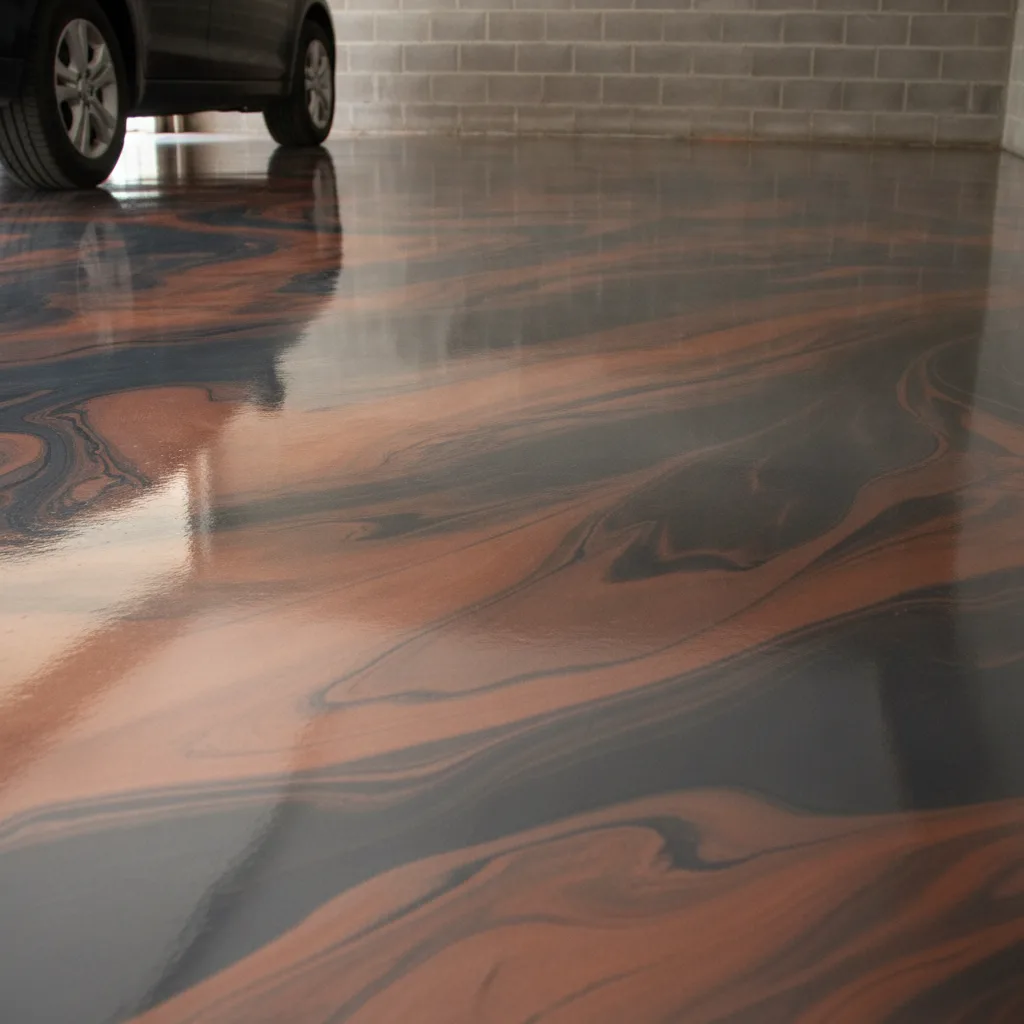
Decorative finish. A plain coloured epoxy floor is the most affordable option. Vinyl flake floors (where coloured flakes are broadcast into the wet base coat and sealed with a clear top) add some cost but give a great-looking, slip-resistant surface. Metallic epoxy floors, which use pigmented metallic powders to create a flowing, marbled effect, are the most labour-intensive and premium option of the three.
Is the cheapest epoxy quote actually the best value?
No. The cheapest quote rarely represents the best value for a garage floor, because the preparation work, product quality and number of coats applied are almost always where corners get cut. A floor that peels, chips or bubbles within two years ends up costing more to fix than if a proper system had been installed from the start.
When comparing quotes, ask each contractor these specific questions:
- Will the floor be diamond-ground (not just acid-etched) before coating?
- How many coats are included, and what is the dry-film thickness of the system?
- Is a polyaspartic or polyurethane topcoat included, or is the topcoat also a standard epoxy?
- What is the warranty on the installed floor, and what does it actually cover?
An acid-etch prep might be mentioned by a lower-priced operator as their surface preparation method. Diamond grinding opens the concrete pores far more consistently and gives the epoxy a mechanical bond rather than a chemical one. That difference alone can be the gap between a floor that lasts a decade and one that starts lifting in two years.
What does a typical Melbourne epoxy garage floor quote include?
A well-written quote from a professional installer should break down what is actually being done. At minimum it should specify: surface preparation method, primer coat details, base coat product and colour, whether flake or metallic pigment is included, the topcoat product, the number of coats and an estimated dry-film thickness, and the warranty terms.
Expect the process to take one to two days on site for a standard residential garage. Most professional-grade systems need 24 hours between coats and a light-traffic cure time of around 24 hours before you can walk on them, with full vehicle traffic usually safe after 72 hours. A fast-cure polyaspartic system can compress that timeline significantly, which is useful if you need your garage back quickly.
For a double garage in Melbourne’s southeastern or northern suburbs, a mid-range flake floor system from a reputable installer will typically land somewhere between $3,200 and $4,500 all up. A premium metallic finish in the same space can push closer to $5,500 to $7,000 depending on the complexity of the design. These are realistic working figures based on current Melbourne market conditions, not lowball numbers used to win work and recover costs with extras later.
Are DIY epoxy kits worth considering to save money?
DIY epoxy kits are available from hardware chains for a few hundred dollars and can be tempting. Honestly, for most garage floors they are not a great long-term investment. The products sold in kit form are typically water-based, low-solids coatings that sit on top of the concrete rather than bonding properly into it. Without diamond grinding equipment (which most homeowners do not own), the prep is almost always inadequate. The result tends to look good for six to twelve months and then starts to peel, particularly where tyres sit and heat up in summer.
If the budget is genuinely tight, it is worth getting a professional quote first. Many homeowners are surprised that the gap between a kit and a proper installation is smaller than expected when they factor in the cost of hiring a grinder, buying the products, and the time involved in doing it themselves.
How can you get an accurate epoxy floor cost for your garage?
The most reliable way to get an accurate cost is to have a professional come out and look at the floor in person. Photos help, but they cannot reveal moisture issues in the slab, existing sealers, or the true condition of the surface. A site visit lets the installer give a fixed-price quote rather than a range with plenty of asterisks attached.
Bring three things to the conversation: the approximate size of the floor (or a rough measurement), a clear idea of what finish you want (plain colour, flake, or metallic), and any information you have about what has been done to the floor in the past, including any sealers, paints, or oils that have soaked in over the years.
Book a no-obligation epoxy floor quote with Metal and Flake