Applying Epoxy Over Concrete in Sunbury: A Local Guide
Epoxy over concrete in Sunbury is a practical, long-lasting upgrade for garages, workshops and driveways. A properly prepared concrete slab gets coated with a two-part epoxy system that bonds hard, resists oil and chemicals, and holds up to the temperature swings Sunbury dishes out across the seasons. Done right, it lasts a decade or more with minimal upkeep.
Why is epoxy over concrete so popular in Sunbury?
Sunbury sits at the northern edge of Melbourne’s growth corridor, which means a lot of newly built homes with plain grey slabs and older properties with tired, pitted concrete that needs a serious refresh. Epoxy solves both problems neatly. It hardens the surface, seals out moisture and gives the floor a clean, finished look that plain concrete simply cannot match. With summers regularly pushing past 40°C and winters dropping close to freezing overnight, Sunbury concrete takes a beating from thermal expansion and contraction. A quality epoxy coating absorbs that movement far better than paint or a thin sealer, which crack and peel within a couple of seasons. Beyond the practical side, homeowners around Sunbury are spending more time in their garages. Whether it is a workshop, a home gym or just a clean storage space, a well-coated floor makes the whole area feel usable rather than purely functional.
What concrete preparation is needed before applying epoxy in Sunbury?
Concrete preparation is the single most critical step when applying epoxy over concrete in Sunbury. The epoxy needs a clean, open, slightly rough surface to grip onto. Without proper prep, even premium epoxy will delaminate and peel within months. Grinding, shot blasting or acid etching are the three main methods, and each suits different situations depending on the slab condition and the coating system being used.
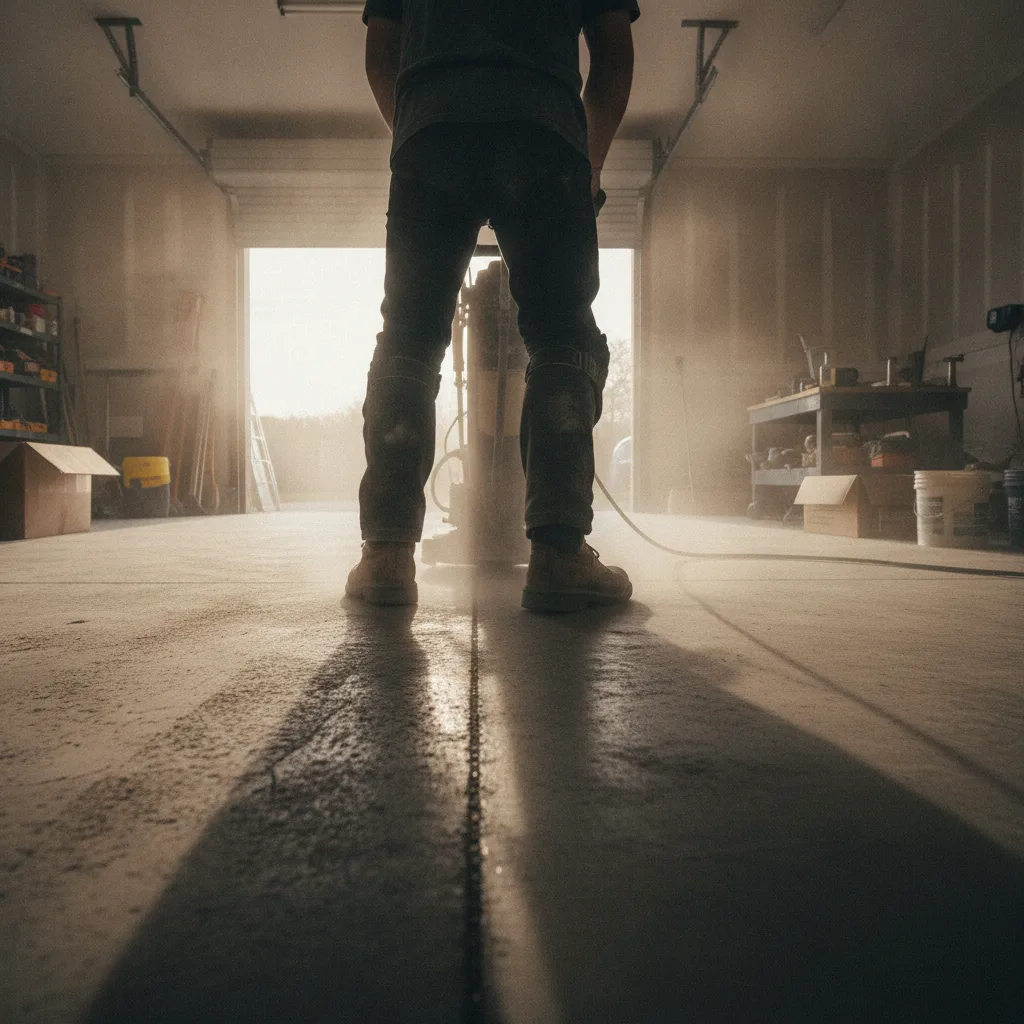
For most residential garages around Sunbury, diamond grinding is the go-to approach. A walk-behind grinder removes the top skin of the concrete, opens the pores and levels out any minor high spots. This creates what the trade calls a CSP 2 or CSP 3 profile, which is essentially a surface rough enough for epoxy to lock into mechanically.
There are a few Sunbury-specific things to watch for during prep:
- Moisture: Sunbury sits on clay-heavy soils that hold water. A simple plastic sheet test (tape a sheet flat to the slab for 24 hours and check for condensation underneath) can reveal rising damp before you commit to coating. Some slabs need a moisture-tolerant primer before the main epoxy goes down.
- Old coatings and contamination: Garages on older Sunbury blocks often have layers of old paint, oil stains or tyre rubber ground in. These all need to come off completely. Oil in particular soaks into concrete and must be degreased and ground out, not just cleaned over.
- Cracks and spalling: Minor cracks can be filled with an epoxy mortar filler prior to coating. Structural cracking is a different issue and worth getting assessed before you spend money on a surface treatment.
What epoxy coating systems work best on Sunbury concrete?
For epoxy over concrete in Sunbury, a full broadcast flake system is one of the most proven options for residential and light commercial use. It combines a pigmented base coat, a broadcast of vinyl flake chips across the wet epoxy, and a clear polyaspartic or urethane topcoat that locks everything in and adds UV stability. The result is a surface that hides small imperfections, provides a bit of slip resistance from the texture of the flakes, and looks sharp without being fussy.
Here is a quick rundown of the main systems used locally:
- Solid colour epoxy with a clear topcoat: Clean and simple. Works well in workshops where you want maximum light reflection off the floor. The solid colour shows dust more easily, which some people prefer because it keeps them sweeping regularly.
- Full flake broadcast: The most popular residential choice in Melbourne’s northern suburbs. The flake pattern disguises everyday wear and gives the floor a more premium, showroom-style finish. Metal and Flake specialises in this system.
- Metallic epoxy: A decorative option that uses pigment and a resin base to create marbled, fluid-looking effects. Suits indoor garage spaces where aesthetics matter as much as durability.
Topcoat choice also matters in Sunbury. A polyaspartic topcoat is worth the extra cost for any floor that gets direct sun through a garage door for part of the day. Standard epoxy topcoats amber over time under UV exposure, while polyaspartic holds its colour far better.
How long does it take to apply epoxy over concrete in Sunbury?
A standard residential garage floor in Sunbury, say 40 to 60 square metres, typically takes two days from start to finish when using a professional flake system. Day one covers the grinding, any crack repairs, and the base coat with flake broadcast. Day two handles the scrape-back of any standing flakes and the application of the clear topcoat. Most systems are ready for light foot traffic in about 24 hours after the topcoat goes down, and ready for vehicle traffic within 72 hours, though this varies by product and temperature.
Temperature matters a lot during application. Epoxy is sensitive to ambient temperature and humidity. The sweet spot for most systems is between 10°C and 30°C with low humidity. Sunbury’s autumn and spring months are ideal. Midsummer application on a hot slab is possible but requires careful timing, typically starting early in the morning before the concrete heats up, and using a slower-cure epoxy formula to stop the resin from setting before it levels properly.
How do you maintain an epoxy floor after it’s installed in Sunbury?
Maintaining an epoxy floor in Sunbury is genuinely low effort, which is one of the main reasons people choose it. A weekly sweep and an occasional mop with a pH-neutral cleaner is all the routine maintenance most floors need. Avoid bleach-based cleaners and harsh solvents, as these can dull the topcoat over time.
A few practical tips for Sunbury conditions specifically. Sunbury gets its share of red dust and tracked-in clay in summer. Putting a quality door mat at the garage entry cuts down on abrasive grit that would otherwise grind into the topcoat under foot and tyre traffic. For workshop floors, placing a rubber mat under any stationary equipment protects against point-load wear. Most quality epoxy flake systems applied by a professional will not need any recoating for 8 to 12 years under normal residential use, and a maintenance topcoat at that point is far cheaper than starting from scratch.
When things do go wrong, small chips or scratches from dropped tools can usually be touched up without redoing the entire floor, as long as the existing coating is still well bonded to the slab underneath. This is one reason professional prep and installation pays for itself over the life of the floor.
If you are ready to turn a tired grey slab into something you are actually proud of, Book an epoxy over concrete quote in Sunbury with Metal and Flake.