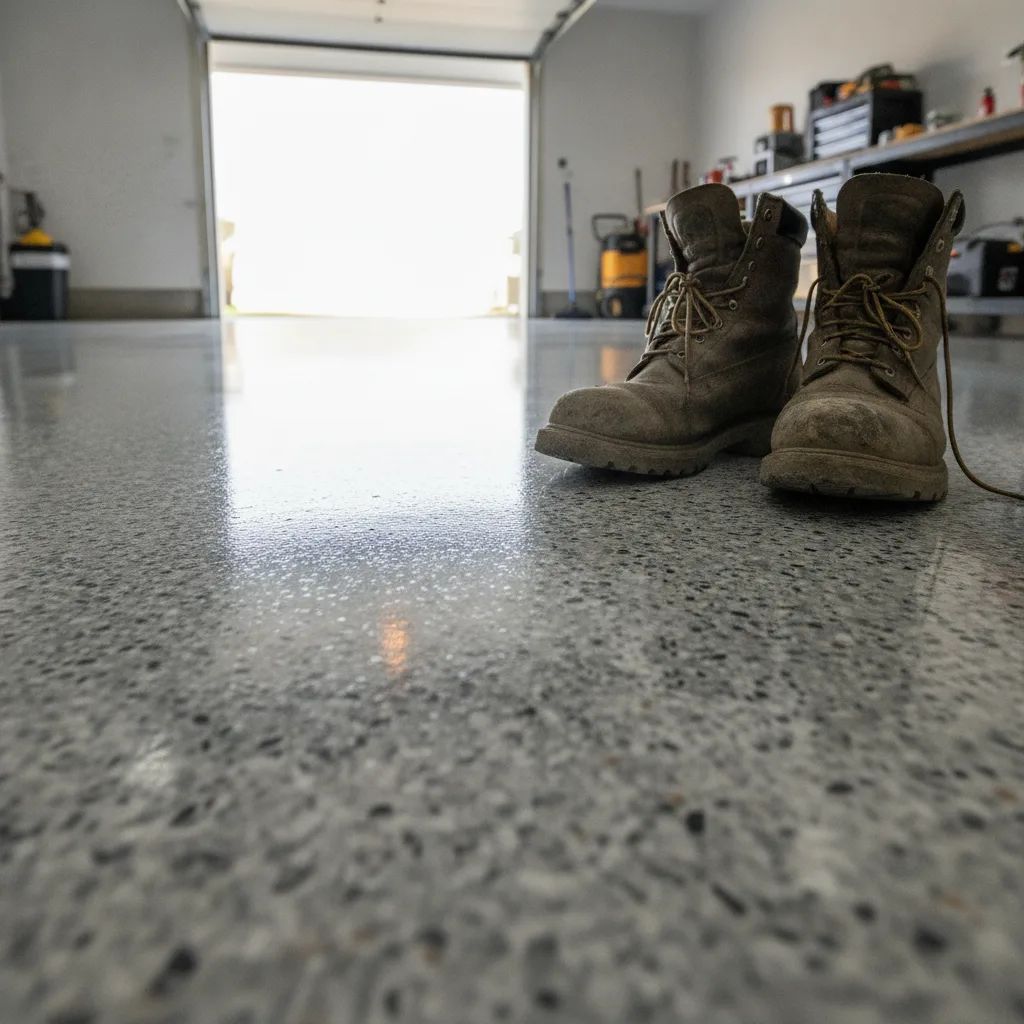
Epoxy Garage Floor Reservoir: A Local Buyer’s Checklist
An epoxy garage floor in Reservoir transforms a cracked, dusty slab into a hardwearing, easy-clean surface that lasts well over a decade when installed correctly. This checklist covers every decision point: slab condition, system type, coat thickness, drainage, colour, and what to ask any installer before you sign anything.
Why is the condition of your Reservoir slab the starting point for everything?
The condition of your concrete slab determines whether an epoxy coating bonds properly or peels within months. A slab with active moisture, deep cracks, oil contamination or a soft surface layer must be addressed before any coating goes down. Skipping this step is the single most common reason epoxy floors fail prematurely.
Reservoir sits in Melbourne’s inner north, and plenty of the housing stock here dates from the 1950s through to the 1980s. That means a lot of garages are sitting on older slabs that were poured without a proper moisture barrier underneath. Moisture vapour pushing up through concrete is one of the sneakiest causes of epoxy delamination, and it is almost invisible until it is too late.
Before any installer quotes you a price, they should be doing a few things on the slab:
- A tap test to check for hollow spots and delaminated concrete.
- A moisture reading using a calcium chloride test or a relative humidity probe. The general industry benchmark is that moisture vapour emission should sit below 3 lb per 1,000 sq ft per 24 hours before a standard epoxy is applied.
- A visual check for existing coatings, oil staining and surface laitance (that weak powdery top layer that forms on a lot of older slabs).
If an installer rocks up and skips all of that, that is a red flag worth paying attention to.
What epoxy system actually suits a residential garage floor in Reservoir?
For a residential garage in Reservoir, a multi-coat 100% solids epoxy system with a decorative broadcast layer and a polyurethane or polyaspartic topcoat is generally the most practical choice. It balances durability, chemical resistance, UV stability and aesthetics without overengineering the job.
Here is a quick breakdown of the main system options you will hear about:
- Water-based epoxy: Lower VOCs and easier cleanup, but typically thinner film builds and less abrasion resistance. Fine for light use, but not ideal if you are parking a heavy four-wheel drive or doing mechanical work in the garage.
- Solvent-based epoxy: Better penetration into the concrete, stronger bond. More fumes during application, so ventilation matters.
- 100% solids epoxy: No water or solvent carrier, so almost all of the product stays on the slab as cured film. This gives you a much thicker, more durable layer per coat. This is the system most professional installers use for garage floors.
- Polyaspartic topcoat: A fast-curing, UV-stable finish coat that prevents yellowing and adds scratch resistance. Worth the extra cost on a garage that gets direct afternoon sun, which is common for west-facing garages in Reservoir.
The metallic and flake finishes you see in showrooms are decorative broadcasts added into the system: coloured flakes or metallic pigments are scattered into the wet basecoat, then sealed under the topcoat. They are not just cosmetic. The texture they create adds grip underfoot and hides minor surface imperfections in the slab.
How should you compare quotes for an epoxy garage floor in Reservoir?
When comparing quotes for an epoxy garage floor, look past the headline price and check what surface preparation method is included, how many coats are specified, the dry film thickness in microns, and whether the topcoat is a dedicated polyurethane or polyaspartic product. These details determine the durability of what you are actually paying for.
A standard double garage in Reservoir runs roughly 36 to 42 square metres. When you get quotes, ask each installer to put the following in writing:
- Prep method: Diamond grinding is the gold standard. Shot blasting is also acceptable. Acid etching alone is not sufficient for a 100% solids system because it does not open the concrete profile enough for a strong mechanical bond.
- Number of coats and product names: A reputable installer will name the brand and product line. If they are vague about this, push harder. A two-coat system (primer plus topcoat) is minimal. A three-coat system (primer, colour/flake coat, clear topcoat) is more typical for a quality residential job.
- Dry film thickness (DFT): A total DFT of around 500 to 750 microns across all coats is a reasonable target for a residential garage.
- Warranty terms: Check whether the warranty covers delamination specifically, and whether it is voided by moisture issues that were not disclosed or tested for before the job.
- Cure time before vehicle traffic: A polyaspartic topcoat can be ready for foot traffic in a few hours and light vehicle traffic within 24 hours. Standard epoxy topcoats typically need 72 hours before you drive on them. Plan your timeline accordingly.
What practical things should you sort out before the installer arrives?
Before an epoxy installer arrives, you need to clear the garage completely, degrease any oil spots yourself if possible, fix any major crack repairs your installer requires you to handle, and ensure the space is ventilated and dry. Good preparation on your end reduces delays and keeps the job on schedule.
A few things Reservoir homeowners often overlook:
- Drainage: If your garage has a central floor drain, make sure the installer knows before they start. The drain grate needs to be protected or temporarily removed, and the surrounding area needs careful detailing.
- Expansion joints: Do not ask an installer to fill expansion joints flush with epoxy. Those joints are there for a reason. They should be filled with a flexible polyurethane sealant, not bridged over with a rigid coating.
- Weather window: Epoxy does not like being applied below about 10 degrees Celsius. Melbourne winters can catch people out. A cool snap during application or in the 24-hour cure window can affect adhesion. Early autumn and spring are generally the most reliable seasons for this work in Reservoir.
- Neighbours: Grinding and coating produce noise and odour. Give your neighbours a heads-up, especially if your garage shares a wall or is close to a boundary.
What colours and finishes work well for Reservoir garage floors?
For Reservoir garage floors, mid-tone grey flake blends and charcoal metallics are the most popular choices because they hide tyre marks and brake dust well, photograph cleanly, and suit the area’s mix of period homes and newer builds. Lighter colours show less heat but show more dirt.
Flake systems use vinyl colour flakes broadcast into the wet epoxy at varying densities. A full-broadcast (100% coverage) flake floor hides the concrete surface almost entirely, which is useful if your slab has a patchy appearance. A partial broadcast at around 50% shows more of the base colour and tends to look a bit more refined.
Metallic pigment systems create a flowing, marbled look by manipulating the wet product with rollers and squeegees during application. No two metallic floors look identical, which many homeowners like. The tradeoff is that the finish relies heavily on the applicator’s skill, so it is worth asking to see examples of previous metallic jobs before committing.
Whichever finish you choose, a UV-stable topcoat is non-negotiable for a Reservoir garage. Without it, even a well-installed epoxy floor will yellow or fade within a couple of years of sun exposure through the garage door opening.
Ready to take the guesswork out of it? Book an on-site quote in Reservoir with Metal and Flake.