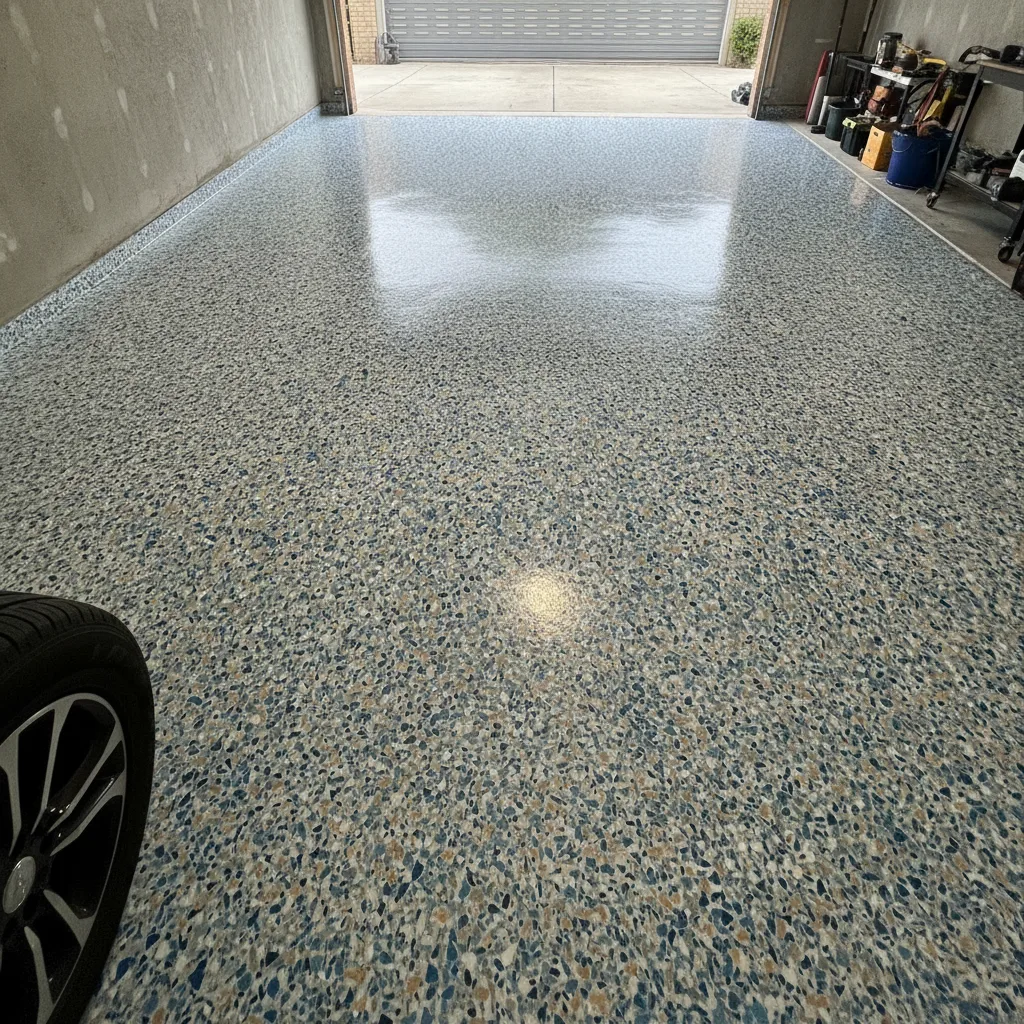
Epoxy Garage Floors in Preston: What to Check Before You Book
An epoxy garage floor in Preston is one of the best bang-for-buck upgrades a homeowner can make. It seals the concrete, resists oil and tyre marks, and turns a dull slab into something you actually want to show off. Before you book anyone, though, there are a handful of things worth checking so the job goes right first time and stays right for years.
Why does the condition of your existing slab matter so much for an epoxy garage floor?
The condition of your concrete slab is the single biggest factor in how long an epoxy garage floor will last. Epoxy bonds to concrete mechanically, not just chemically, so any existing cracks, spalling, moisture rising through the slab, or old paint sitting on the surface will work against adhesion and cause the coating to lift or bubble within months if not addressed first.
Walk your garage floor before you call anyone. Look for:
- Hairline or structural cracks running across the slab
- Flaking or powdery concrete (called spalling), common in older Preston homes that went through decades of Melbourne’s wet winters
- Any old sealer, paint, or adhesive residue left from previous flooring
- Damp patches or white mineral deposits (efflorescence) that signal moisture pushing up from underneath
None of these are deal-breakers. A competent installer will diamond-grind the surface to open the concrete’s pores, fill cracks with an appropriate filler, and test for moisture before a single drop of epoxy goes down. What you want to avoid is a tradie who skips the prep and goes straight to rolling product. That shortcut is the number one reason epoxy floors fail early.
How do you know if your Preston garage needs a primer coat before epoxy?
A primer coat is needed when the concrete is porous, when moisture readings are elevated, or when the floor has been previously sealed. Skipping primer on a thirsty slab means the topcoat soaks in unevenly, leaving a patchy finish and weak bond. A quick pour of water on the slab tells you a lot: if it beads up, there’s an existing sealer; if it soaks straight in, the concrete is open and ready.
Preston has a mix of housing stock. Plenty of the double-brick homes built in the 1960s and 70s have concrete slabs that were never sealed and are relatively straightforward to coat. Newer subdivisions sometimes have slabs with curing compounds applied at the build stage, which can be nearly invisible but will wreck adhesion if not ground off first. Ask your installer specifically how they test for and handle curing compounds. If they look blank, that’s useful information.
What thickness and system should you ask about for an epoxy garage floor in Preston?
Not all epoxy products are equal, and the thickness of the finished system matters for durability under vehicle traffic. A single broadcast coat might look great on day one but chip along the edges of tyre paths within a year. A quality residential garage system typically runs at least two to three coats: a primer or base, a broadcast layer with decorative flake or aggregate, and a clear polyurethane or polyaspartic topcoat to lock everything in and resist UV yellowing.
Polyaspartic topcoats cure faster than traditional epoxy and handle Melbourne’s UV better, which matters for Preston garages with doors that face north or west and get serious afternoon sun. Ask whether the topcoat is UV-stable. If the installer offers only a standard epoxy clear, it will amber over time when exposed to sunlight, turning your crisp grey floor a warm yellow within a couple of years.
For a standard two-car garage of around 36 to 40 square metres, a proper multi-coat system with surface preparation and flake broadcast should take the best part of a full day for prep and a second visit for topcoats once the base has cured. Any quote that promises a same-day done-and-dusted finish on a floor that hasn’t been touched before is worth questioning.
What questions should you ask an epoxy flooring installer before you sign anything?
Getting a few direct answers upfront saves a lot of grief later. Here’s a short list worth running through before you commit:
- How do you prepare the surface? The answer should include diamond grinding or shot blasting, not just acid etching alone. Acid etching is a secondary step, not a substitute for mechanical abrasion.
- Do you test for moisture? A simple calcium chloride test or a digital moisture meter reading should be part of their standard process.
- What products do you use, and can you show me the data sheet? Reputable installers use branded, industrial-grade epoxy systems and can hand you a product data sheet without hesitation.
- What is the cure time before I can park on it? With most epoxy systems, light foot traffic is fine after 24 hours, but vehicles should stay off for at least 72 hours, sometimes up to seven days depending on the topcoat.
- What warranty do you offer on labour and materials? A confident installer backs their work. Get that warranty in writing, not just a verbal promise on the driveway.
It’s also worth asking whether they’re familiar with Preston specifically. Local knowledge matters more than it sounds. An installer who works regularly in the area will know that some streets near the old industrial pockets along Murray Road can have garages with legacy contamination in the concrete from previous uses, things like oil soaked deep into the slab over decades. That kind of slab needs longer preparation time and sometimes an oil-tolerant primer to get a reliable bond.
How do you maintain an epoxy garage floor once it’s laid?
One of the biggest selling points of an epoxy garage floor is how little maintenance it actually needs. A regular sweep to clear grit (which acts like sandpaper underfoot and under tyres) and an occasional mop with a pH-neutral cleaner is about all that’s required. Avoid bleach-based cleaners; they’ll dull the topcoat over time.
Put felt pads under any metal shelving legs or workbench feet resting directly on the floor. Point loads from metal on epoxy won’t crack the coating in most cases, but they can leave permanent indentations in the topcoat if a heavy cabinet sits in one spot for years. A rubber or felt buffer between metal and the floor is cheap insurance.
If you notice a small chip or scratch appearing, address it quickly. Most epoxy topcoats can be spot-repaired with a touch-up kit rather than a full recoat, as long as you catch it while the damage is still contained. Leaving a chip to grow means moisture can get under the surrounding coating and lift a much larger area.
With the right prep, quality products, and a tradie who knows what they’re doing, a well-laid epoxy garage floor in Preston should give you ten-plus years of hard use before it needs any serious attention. The preparation stage is where that lifespan is won or lost, so don’t let anyone rush past it.
Book an on-site quote in Preston with Metal and Flake