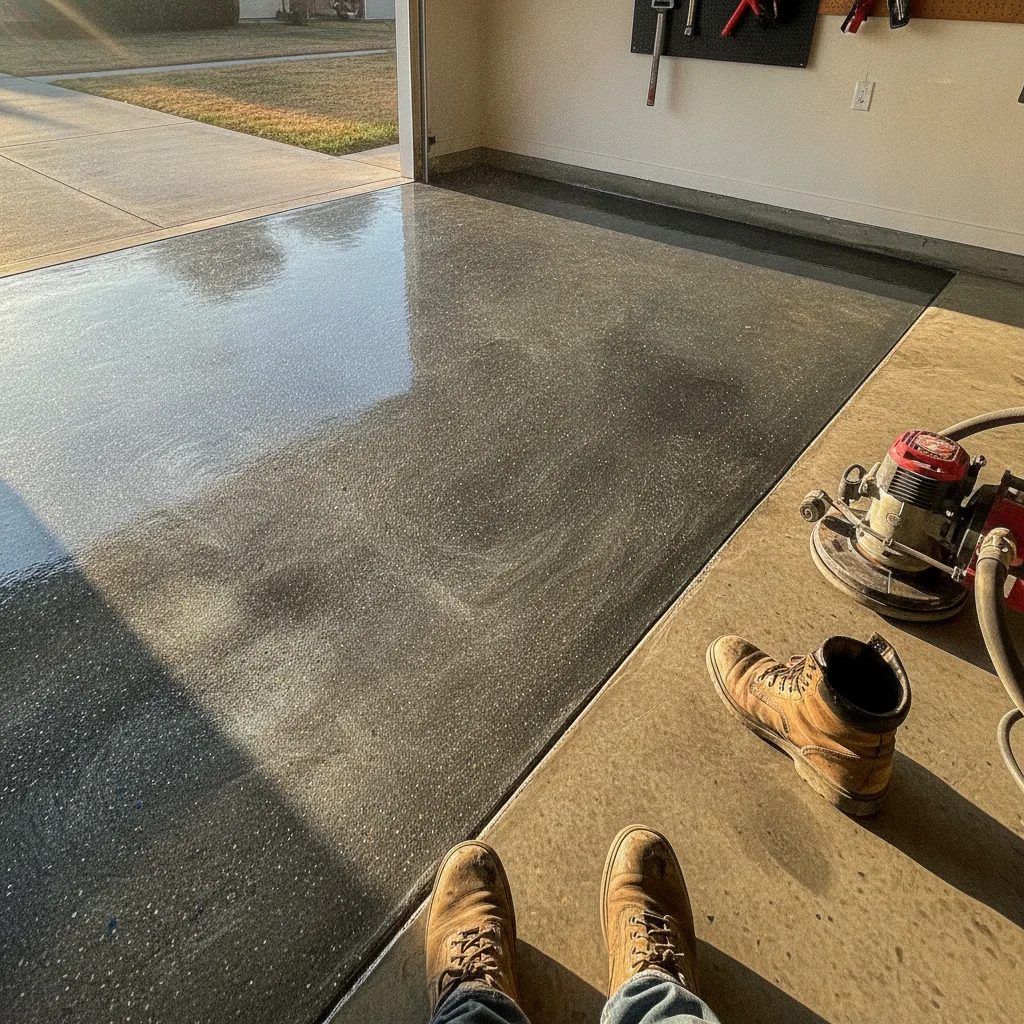
Epoxy Floor for Your Garage: What Melbourne Homeowners Should Know
An epoxy floor for your garage is a two-part resin coating applied directly to a prepared concrete slab. It bonds at a chemical level, creating a hard, seamless surface that resists oil, chemicals, abrasion and moisture. For Melbourne homeowners, it is one of the most cost-effective ways to transform a cracked, dusty slab into a surface that looks sharp and holds up for years.
Why is an epoxy floor for your garage worth the investment?
Bare concrete is porous. It soaks up oil drips, stains from cleaning products and moisture that wicks up from the ground. Over time that means a floor that looks grubby no matter how much you sweep it, and dust that migrates into the rest of the house. An epoxy garage floor seals all of that out with a surface that is far easier to hose down and keep looking decent.
Beyond practicality, the visual upgrade is significant. A metallic or flake finish turns a plain grey slab into something you might actually want to show off. That matters if you use the garage as a workshop, a home gym or extra living space, not just somewhere to park the car.
From a property value standpoint, a well-finished garage floor reads as a premium detail to buyers. It signals that the home has been maintained. While it is hard to put an exact dollar figure on it, real estate agents consistently list a finished garage as a positive selling point in the Melbourne market.
What goes into preparing a concrete slab for epoxy?
Surface preparation is where most DIY epoxy jobs fall apart. For epoxy to bond properly, the concrete has to be opened up mechanically, typically by diamond grinding or shot blasting. This creates a surface profile that gives the resin something to grip. Skipping this step, or just etching with acid and hoping for the best, is the number one reason epoxy peels within a year or two.
Before any grinding starts, the slab needs to be checked for moisture. Melbourne slabs built before the mid-1990s frequently have no vapour barrier underneath them, which means moisture vapour pushes up through the concrete. If epoxy is applied over a damp slab without the right primer, hydrostatic pressure will eventually lift the coating from below. A simple calcium chloride moisture test takes 24 hours and tells you exactly what you are dealing with.
Cracks and spalls need to be filled and feathered before coating begins. Small shrinkage cracks are normal in any concrete slab and can be filled with an epoxy mortar or a semi-rigid polyurethane filler. Structural cracks, the kind that move, need to be assessed separately because no coating will hold across an active crack indefinitely.
What types of epoxy garage floor finishes are available?
There are a few different product categories worth understanding. Standard solid-colour epoxy is the most straightforward option. It gives a clean, single-colour finish that is tough and easy to maintain. It is the practical choice for workshops and commercial-style garages.
Flake or chip systems broadcast coloured vinyl flakes into a wet epoxy base coat, then seal the whole thing with a clear polyaspartic or urethane topcoat. The flakes hide minor imperfections in the slab, add texture for slip resistance, and create a speckled appearance that does not show dust or light dirt between cleans. They are probably the most popular choice for residential garages in Melbourne right now.
Metallic epoxy is the premium end of the residential market. Metallic pigments are mixed into the epoxy and manipulated during application to create flowing, three-dimensional effects that look different from every angle. No two floors come out the same. The topcoat is typically a high-build polyaspartic that is UV-stable, so it will not yellow near garage doors that get direct afternoon sun.
It is worth knowing that the topcoat matters as much as the base. Epoxy on its own can yellow and dull in UV exposure. A polyaspartic or aliphatic urethane topcoat protects the colour and gloss, and is harder than plain epoxy, so it resists scuffs from foot traffic and dragged tools more effectively.
How long does an epoxy garage floor last in Melbourne’s climate?
A professionally installed epoxy system, properly prepared and sealed with a quality topcoat, will typically perform well for ten to fifteen years in a residential garage before it needs any significant attention. The main factors that shorten that lifespan are moisture under the slab, hot tyre pickup and UV exposure.
Hot tyre pickup is worth a specific mention for Melbourne summers. When a car is driven hard and then pulled into a garage, the tyres are hot enough to soften a standard epoxy topcoat and bond to it. When the car moves, it pulls the coating up in patches. A polyaspartic topcoat handles heat far better than standard epoxy and largely eliminates this problem.
Day-to-day maintenance is straightforward. A dust mop or a leaf blower handles loose debris. A mop with a pH-neutral cleaner takes care of oil and general grime. Avoid harsh solvents and steel wool. With that basic routine, the floor keeps its gloss and stays easy to clean for years.
What should Melbourne homeowners ask a contractor before signing anything?
The first question is about preparation method. If the answer is acid etching only, that is a red flag. Diamond grinding is the industry standard for a reason. Ask what surface profile they are aiming for and how they test for moisture before they start.
Ask about the specific products being used. Reputable installers will name the product system, not just say “epoxy.” Understanding whether you are getting a water-based epoxy, a solvent-based system or a 100 percent solids epoxy makes a real difference to the final thickness and durability of the floor.
Check what the warranty covers and for how long. A solid warranty should cover adhesion failure and peeling, not just manufacturing defects in the product. Make sure the installer carries public liability insurance. For a job being done in and around your home, that is non-negotiable.
Finally, ask to see photos of comparable jobs, ideally in garages of a similar age and slab condition to yours. Installers who specialise in residential garage floors will have plenty of before-and-after examples to share, and they will be upfront about what is achievable on an older or problematic slab rather than promising a perfect result regardless.
Getting a quote is a good opportunity to have those conversations in person. A contractor worth hiring will spend time looking at your slab, not just measuring the square meterage and sending a number.
Book a garage floor coating consultation with Metal and Flake