Epoxy Floor Cost in Hoppers Crossing: 2026 Local Pricing Guide
Epoxy floor cost in Hoppers Crossing typically ranges from $50 to $120 per square metre for a residential garage, depending on floor condition, system chosen and the size of the job. Decorative finishes like metallic or flake blends sit toward the upper end of that range, while basic single-coat sealers come in cheaper. Most average double garages land between $2,000 and $4,500 fully installed.
What does epoxy floor coating actually cost per square metre in Hoppers Crossing?
In the Hoppers Crossing area, epoxy floor coating costs roughly $50 to $120 per square metre installed, with the sweet spot for a quality residential job sitting around $70 to $90 per square metre. That price covers surface preparation, the base coat, colour flakes or pigment, and a clear topcoat seal. Budget systems using thin, single-coat paint sit well below that range but rarely last more than a couple of years before peeling.
It helps to think about the cost in three layers. First, there is the preparation: grinding or acid-etching the concrete so the coating bonds properly. That step alone can account for 30 to 40 percent of the total labour bill, and it is the part that separates a long-lasting floor from one that bubbles and lifts within a year. Second, there is the material cost of the epoxy system itself. A two-part polyaspartic or epoxy-polyaspartic hybrid system uses more raw material than a water-based paint, and the product cost reflects that. Third, there is the finishing topcoat, which is what gives the floor its gloss level and protects it from UV fading, tyre marks and chemicals.
For a standard double garage in Hoppers Crossing, around 36 to 42 square metres, expect the total installed price to fall somewhere between $2,500 and $4,200 depending on the system. Single garages of around 18 to 20 square metres generally come in between $1,200 and $2,000 for a quality job.
What factors push the epoxy floor cost up or down?
The biggest cost drivers for an epoxy floor are the current condition of the concrete, the type of coating system, the total area, and any extras like drainage cut-outs or floor repairs. A concrete slab with existing cracks, oil stains or moisture issues will cost more to prepare than a clean new pour. The coating system you choose, from a basic solid colour up to a multi-layer metallic or decorative flake finish, also has a significant effect on the final price.
Here is a plain-English breakdown of what shifts the number:
Concrete condition. Oil-stained slabs need degreasing and sometimes shot-blasting rather than simple grinding. Cracks need filling with epoxy filler before coating begins. Each of these steps adds time and material to the job. An honest installer will identify these issues during a site visit before quoting, so you are not hit with surprises mid-job.
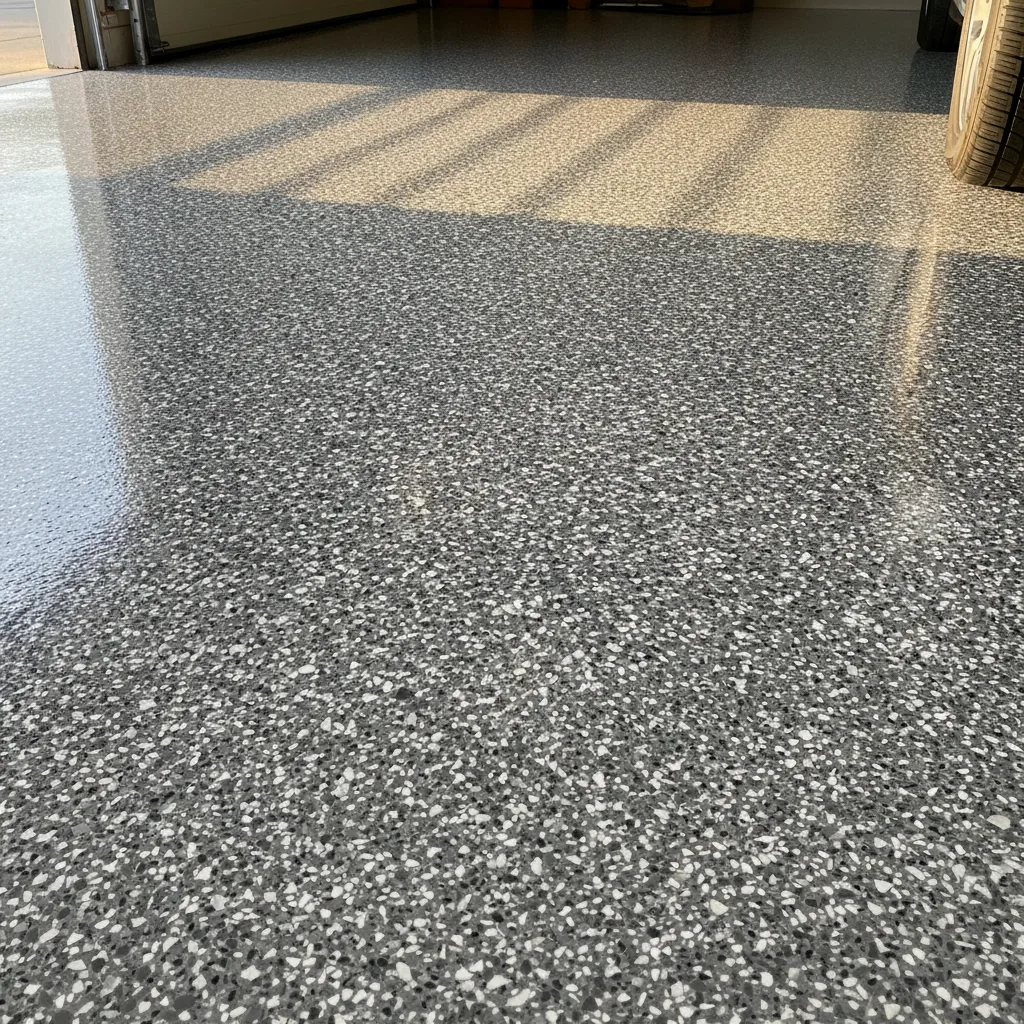
Coating system. A full broadcast flake system, where vinyl flakes are scattered across the wet base coat to create a textured, speckled look, uses more material and more labour than a plain pigmented epoxy. Metallic epoxy finishes that create a three-dimensional, flowing effect involve additional application steps. Both options look brilliant and last well, but they cost more upfront than a straight solid colour.
Floor size and shape. Most epoxy jobs have a minimum call-out price, often around $800 to $1,000, because mobilising equipment and prepping the site takes time regardless of how small the floor is. That means very small areas can look expensive per square metre. Larger floors, above 80 square metres, often attract a lower per-square-metre rate because the preparation and setup cost is spread across more area.
Location and access. Hoppers Crossing sits in Melbourne’s western suburbs, roughly 30 kilometres from the CBD. Most specialist epoxy flooring businesses servicing the area factor in a modest travel component for outer western suburbs, but it is rarely a major line item.
Topcoat choice. A polyaspartic topcoat costs more than a standard epoxy clear coat but cures faster (often within hours rather than days), is more UV-stable and resists tyre marks and chemicals better over time. For a garage floor that sees daily car traffic, the polyaspartic option generally pays for itself through longevity.
How does DIY epoxy compare to hiring a professional in Hoppers Crossing?
DIY epoxy kits from hardware stores typically cost $200 to $600 for a double garage, but they use water-based formulas at 30 to 50 percent solids content, which means a thin, less durable film compared to the high-solids systems a professional uses. Most homeowners find DIY results last two to four years before peeling or flaking, while a professionally applied system with proper surface prep routinely lasts ten years or more.
The main reasons DIY epoxy fails early are insufficient surface preparation and mismatched products. Grinding concrete to the right profile requires a diamond grinder, not a hired floor sander, and very few hardware-store kits are designed to work over contaminated or aged concrete. If the slab has any oil staining from cars, the water-based coating simply will not bond.
That said, for low-traffic areas like a small workshop or storage room, a DIY kit can be a reasonable short-term solution. For a garage that parks two cars daily, the professional route delivers a far better return on investment over a five-to-ten-year horizon. A professional job at $3,500 that lasts twelve years works out to about $290 per year. Two rounds of DIY at $500 each over the same period, plus your time, is not as cheap as it looks on paper.
What questions should you ask before accepting an epoxy floor quote in Hoppers Crossing?
Before you accept any epoxy floor quote in Hoppers Crossing, ask about the preparation method (grinding vs. acid-etching), the solids content of the products being used, the number of coats included, the cure time before you can drive on it, and whether the quote includes crack repairs or is priced on a clean slab assumption. A solid quote will answer all of these without you needing to chase.
Here are the specific questions worth asking any installer:
How will you prepare the surface? Diamond grinding is the industry-preferred method because it opens the concrete pores mechanically and leaves a profile for the epoxy to grip. Acid-etching is cheaper and can work on new, clean slabs, but it is not suitable for aged or contaminated concrete. If an installer does not mention surface preparation at all, that is a red flag.
What is the solids content of your products? Professional-grade epoxy systems run at 70 to 100 percent solids. Consumer products often run at 30 to 50 percent. Higher solids means a thicker, tougher film once cured.
How many coats are included? A proper system is at minimum a primer or base coat, plus a clear protective topcoat. Most quality residential jobs use three layers: a primer, a colour or flake layer, and a polyaspartic or urethane topcoat.
What is the cure time? Fast-cure polyaspartic systems allow foot traffic in two to four hours and vehicle traffic in 24 hours. Standard epoxy systems can require 48 to 72 hours before cars go back on. Know what you are getting before the job starts.
Is crack repair included? Most quotes assume a clean, crack-free slab. If your slab has cracks, get clarity on whether filling is included or quoted separately.
Is epoxy flooring worth the cost for a Hoppers Crossing home?
Yes. For most Hoppers Crossing homeowners with a working garage, epoxy flooring is worth the cost. A properly installed system protects the concrete from oil, water and abrasion, is easy to clean, looks far better than bare grey concrete, and holds up to daily vehicle traffic for a decade or more without significant maintenance. It also adds perceived value to the home, which matters when selling.
The western suburbs of Melbourne, including Hoppers Crossing, Werribee and Point Cook, tend to have newer housing stock with plain concrete garage floors that are excellent candidates for epoxy coating. The slabs are often younger, less contaminated and easier to prepare than slabs in older inner-Melbourne suburbs, which can bring the preparation cost down and make the overall job more straightforward.
If you are comparing flooring options for a garage, the main alternatives are interlocking tiles (around $25 to $50 per square metre but with joints that collect dirt), polyurea coatings (similar price to quality epoxy but faster cure), and leaving concrete bare (free but porous and difficult to clean). For durability, appearance and ease of maintenance, a quality epoxy or epoxy-polyaspartic system is hard to beat at the price point.
Get an epoxy floor cost estimate in Hoppers Crossing from Metal and Flake.