Epoxy Flake Flooring Sunbury: Colours, Costs and What to Expect
Epoxy flake flooring in Sunbury is a durable, low-maintenance floor coating that bonds a coloured vinyl flake broadcast into a resin base coat, then seals the whole lot under a clear topcoat. It suits garages, workshops and alfresco areas well. Costs typically sit between $40 and $70 per square metre for a professionally installed system, depending on concrete condition and flake density.
What makes epoxy flake flooring a good fit for Sunbury homes?
Epoxy flake flooring suits Sunbury homes because the area sits on Melbourne’s north-western fringe where temperature swings between summer and winter are pronounced. A quality flake system handles those thermal cycles without lifting or cracking. The textured flake surface also adds grip underfoot, which matters on driveways and workshop floors that can get wet or dusty. For homeowners running a shed, a double garage or a home business out of a converted space, the coating turns a rough concrete slab into something that looks sharp and is genuinely easy to hose down.
The flake layer does something plain epoxy cannot: it hides minor surface variation in the concrete. Sunbury has a mix of established homes with older slabs and newer estates where concrete was poured quickly. Flake broadcast covers hairline cracks, staining and the general patchy look that bare concrete develops over time. You end up with a consistent finish that reads as intentional rather than patched.
What colours and flake blends are available for epoxy flake flooring in Sunbury?
Epoxy flake flooring comes in a wide range of colour blends, from neutral greys and warm beiges through to bold charcoals, blues and multi-colour mixes. Most suppliers offer pre-blended flake bags, but a good installer can also combine colours to suit your existing property palette. The most popular choices for garages tend to be grey-and-white or charcoal blends because they read as clean and professional without showing tyre marks or dust between cleans.
Flake size matters too. Standard blends use a 4 mm chip that broadcasts evenly across the base coat. Larger 6 mm flakes give a bolder, more textured look and suit bigger open areas. Micro-flake (around 1 mm) produces a finer, almost terrazzo-style finish more commonly seen in commercial fitouts or showrooms. For a typical Sunbury garage of around 40 to 60 square metres, the standard 4 mm blend is the most practical choice: good coverage, good grip and straightforward to apply a uniform topcoat over.
Flake density is another decision. A full-broadcast, wall-to-wall flake layer gives maximum chip coverage and the most texture. A partial broadcast leaves some of the base colour visible between chips, which gives a speckled look and uses less material. Full broadcast is the more popular and hardwearing option for residential garage floors.
How much does epoxy flake flooring cost in Sunbury?
For a professionally installed epoxy flake floor in Sunbury, expect to pay somewhere in the range of $40 to $70 per square metre for a standard garage application. That figure covers surface preparation, the base coat, flake broadcast and a clear polyurethane or polyaspartic topcoat. A standard double garage of around 40 square metres comes in at roughly $1,600 to $2,800 all up, depending on how much prep work the slab needs.
Concrete preparation is the part that affects cost most. A slab with heavy oil staining, previous coatings or significant cracking will need more grinding time and possibly a patching compound before the base coat goes down. Skipping prep is the single biggest reason DIY and budget epoxy jobs fail within a year: the coating peels off because it never bonded properly to a contaminated or unprepared surface. A professional job includes diamond grinding the slab to open the concrete profile, which is what allows the epoxy to mechanically key in and last for a decade or more.
Topcoat choice also affects price. A standard two-pack polyurethane topcoat is the most common option. A polyaspartic topcoat costs more but cures faster (often same-day return to foot traffic) and has better UV stability, which matters for any outdoor or semi-outdoor area exposed to direct sunlight.
What does the installation process actually involve?
The installation of epoxy flake flooring follows a clear sequence that a professional crew works through over one to two days for a residential garage. Understanding each step helps you know what to prepare for and what questions to ask your installer before they start.
Day one begins with clearing the garage completely. Everything needs to come out: cars, shelving, stored gear, the lot. The installer then runs a diamond grinder or shot blaster across the entire slab to strip any existing sealers, open the concrete surface and remove contamination. Oil spots get a degreaser treatment before grinding. Any cracks or low spots are filled with an epoxy filler and allowed to cure.
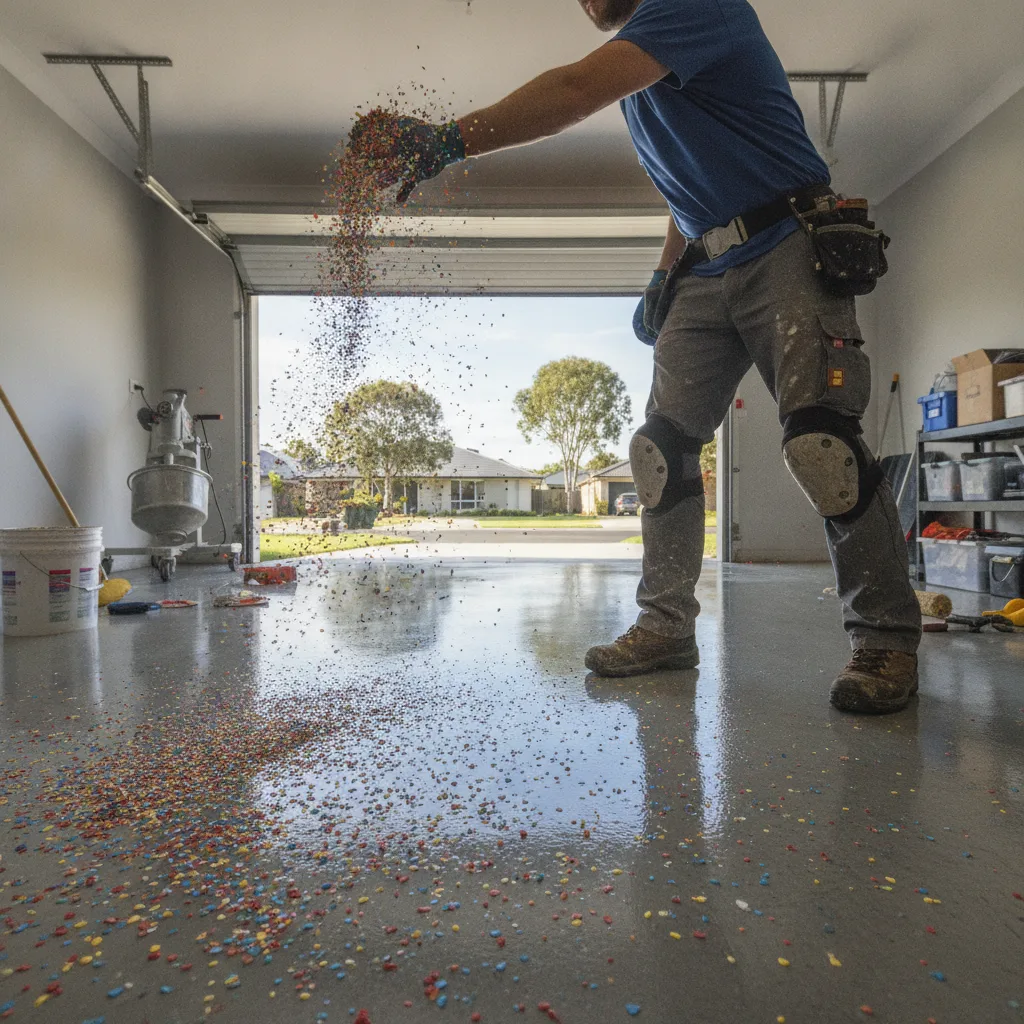
Once the slab is clean and profiled, the base coat goes down. This is a two-part epoxy mixed on site and applied with a squeegee and roller. While the base is still tacky (usually within about 20 to 30 minutes of application), the installer broadcasts the vinyl flake by hand, throwing it upward so it falls evenly across the wet surface. A full broadcast means the flake is thrown until the base coat is completely hidden. The floor then sits to cure, typically overnight.
Day two involves scraping any sharp or raised flake edges flat, vacuuming the loose chips and applying the clear topcoat. The topcoat locks everything in, provides the UV resistance, and sets the final sheen level (matte, satin or gloss). With a standard polyurethane topcoat, light foot traffic is usually possible within 24 hours, and vehicles can drive back in after around 72 hours. A polyaspartic topcoat shortens that significantly, with some systems ready for cars the same afternoon.
How long does an epoxy flake floor last and how do you maintain it?
A properly installed epoxy flake floor in a residential garage should last 10 to 15 years before needing any significant attention, and in many cases longer than that. The topcoat takes the wear, so the flake layer underneath stays intact. High-traffic areas near the entry or turning points where tyres scrub may show wear first, but localised re-coating is straightforward when the time comes.
Day-to-day maintenance is genuinely simple. A weekly sweep and an occasional mop with a mild detergent is all it needs. The sealed surface does not absorb oil, grease or water, so spills wipe up without staining. Avoid dragging sharp metal across the floor and keep heavy impacts (dropped tools, trailer hitches) in mind, as those can chip the topcoat. Neither of those scenarios is unique to epoxy: they would damage any floor covering.
One practical tip: if you park cars on the floor in summer, be aware that hot tyre pickup can occur with lower-quality epoxy systems. A quality polyaspartic or two-pack polyurethane topcoat rated for vehicle traffic will resist this. It is worth asking your installer specifically about hot-tyre resistance before they quote, because not all topcoat products are equal.
How do you choose the right epoxy flake flooring installer in Sunbury?
Choosing the right installer for epoxy flake flooring in Sunbury comes down to three things: evidence of previous work, transparency about the products they use and a clear process for concrete preparation. Any installer worth hiring should be able to show you photos of finished jobs, tell you exactly which base coat and topcoat systems they use, and explain their prep steps before they quote.
Ask whether they diamond grind or acid etch. Diamond grinding is the industry-preferred method because it opens the concrete mechanically and removes more contamination than acid etching alone. Ask about the topcoat: is it a single-component product or a proper two-pack system? Single-component floor paints are cheaper but far less durable, and they are sometimes marketed as epoxy when they are really just floor paint. A genuine epoxy base coat mixed on site is a clear sign you are dealing with a professional outfit.
Also check whether the quote includes a warranty on both the labour and the coating system. A reputable installer will back their work. If someone cannot tell you what products they are using or deflects questions about prep, keep looking.
Book epoxy flake flooring installation in Sunbury with Metal and Flake