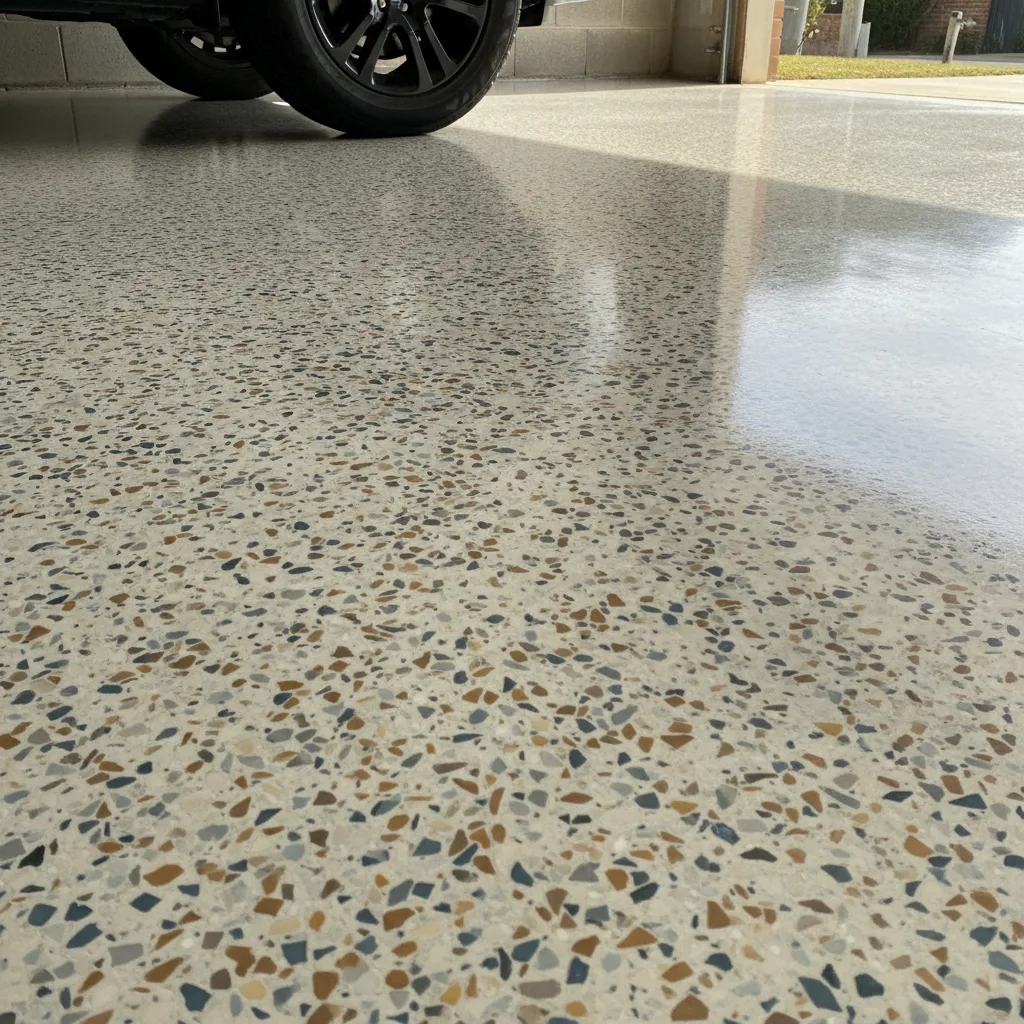
Epoxy Flake Flooring in Melbourne: A Complete Local Guide
Epoxy flake flooring Melbourne homeowners choose is a multi-coat resin system with decorative vinyl flakes broadcast into the wet base coat, then sealed under a clear topcoat. It produces a hard, slip-resistant, easy-to-clean surface that suits garages, workshops and commercial spaces. The result is durable, looks sharp and holds up well in Melbourne’s variable climate.
What exactly is epoxy flake flooring and how does it differ from plain epoxy?
Epoxy flake flooring uses the same two-part resin chemistry as a standard epoxy coating, but vinyl flakes (sometimes called colour chips or decorative flakes) are scattered across the wet base coat before it cures. The flakes add grip, mask minor surface imperfections and create a multi-tonal finish that hides tyre marks, dust and everyday wear far better than a solid-colour epoxy. A clear polyurethane or polyaspartic topcoat locks everything in and provides UV stability, which matters in a sun-exposed Melbourne garage where a plain epoxy might amber and yellow within a season or two.
The flake size and broadcast density are where the look really comes together. A full broadcast, where flakes are thrown until the base coat is completely covered, gives a terrazzo-style appearance. A partial broadcast leaves some base colour showing through for a speckled effect. Most residential garages in Melbourne go with a full broadcast because it hides oil drips and concrete staining almost completely.
Why is epoxy flake flooring a popular choice for Melbourne garages and workshops?
Melbourne’s climate throws everything at a garage floor: cold, wet winters, scorching summer days that can push concrete surface temperatures past 50°C, and the constant expansion and contraction that comes with it. Epoxy flake flooring handles that range well because the flake layer adds flexibility and the clear topcoat, particularly a polyaspartic formulation, resists UV degradation better than basic epoxy alone. The result is a floor that stays looking good through Melbourne’s four-seasons-in-one-day weather without peeling or going chalky.
Beyond weather performance, the slip resistance is a genuine safety benefit. The texture created by the embedded flakes gives foot and tyre traction that a smooth painted floor simply cannot match, which is why the system is common in workshops and showrooms as well as home garages. Cleaning is straightforward: a mop, warm water and a pH-neutral cleaner is usually all it takes. There are no grout lines to trap grime, no tiles to crack and no ongoing sealing schedule the way you have with concrete sealers.
How is epoxy flake flooring Melbourne installed from start to finish?
Preparation is where a professional installation lives or dies. The concrete slab must be mechanically ground or shot-blasted to open the surface profile so the epoxy bonds properly. Skipping this step, or using acid etching alone, is the most common reason DIY epoxy jobs peel within a year. Any cracks, spalls or expansion joints are repaired at this stage too, because the coating will faithfully mirror every defect beneath it.
Once the prep is done, the process runs like this. A moisture-tolerant primer goes down first if the slab is showing any readings above acceptable levels on a moisture meter. Melbourne slabs, particularly in older suburbs where sub-floor drainage can be patchy, often need this step. The pigmented epoxy base coat follows, and while it is still wet the vinyl flakes are broadcast by hand across the surface. After the base cures, excess loose flakes are swept and scraped back, leaving a flat, uniform chip layer. A coat of clear topcoat, either polyurethane for indoor applications or a polyaspartic for faster return-to-service times and better UV resistance, goes over the top. Most jobs are ready for foot traffic within 24 hours and vehicle traffic within 72 hours, though that varies with temperature and humidity on the day.
How much does epoxy flake flooring cost in Melbourne?
Costs vary depending on garage size, slab condition and the product system used, but a realistic ballpark for a standard double garage in Melbourne (around 36 to 40 square metres) using a professional-grade flake system sits in the range of $1,800 to $3,500 fully installed. That figure shifts upward if the slab has significant cracking or previous coatings that need grinding back, and it shifts again if you opt for a premium polyaspartic topcoat over a standard polyurethane one. A polyaspartic topcoat typically costs more but cures faster, handles higher temperatures during application and carries better UV ratings, all of which are relevant on a north-facing Melbourne garage that gets hammered by afternoon sun.
Comparing that to alternatives is useful context. Laying tiles over an existing slab involves labour, adhesive, grout and the ongoing risk of cracked tiles from concrete movement. Polished concrete requires a slab in very good condition and several grinding and densifying passes to achieve a quality result. For most residential garages, epoxy flake sits at a sweet spot: significantly better than a painted floor, more cost-effective than polished concrete on a slab that is not already in perfect shape, and faster to install than tiling.
What should Melbourne homeowners look for when choosing an installer?
The most important thing to check is how a contractor prepares the slab. Ask directly whether they use diamond grinding or shot blasting. If the answer is acid etching only, that is a red flag. Mechanical preparation creates a concrete surface profile (CSP) that epoxy manufacturers specify for proper adhesion. Acid etching alone rarely achieves that, particularly on older Melbourne slabs with existing sealers or oil contamination.
Ask about the product system too. There is a significant quality gap between a hardware-store epoxy kit and a commercial two-part system. Commercial-grade systems use higher solids content, meaning the dried film is thicker and more durable. A proper flake installation will typically have a total dry film thickness of around 1.5 to 2.5 millimetres across all coats, which is substantially thicker than a rolled-on paint product. Request a warranty and read what it covers. A quality installer will back their work for at least two to five years on both the materials and the labour, and they will specify what voids the warranty (things like using incompatible cleaning chemicals or dragging sharp metal across the surface).
References from recent Melbourne jobs are worth asking for. A local installer will have completed work in suburbs with similar soil conditions and climate exposure to yours, and looking at a six-month-old or twelve-month-old floor tells you a lot more than a freshly completed show floor does.
How do you maintain epoxy flake flooring once it is down?
Maintenance is genuinely low effort, which is one of the main reasons people choose the system. Sweep or blow out loose grit regularly, because fine particles act like sandpaper underfoot and can dull the topcoat over time. For washing, a mop with warm water and a mild, pH-neutral cleaner is enough for most jobs. Avoid bleach-based products and anything with citrus solvents, as these can break down the topcoat chemistry gradually. For oil spills in the garage, blot them up promptly rather than leaving them to sit, and a quick wipe with a small amount of methylated spirits on a cloth handles anything stubborn.
Depending on traffic levels, the clear topcoat may benefit from a maintenance re-coat every five to ten years. In a residential garage that sees two cars and weekend workshop use, many floors go well beyond that without needing attention. In a commercial workshop or showroom with daily forklift or trolley traffic, a shorter maintenance cycle makes sense. The base coat and flake layer underneath almost never need replacing as long as the topcoat is kept in reasonable condition.
Book epoxy flake flooring installation in Melbourne with Metal and Flake.