Epoxy Flake Flooring Bunnings Kits vs Professional Installation: What You Need to Know
Epoxy flake flooring from Bunnings is a budget entry point for homeowners who want a decorative floor coating, but DIY kits typically cover smaller areas, use thinner product layers and require careful surface prep that most guides understate. Professional installation uses industrial-grade materials, proper grinding and a multi-coat system that lasts significantly longer and looks far better.
What exactly does an epoxy flake flooring Bunnings kit include?
A Bunnings epoxy flake kit usually contains a two-part epoxy base coat, a small bag of vinyl colour flakes and a single clear topcoat. Most kits are designed for areas between 15 and 25 square metres, which is fine for a small laundry or a garden shed floor. The instructions assume a reasonably clean, dry slab and basic DIY skills, but the fine print around surface preparation is where most people get caught out.
The epoxy resin in a retail kit is typically a water-based or thin-solvent formula. That keeps it safe for home use and easy to roll on, but it also means a thinner dry-film thickness compared to the solvent-free, high-build epoxy systems a professional applicator brings to the job. Thinner film means less protection and a shorter service life, particularly in a garage where car tyres, hot rubber and abrasion are constant.
Colour flake options in store are limited to a handful of standard blends. If you want a custom broadcast, a full-flake coverage look or a specific colour to match your home interior, a kit from the paint aisle is not going to get you there.
Why does surface preparation matter so much with epoxy flake flooring?
Surface preparation is the single biggest reason DIY epoxy floors fail. Epoxy bonds to concrete mechanically, meaning the slab needs an open, porous surface for the coating to grip. Without proper prep, even the best product will peel within months. Professional applicators use diamond-grinding machines or shot blasters to achieve a concrete surface profile (CSP) of 2 to 3, a standard defined by the International Concrete Repair Institute. A retail kit guide might suggest acid etching with muriatic acid, which is messy, hazardous and rarely achieves a consistent profile on modern power-trowelled slabs.
Moisture is the other silent killer. Concrete slabs in Melbourne can hold trapped moisture, especially in older homes or areas with poor subfloor drainage. A professional will run a calcium chloride moisture test or use a tramex meter before coating. Pour epoxy over a damp slab and you will get osmotic blistering, those bubbles that pop up within weeks and ruin the finish entirely. A Bunnings kit does not come with a moisture test, and the instructions rarely warn you strongly enough about this risk.
Cracks, oil stains and existing coatings also need specific treatment before any epoxy goes down. Oil-contaminated concrete needs a degreaser, mechanical prep and sometimes a penetrating primer. Existing paint needs to be fully removed. These steps add time, cost and equipment that most DIYers do not account for when they pick up a kit on a Saturday afternoon.
How does the finished result actually compare between Bunnings kits and professional epoxy flake systems?
The gap in finish quality is noticeable and grows wider over time. A professionally installed epoxy flake floor typically uses a three-coat system: a high-build primer or basecoat, a full broadcast of vinyl flakes, and one or two layers of a polyaspartic or polyurethane topcoat. The topcoat is UV-stable, which matters in Melbourne where garage doors face north or west and sunlight hammers the floor for hours each day. UV-stable topcoats resist yellowing and chalking for years. Many retail kit topcoats are not UV-stable and will dull or yellow within a season outdoors.
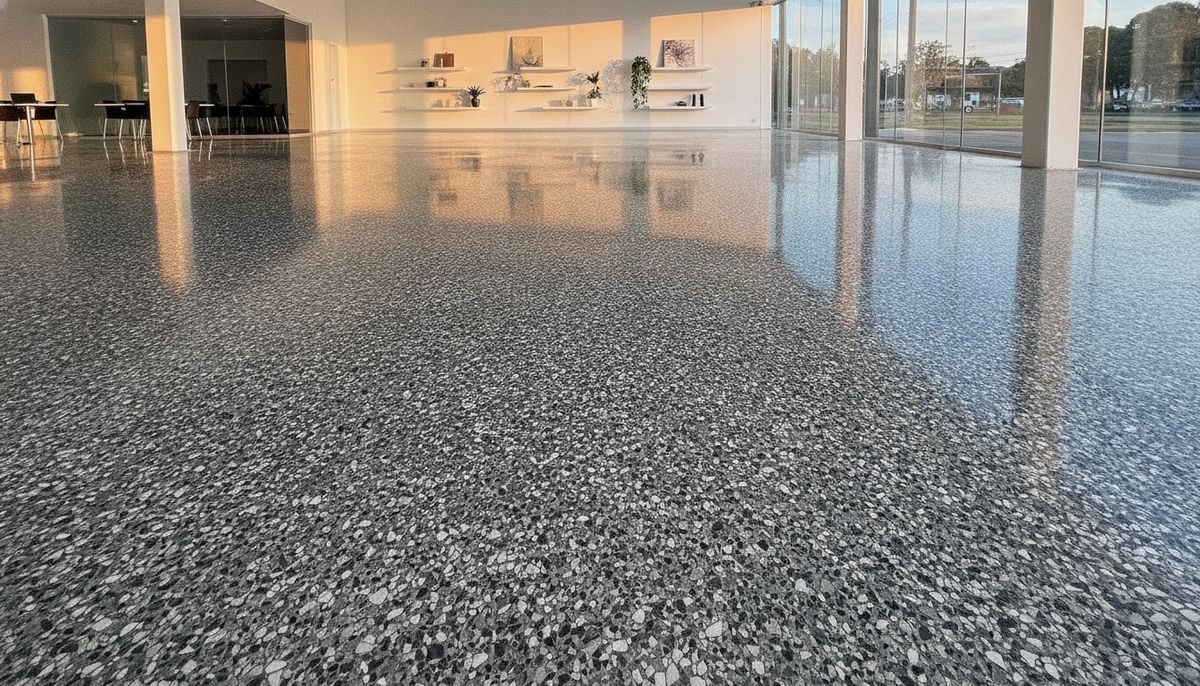
Flake coverage also looks different. A professional full-flake broadcast covers the basecoat entirely and creates a seamless, terrazzo-like texture. Most DIY kits use a partial broadcast, leaving patches of the base colour visible between flakes. Both are valid aesthetic choices, but a partial broadcast does show tire marks and scuffs more readily than a dense full-flake floor.
Durability figures are telling. A well-installed professional epoxy flake floor in a domestic garage should realistically last 10 to 15 years before needing a topcoat refresh. A retail kit, applied to a properly prepped slab and maintained carefully, might give you 3 to 5 years before peeling or wearing thin in high-traffic zones. The maths on cost per year of service life often favours the professional job, even before you factor in the time and frustration of a redo.
When does a Bunnings epoxy flake kit actually make sense?
There are situations where a retail kit is a perfectly reasonable choice. A garden shed floor, a small workshop used a couple of times a week, or a hobby space where looks are secondary to cost all suit a DIY approach. If you are renting and want a temporary upgrade to a laundry or utility room, a kit is an affordable option you can apply in a weekend.
It also helps if you already have access to a concrete grinder, some experience with two-part coatings and a genuine willingness to read the technical data sheet rather than just the back of the box. The people who get acceptable results from retail kits are usually those who treat the prep work as seriously as the coating itself.
For garages, showrooms, living areas, commercial spaces or anywhere that sees real daily traffic, the case for professional installation is hard to argue against. The material quality, preparation standards and finished result are simply in a different category.
What should you budget for epoxy flake flooring in Melbourne?
A Bunnings epoxy flake kit for a single-car garage (roughly 20 to 25 square metres) will cost somewhere in the range of $150 to $300 for materials. Add consumables like rollers, mixing paddles, gloves and tape and you are closer to $350 to $450 all up. That sounds attractive until you price in your time, which for a thorough prep and two-coat system is realistically a full weekend.
Professional epoxy flake flooring for a standard double garage in Melbourne generally runs from around $1,500 to $3,500 depending on the system specified, the condition of the slab and the access requirements. That covers diamond grinding, crack repairs, a full multi-coat system with a UV-stable topcoat, and a clean finish with sharp edges around the perimeter. Most professional installers also offer a workmanship warranty, something a retail kit cannot provide.
If you are weighing up the two options for a space you care about, it pays to get a professional quote first. You might find the price difference is smaller than expected once you account for all the materials, prep equipment and time a DIY job actually demands.
Get a professional epoxy flake quote from Metal and Flake.