Cost of Epoxy Garage Floor Coating: 2026 Guide for Melbourne
The cost of epoxy garage floor coating in Melbourne typically sits between $30 and $80 per square metre, depending on the system used, the condition of the concrete, and the finish you choose. A standard double garage (around 36 sqm) usually comes in between $1,100 and $2,900 fully installed, with premium flake or metallic finishes sitting toward the higher end of that range.
What does the cost of epoxy garage floor coating actually include?
The cost of epoxy garage floor coating covers more than just the product poured on the floor. A proper installation includes concrete preparation (usually diamond grinding), a primer coat, the body coat or broadcast layer, and a clear topcoat for durability. Labour, prep equipment, and material disposal are all part of the total figure a reputable installer quotes you.
Here is a rough breakdown of what makes up the price on a typical residential garage job in Melbourne:
- Concrete preparation: 20 to 35 percent of the total cost. Diamond grinding opens up the concrete surface so the epoxy bonds properly. Skip this step and the coating will peel, no matter how good the product is.
- Materials: Primer, body coat, decorative flakes or pigment, and a polyurethane or polyaspartic topcoat. Better products cost more upfront but last significantly longer.
- Labour: A two-person crew on a double garage typically takes one to two days. Regional Melbourne jobs may carry a travel surcharge.
- Repairs: Crack filling and surface patching are usually quoted separately. Badly damaged concrete can add $150 to $400 to the job.
The short version: if a quote looks unusually low, check what preparation method is included. A cheap acid-wash prep instead of mechanical grinding is often where budget jobs cut corners, and it shows within a year or two.
What factors push the price up or down?
Several practical factors move the cost of epoxy garage floor coating around, and understanding them helps you compare quotes fairly rather than just picking the cheapest number.
Floor size and shape. Larger floors bring the per-square-metre rate down slightly because setup costs are spread over more area. Odd shapes with lots of corners, steps, or drains take longer to prep and coat, so they cost more per square metre than a clean rectangle.
Concrete condition. New concrete that was poured and cured correctly is relatively straightforward to coat. Old concrete with oil stains, moisture issues, previous coatings, or significant cracking needs more prep time and sometimes specialist treatment. Oil-contaminated concrete, common in older garages, may need a degreasing etch cycle before grinding can even begin.
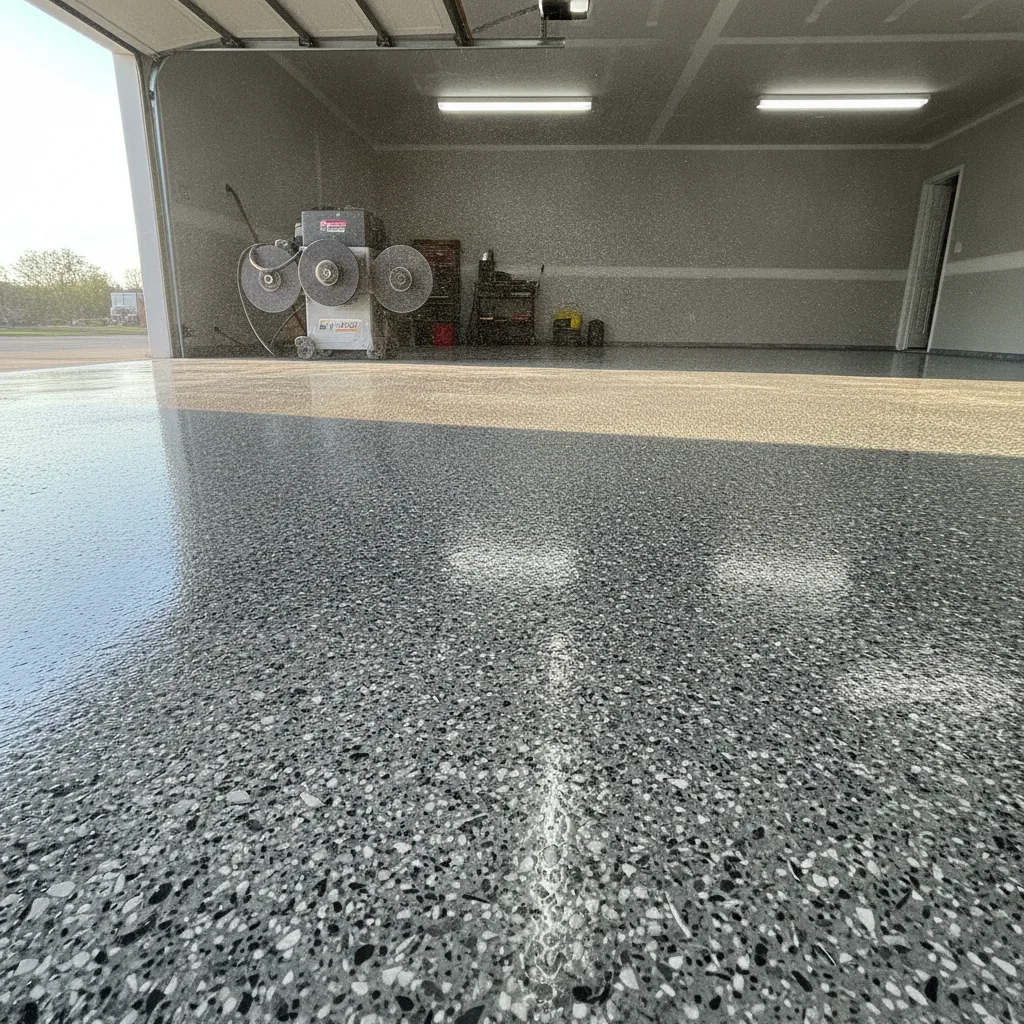
System type. A basic solid-colour epoxy is the most affordable option. A full decorative flake system (like the kind Metal and Flake installs) adds a broadcast vinyl flake layer that hides imperfections, adds texture for grip, and looks sharp for years. Metallic pigment systems with swirled effects are the premium tier. Expect to pay roughly 20 to 40 percent more for a flake or metallic finish compared to a plain single-colour coat.
Topcoat choice. A standard epoxy topcoat does the job, but a polyurethane or polyaspartic clear coat is harder, more UV stable, and resists hot tyre pick-up far better. Polyaspartic topcoats in particular cure faster (which means a quicker return to use) and hold their sheen longer on a Melbourne garage floor that sees summer heat.
Access and logistics. If the garage is used for storage, clearing it out is your job. Installers are not removalists. A clear, empty floor on day one keeps the job on schedule and avoids re-attendance fees.
How do Melbourne epoxy prices compare to DIY kits?
DIY epoxy kits available from hardware stores in Melbourne typically cost $150 to $400 for a double garage. They look attractive on price, but the trade-off is real: most consumer kits are water-based epoxy paints with low solids content, not the thick, high-build systems a professional installer uses. They bond less aggressively to concrete, scratch more easily, and commonly peel within two to three years, especially under vehicle traffic and Melbourne’s temperature swings.
A professional high-build epoxy system with a proper polyurethane or polyaspartic topcoat, applied over mechanically prepared concrete, routinely lasts ten or more years with basic maintenance. When you divide the professional cost across that lifespan, the per-year figure is often comparable to replacing a DIY kit every few years and doing the labour yourself each time.
The other consideration is bond failure. If a DIY coat peels and you later want a professional system applied, the old coating has to be fully removed first. That adds cost to the professional job that would not have existed on bare concrete.
What is a realistic budget for a Melbourne garage in 2026?
To give you a concrete working guide rather than a vague range, here are typical installed prices for residential garages in Melbourne as of 2026:
- Single garage (approx. 18 sqm): $700 to $1,500 depending on system and prep required.
- Double garage (approx. 36 sqm): $1,100 to $2,900 for a quality flake or solid-colour system.
- Triple garage or large workshop (55 sqm+): $1,800 to $4,500+. Commercial-grade systems and longer prep time drive the upper end.
These figures assume concrete in reasonable condition and a standard flake broadcast finish with a clear topcoat. Add $200 to $600 if your slab needs significant crack repairs or has heavy oil contamination.
One practical tip: get at least two quotes and make sure each one specifies the preparation method, the product system being used, and the number of coats. A quote that simply says “epoxy floor coating” without those details is hard to compare fairly against one that spells everything out.
Are there ongoing costs after the coating is installed?
Ongoing costs for an epoxy garage floor are minimal, which is a big part of why they are popular. Regular sweeping and an occasional mop with a pH-neutral cleaner keeps the surface looking good. Avoid harsh degreasers or bleach-based products, which can dull the topcoat over time.
A quality polyaspartic or polyurethane topcoat does not need resealing on any set schedule. If the floor sees very heavy use or chemical spills over many years, a maintenance topcoat may eventually make sense, but most residential garage floors will go a decade or more without needing any remedial work if the initial installation was done properly.
The real cost saving is what you avoid: concrete dust, oil absorption into the slab, and the effort of cleaning bare concrete. An epoxy surface wipes clean in minutes. That practical benefit is worth factoring into the value equation alongside the upfront price.
Ready to get a real number for your garage rather than a ballpark? Request a garage floor coating price from Metal and Flake.