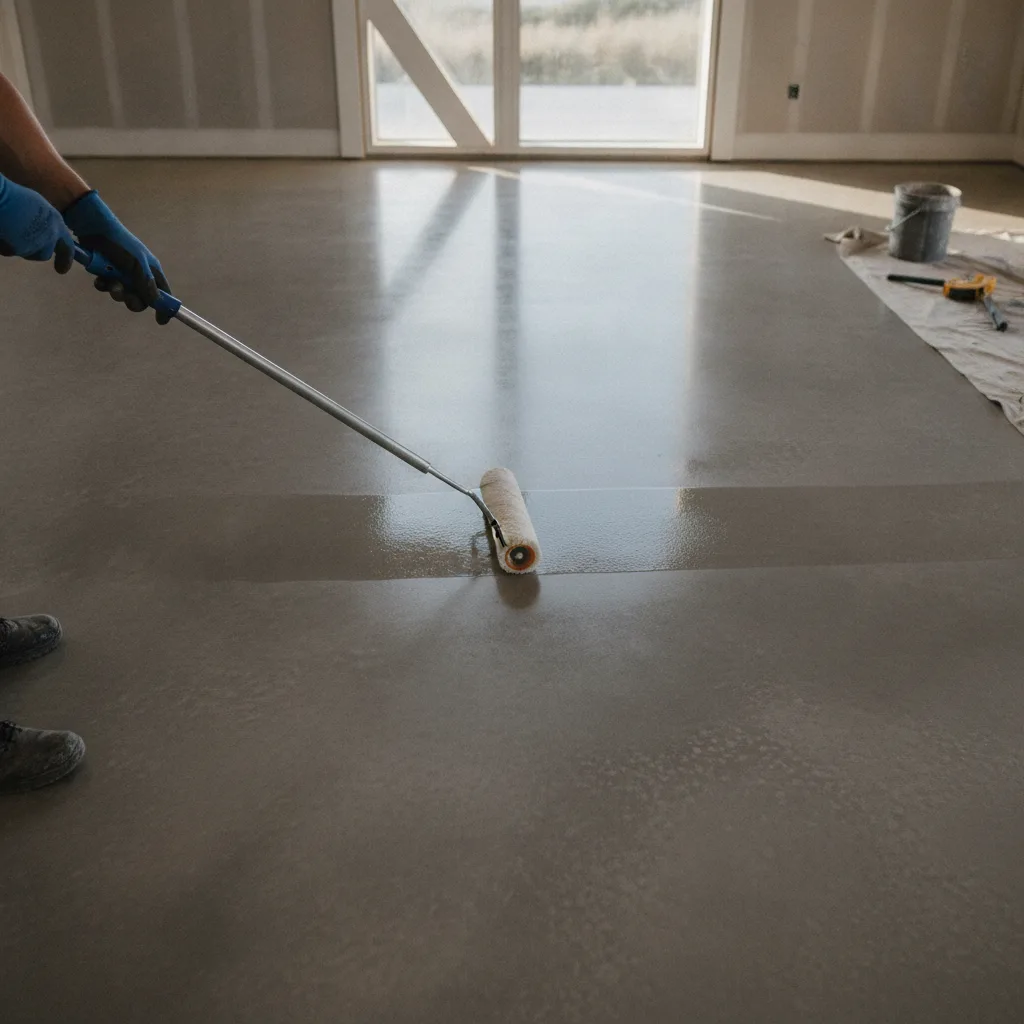
Concrete Floor Sealing in Williamstown: Options for Local Homes
Concrete floor sealing in Williamstown protects bare or polished slabs from moisture, salt air, stains and everyday wear. The right sealer depends on whether you want a natural matte look, a high-gloss finish or something in between. Most residential jobs use a penetrating sealer, an acrylic topcoat or a polyurethane system, each with different durability and maintenance requirements.
Why does concrete floor sealing matter so much in Williamstown?
Williamstown sits right on Port Phillip Bay, and that coastal position means higher humidity, salt-laden air and morning condensation that can work its way into an unsealed slab year-round. Unsealed concrete absorbs moisture easily, which leads to surface dusting, efflorescence (that white powdery residue), and gradual surface breakdown that becomes expensive to repair. Sealing the slab cuts off that path entirely, keeping the concrete stable and clean for years.
Beyond the coastal factor, Williamstown homes tend to mix heritage weatherboard cottages with newer builds and converted industrial spaces close to the foreshore. A lot of those older homes have concrete subfloors that were never properly finished. Sealing gives those floors a second life without the cost and disruption of ripping them out and starting over.
Salt air accelerates the corrosion of any reinforcing steel inside the slab, too. A quality sealer acts as a barrier that slows chloride ingress, which is a real concern for ground-level slabs within a kilometre or two of the bay.
What sealer options are available for concrete floors in a home?
Homeowners choosing concrete floor sealing have three main product categories to pick from: penetrating sealers, topical acrylic sealers, and polyurethane or epoxy-based coating systems. Penetrating sealers soak into the concrete and create an invisible, breathable barrier. Topical acrylics sit on the surface and add a sheen. Polyurethane systems build a hard, abrasion-resistant film that handles heavy foot traffic and wet areas with ease.
Here is a plain-English breakdown of each option:
- Penetrating sealers (silane/siloxane). These soak in and repel water without changing the look of the floor. They are ideal for outdoor entertaining areas or driveways where you want protection but not a glossy film. Reapplication is typically needed every three to five years.
- Acrylic topcoat sealers. Water-based or solvent-based acrylics go on quickly and give a low to medium sheen. They are budget-friendly and easy to recoat, but they scratch and scuff more readily than harder systems. Expect to recoat every two to four years in a busy household.
- Polyurethane coatings. A two-part polyurethane is significantly harder than acrylic and holds up well in laundries, kitchens and open-plan living areas with polished concrete. It resists household chemicals, cooking oil spills and pet accidents without staining into the slab.
- Epoxy base with polyurethane topcoat. This is the system most people associate with a high-end polished concrete look. The epoxy fills the slab surface and gives good chemical resistance; the polyurethane topcoat adds UV stability and scratch resistance. This combination is popular in Williamstown renovations where the concrete becomes the feature floor rather than a hidden substrate.
How do you prepare concrete before sealing?
Concrete floor preparation before sealing is the step that determines how long the job lasts. At a minimum, the slab needs to be clean, dry and free of any previous coatings, oils, paint or curing compounds that would stop the sealer bonding properly. Skipping prep is the single biggest reason sealed floors peel, bubble or go cloudy within twelve months.
A professional preparation sequence for a residential slab typically includes:
- Diamond grinding or shot blasting. This opens the pores of the concrete and removes any surface laitance (the weak, dusty top layer). Diamond grinding is the more common choice indoors because it creates less mess than shot blasting.
- Crack and spall repair. Any cracks wider than a hairline get filled with a flexible polyurethane filler or rigid epoxy, depending on whether the crack is still moving.
- Moisture testing. A calcium chloride test or an in-situ RH probe checks moisture vapour emission. If the reading is too high and you seal over it, the moisture gets trapped and causes the coating to lift. This is especially relevant in older Williamstown homes where the slab may sit directly on ground without a proper vapour barrier beneath it.
- Final clean. A thorough vacuum and wipe-down removes all grinding dust before any product goes down.
Rushing any of these steps costs more in the long run. A properly prepared slab with a quality polyurethane topcoat can realistically last ten years or more before it needs a full recoat.
What finish level suits a coastal Williamstown home?
The finish you choose comes down to how the room is used and what aesthetic you are after. For a beachside suburb like Williamstown, many homeowners lean toward a satin or low-sheen finish rather than a full mirror gloss, because it hides sand and grit tracked in from nearby Williamstown Beach and shows less footprinting day to day.
For open-plan living and dining areas, a light grind and seal with a satin polyurethane topcoat is a practical, good-looking option that ties in with the coastal palette many local homes use. For garages, workshops or laundries, a full epoxy base coat followed by a polyurethane topcoat gives the durability those harder-working spaces need.
Colour is another consideration. Penetrating sealers and clear polyurethanes keep the natural grey tone of the concrete. If you want a warmer or more distinctive look, a tinted base coat or a metallic epoxy system (like a flake system) adds character without covering the floor in tiles or timber. Metallic and flake finishes have become popular in Williamstown renovations, particularly in converted terrace homes and newer builds near the foreshore, because they give a floor genuine visual interest that holds up to daily life.
How long does concrete sealing take and what disrupts the household?
For a standard living area of around 40 to 60 square metres, a professional concrete floor sealing job typically takes one to two days on the tools, plus a curing period before the floor can be walked on. A two-part polyurethane system usually needs 24 hours before light foot traffic and around 72 hours before moving furniture back in. Full cure, where the coating reaches its maximum hardness, takes around seven days.
The main household disruption is moving furniture out of the space and keeping pets and kids off the wet surface. Solvent-based products have a strong smell during application, so good ventilation matters. Water-based systems are lower odour, which makes them easier to manage in occupied homes. Your applicator will advise which product suits your timeline and tolerance for fumes.
Planning ahead is straightforward. Most jobs in Williamstown can be quoted, prepped and completed within a single week once you have a start date locked in.
If you are ready to get a proper quote and see what your slab can look like, Book concrete floor sealing in Williamstown with Metal and Flake.