Concrete Floor Coating in Preston: Which System Is Right for You?
Choosing the right concrete floor coating in Preston comes down to three things: how the space is used, how much traffic it takes, and what finish you want to live with long term. Epoxy, polyaspartic and flake broadcast systems each have genuine strengths. Match the system to your slab and your lifestyle and you will not go wrong.
What makes a concrete floor coating different from regular paint?
A concrete floor coating is a chemically bonded system, not a surface-level paint. Standard floor paint sits on top of the concrete and peels when moisture, hot tyres or heavy gear put it under stress. A proper coating soaks into the prepared slab and cures into a hard, seamless layer that is typically two to four times thicker than paint and far more resistant to abrasion, chemicals and impact.
That distinction matters in a suburb like Preston, where a lot of homes have older slabs that have seen decades of use. An uncoated or paint-only slab will keep absorbing oil, dust and moisture. A coated slab is sealed. You can hose it down, park on it and not worry about staining.
The other practical point: paint can be rolled on by anyone on a Saturday afternoon. A quality coating system requires surface prep, usually by diamond grinding, to open up the concrete so the coating bonds correctly. Skipping that step is the single biggest reason coatings fail.
What are the main concrete floor coating systems available in Preston?
The three systems you will come across most often are standard epoxy, polyaspartic and a flake broadcast system. Each suits a different situation. Standard epoxy is a slower-curing, solids-rich coating that builds up good film thickness. Polyaspartic cures fast, handles UV exposure well and can be walked on within hours. A flake broadcast system adds vinyl flakes between coats for texture, slip resistance and a decorative finish. Most residential and commercial jobs in Melbourne’s northern suburbs call for one of these three, or a combination.
Here is a quick breakdown of where each system earns its keep:
- Epoxy base coat: Best for garages and workshops where you want maximum build and chemical resistance. Slower cure means the installer has more working time to get the finish right.
- Polyaspartic top coat: Ideal as a wearing surface over an epoxy base, or as a standalone system on light-traffic areas. It is UV stable, so it will not yellow near roller doors or skylights.
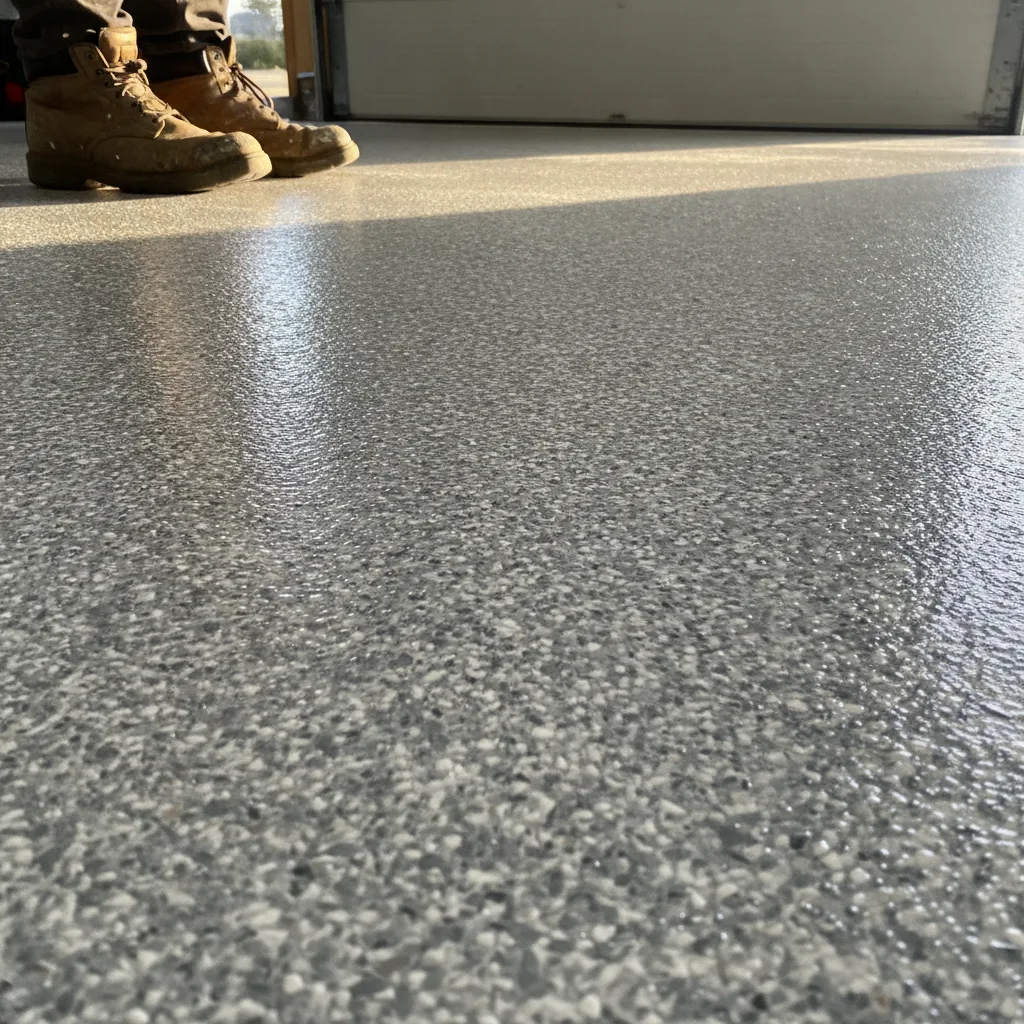
- Full flake broadcast: The most popular residential option in Melbourne right now. Vinyl flakes are scattered into the wet base coat, then locked in with a clear polyaspartic top coat. The result is a durable, textured floor that hides everyday scuff marks well.
How do you know which concrete floor coating system suits your Preston slab?
The right system depends on your slab condition, the space’s purpose and your expectations for maintenance. A single-car garage used for weekend parking has very different demands from a double garage doubling as a home workshop. Assess those three factors honestly and the answer usually becomes clear without a lot of second-guessing.
Start with the slab itself. Preston has a mix of housing stock, from post-war brick homes with 60-plus-year-old slabs to newer townhouses. Older slabs often have surface laitance, minor cracking or contamination from oil. All of that needs to be dealt with before any coating goes down. Diamond grinding removes laitance and opens the pores. Cracks are filled with a flexible epoxy filler. If moisture is coming up through the slab, a moisture-tolerant primer goes on first. None of this is optional if you want the coating to last a decade or more.
Next, think about the space. For a home garage that sees two cars and a bit of storage, a full flake system in a polyaspartic top coat is hard to beat. It looks sharp, it is easy to clean and the flakes add enough texture to keep it slip-safe when wet. For a workshop where grinding swarf and cutting oils are on the floor regularly, a high-build epoxy base with a chemical-resistant top coat makes more sense. For a commercial space in Preston’s growing strip of converted warehouses and small factories, a polyaspartic system applied in a single day is often preferred because the downtime is minimal.
Budget is real, too. A basic single-coat epoxy system will cost less upfront, but it will likely need maintenance sooner. A two-coat system with a proper polyaspartic top coat costs more on day one and typically outlasts the cheaper option by several years. Over a ten-year horizon, the better system usually wins on cost.
How long does a concrete floor coating last in a Preston garage?
A correctly installed concrete floor coating in a residential garage should last between ten and fifteen years with basic maintenance. The key variables are surface preparation quality, the number of coats applied and how the floor is used day to day. Floors that see heavy point loads, constant chemical exposure or abrasive traffic will wear faster than a standard two-car garage floor.
Maintenance is straightforward. Sweep regularly to remove grit, because fine particles act like sandpaper under foot traffic. Mop with a pH-neutral cleaner. Avoid dragging sharp or heavy metal objects directly across the surface. If a small area chips or scuffs, it can often be spot-repaired without redoing the whole floor, which is a genuine advantage over tiles or painted concrete.
One thing worth knowing: polyaspartic top coats are measurably harder than standard epoxy finishes. The Shore D hardness of a quality polyaspartic sits around 80 or above, which is why installers use it as the wearing surface in high-traffic situations. That hardness translates directly to scratch resistance and gloss retention over time.
What should you ask a coating contractor before you book?
Before signing anything, ask the contractor these four questions directly. What preparation method do you use, and do you diamond grind or shot blast? What is the total dry film thickness of the finished system? What is the cure time before I can drive on it? And what does your warranty cover specifically?
Any experienced installer will answer all four without hesitation. Vague answers about prep or warranty are a red flag. Diamond grinding should be the standard, not an upsell. Total film thickness for a quality two-coat system typically sits between 250 and 400 microns dry. Drive-on cure time for a polyaspartic top coat is usually 24 hours. Warranty terms should be written down, not verbal.
It is also worth checking whether the contractor operates locally. A team that works regularly in Preston and Melbourne’s north understands the local climate, typical slab conditions and the style of garage layouts common in the area. That local knowledge shortens the diagnosis time and means fewer surprises on the day.
Ready to get a floor that actually holds up? Book a concrete floor coating in Preston with Metal and Flake.