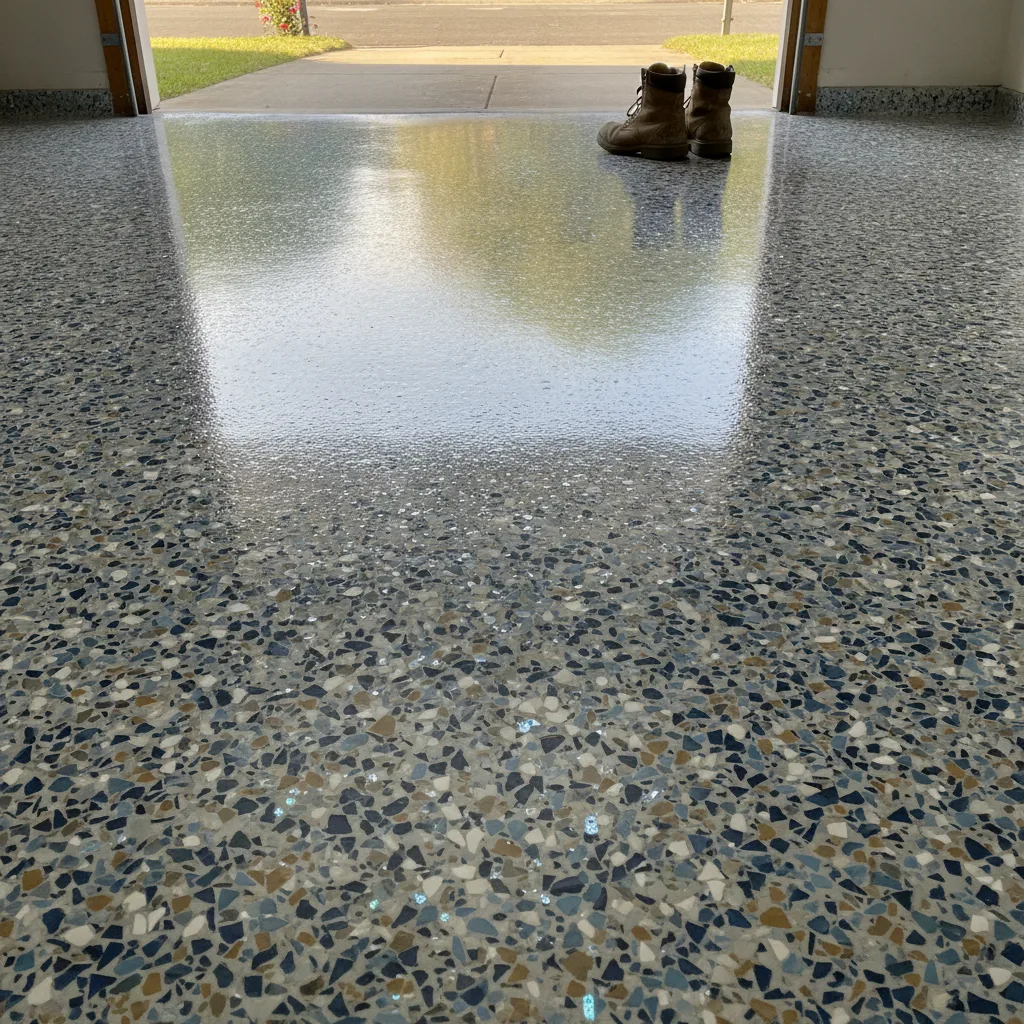
Concrete Floor Coating in Hoppers Crossing: Local Options Explained
Concrete floor coating in Hoppers Crossing gives homeowners a durable, easy-clean surface over bare or ageing concrete. The main options are epoxy, polyaspartic and polyurethane coatings. Each suits different budgets and uses. Epoxy is the most popular for garages, offering hard-wearing protection with a high-gloss finish that resists oil, chemicals and foot traffic for years.
What types of concrete floor coating are available in Hoppers Crossing?
The most common concrete floor coatings available to Hoppers Crossing residents are epoxy (including flake and metallic finishes), polyaspartic and polyurethane. Epoxy is the go-to for garages and workshops. Polyaspartic cures faster and handles UV better, making it a strong pick for areas with natural light. Polyurethane is often used as a topcoat for added scratch resistance.
Here is a quick rundown of the three main coating types you will come across:
- Epoxy coatings: A two-part resin system that bonds hard to concrete. Usually 2 to 3 mm thick once a broadcast flake layer is added. Excellent for garages, man caves and home workshops. Handles heavy vehicle loads and oil spills without complaint.
- Polyaspartic coatings: A newer generation product that cures in a matter of hours rather than days. UV-stable, so the colour will not yellow when sunlight hits it. Often used as a topcoat over epoxy or as a standalone system in lighter-traffic areas.
- Polyurethane coatings: Softer and more flexible than epoxy, which makes it better at handling thermal movement in a slab. Commonly used as a protective clear topcoat to extend the life of an epoxy base.
Most Hoppers Crossing homeowners end up with a layered system: an epoxy base coat, a decorative flake broadcast, and a polyaspartic or polyurethane topcoat. That combination gives you looks, durability and a slip-resistant texture all in one job.
Why does concrete preparation matter so much for floor coatings?
Concrete preparation is the single biggest factor in how long a floor coating lasts. Without proper surface prep, even the best epoxy or polyaspartic product will peel within a year. The slab must be ground or shot-blasted to open the concrete profile so the coating can bond at a mechanical level, not just sit on top like paint.
This is where a lot of DIY jobs fall short. Acid etching (the old-school method) simply does not open the concrete surface deeply enough for a coating to grab hold properly. Professional applicators use diamond grinding machines that cut a concrete surface profile (CSP) of around CSP 2 to CSP 3, as specified by the International Concrete Repair Institute. That gives the epoxy something to sink into.
On top of grinding, any cracks, spalls or hollow spots need to be filled with an epoxy mortar or polyurea joint filler before coating goes down. Skip that step and you will see those defects telegraphing through your finished floor within months. Moisture also matters. Hoppers Crossing sits in Melbourne’s west, where older slabs can carry ground moisture. A moisture test before coating is not optional. If moisture vapour transmission is too high, a moisture-tolerant primer needs to go down first or you risk bubbling and delamination down the track.
How long does a concrete floor coating last in a Hoppers Crossing garage?
A professionally applied epoxy or polyaspartic concrete floor coating in a Hoppers Crossing garage will typically last 10 to 20 years with basic maintenance. The lifespan depends on coating thickness, the quality of surface preparation, the volume of traffic, and whether a UV-stable topcoat was used. Thin, single-coat DIY systems generally last 2 to 5 years before peeling or fading.
A few things accelerate wear in a typical home garage:
- Hot tyre pick-up: Tyres heat up on the road and, when parked on a warm epoxy floor, can bond to the surface and peel the coating when the car moves. A polyaspartic or polyurethane topcoat prevents this.
- Chemical exposure: Engine oil, brake fluid and battery acid are the usual culprits. Standard epoxy handles all three well, but prolonged pooling of any chemical will eventually cause discolouration.
- UV exposure: Standard epoxy yellows in direct sunlight. If your garage door is often open and afternoon sun hits the floor, a UV-stable topcoat is worth the extra cost.
Maintenance is simple. Sweep regularly and mop with a pH-neutral cleaner. Avoid bleach-based products on epoxy. A light re-topcoat every 7 to 10 years can restore the gloss and add another decade to the floor’s life.
What does a concrete floor coating job typically cost in the western suburbs?
Pricing for concrete floor coating in Melbourne’s western suburbs, including Hoppers Crossing, generally ranges from around $30 to $80 per square metre for a professional system, depending on the coating type, the condition of the existing slab, and the level of decorative finish chosen. A standard two-car garage of roughly 36 square metres would typically land between $1,100 and $2,900 fully installed.
The variables that push price up or down include:
- Slab condition: Heavy cracking, spalling or contamination from old oil means more prep work and more materials. A clean new slab costs less to coat.
- Coating system: A basic solid-colour epoxy is cheaper than a full flake broadcast with a polyaspartic topcoat, or a premium metallic finish.
- Floor size and shape: Odd shapes with lots of edges and obstacles take more time than a simple square garage.
- Access: If equipment needs to travel up steps or through narrow passages, expect a small surcharge.
It pays to get at least two quotes and make sure each one specifies the same scope: surface grinding, crack repair, number of coats, and the brand of product being used. A quote that looks cheap on paper may be skipping the prep work or using a thin single-coat system.
What finish options suit a Hoppers Crossing home garage?
The most popular finish options for a home garage concrete floor coating in Hoppers Crossing are full-flake broadcast, solid colour and metallic epoxy. Full-flake is the most practical: the vinyl flakes hide minor surface variation, provide a natural non-slip texture, and look sharp in just about any colour combination. Solid colour is cleaner and more minimal. Metallic gives a high-end, showroom effect.
Full-flake systems are the workhorse of residential garage floors and for good reason. The flakes are scattered across the wet epoxy base coat until the floor is completely covered, then locked in with a clear topcoat. The result is a surface that hides tyre marks, dust and the odd dropped tool far better than a solid colour would. You can also choose partial flake for a more speckled, terrazzo-style look.
Metallic epoxy uses pigmented metallic powders that flow and swirl during application, creating a one-of-a-kind marbled effect. No two metallic floors look exactly the same. They work best in showrooms, home gyms or feature areas where the floor itself is a talking point. They do show dust and fine scratches more than a flake system, so factor that into your decision if the space gets heavy daily use.
Colour choice is broader than most people expect. Reputable applicators in Melbourne’s west carry dozens of flake blends and solid colours, so you are not locked into grey or beige. Bring a photo of your garage interior, your car, and any storage units when you meet with a coatings specialist. It helps nail the right combination faster.
Get a concrete floor coating quote in Hoppers Crossing from Metal and Flake