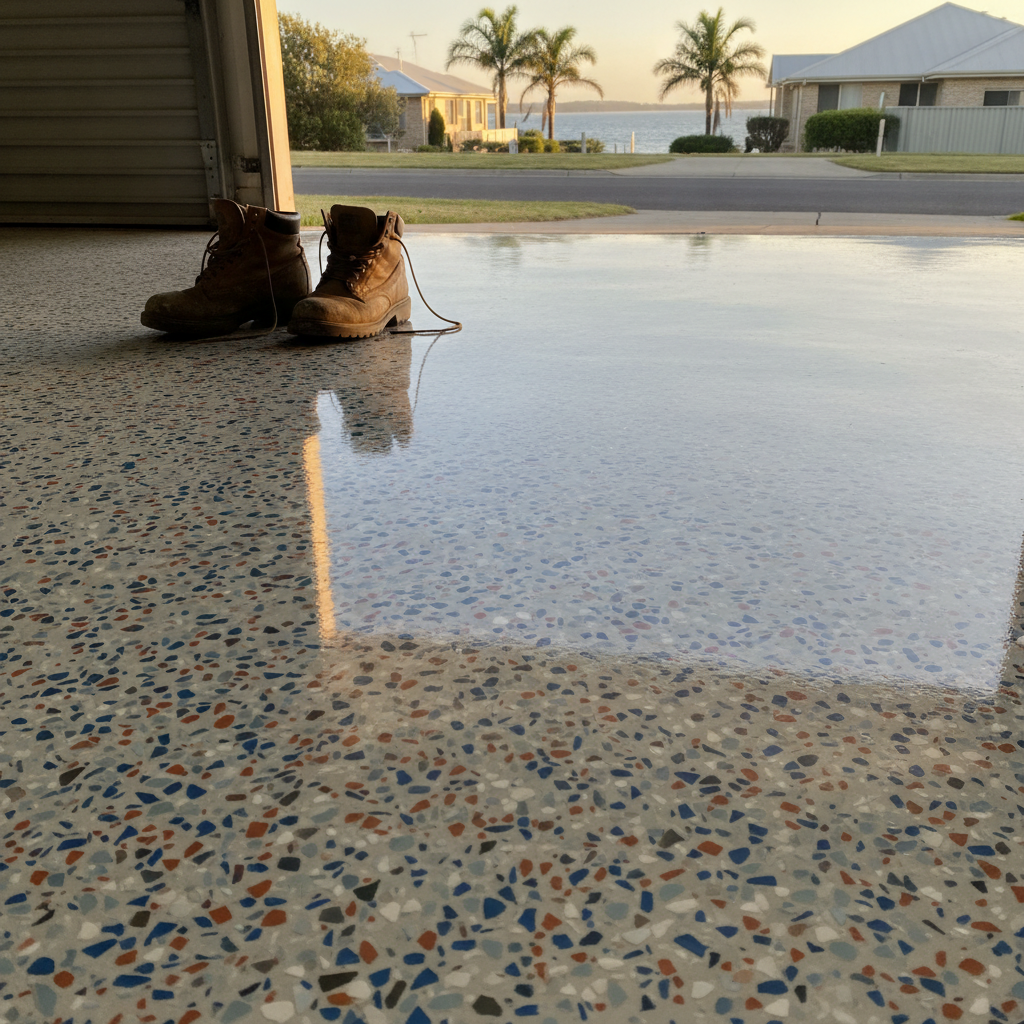
Concrete Floor Coating in Williamstown: Protecting Your Slab Near the Bay
Concrete floor coating in Williamstown is one of the smartest things you can do for a garage, workshop or residential slab in this suburb. The combination of salt-laden bay air, seasonal humidity and a strong coastal UV load accelerates slab deterioration faster than most people expect. A quality coating seals the surface, blocks moisture ingress and gives your floor a finish that holds up for years.
Why does coastal living make concrete floor coating in Williamstown so critical?
Concrete floor coating in Williamstown matters more than in inland suburbs because salt air attacks unprotected concrete at a chemical level. Airborne chlorides work into the surface pores, encourage the steel reinforcement to rust and cause spalling from the inside out. A sealed, coated slab blocks that cycle before it starts, saving you from costly remediation work down the track.
Williamstown sits right on Hobsons Bay, which means the western wind picks up salt spray off the water and deposits it on every exposed surface, including your garage or workshop floor. Left bare, a concrete slab in this environment will start showing surface dusting, pitting and staining within a few seasons. Moisture also wicks up from the ground through the slab, especially in older homes on the foreshore streets where drainage has changed over decades of development.
A properly applied floor coating cuts off both attack routes. It seals the top surface against salt, oil and chemical spills while also slowing moisture vapour transmission. That dual protection is why tradies and homeowners in bayside suburbs treat floor coatings as maintenance, not a luxury.
What types of floor coating work best for a bayside environment?
Epoxy-based floor coatings perform exceptionally well in coastal environments because they form a hard, chemically resistant film that bonds tightly to prepared concrete. Two-part epoxy systems are particularly suited to Williamstown conditions: they resist salt, petroleum products and the constant humidity that comes with living near the bay, and when finished with a UV-stable polyurethane topcoat they won’t yellow or chalk from sun exposure.
Polyurethane topcoats are the finishing layer most professionals recommend over a base epoxy in coastal areas. Epoxy alone can chalk and yellow under UV radiation, which in Williamstown means a west-facing garage floor can start looking tired within a couple of years if it hasn’t got that UV-stable top layer. Polyurethane holds colour and gloss far better outdoors or in bright, sun-hit spaces.
Decorative flake systems, where coloured vinyl flakes are broadcast into the wet base coat and then sealed under a clear topcoat, are a popular choice locally. The flakes add texture that helps with slip resistance (useful in a workshop where wet shoes are common), and they hide the minor surface marks that accumulate in a working garage. The finish looks polished without being impractical.
Metallic epoxy coatings are another option worth knowing about. Metallic pigments are blended through the epoxy to create a marbled, flowing effect that can look striking in a showroom, studio or high-end garage. These systems require skilled application to get the flow pattern consistent, so the quality of the installer matters as much as the product.
How should you prepare a Williamstown slab before coating?
Proper preparation is what separates a coating that lasts a decade from one that starts peeling within a year. For concrete floor coating in Williamstown, the prep process typically involves mechanical diamond grinding to open up the surface pores, removal of any existing sealers or contamination, repair of cracks and spalls with appropriate fillers, and a final check on moisture vapour emission rates before any product goes down.
Moisture is the biggest variable on older Williamstown slabs. Many homes in the suburb date from the early to mid twentieth century, and their slabs were poured before modern moisture barriers were standard. A simple plastic sheet test left on the slab overnight can indicate whether you have a moisture problem, but a professional will use a calibrated moisture meter to get a reading you can actually act on. If vapour emission is too high, a moisture-tolerant primer or a specific moisture barrier coat goes down before the main system.
Grinding rather than acid etching is the current industry standard for a good reason. Grinding removes the top layer mechanically, creating a consistent profile across the whole floor. Acid etching can work on clean slabs but is unreliable on contaminated concrete, and it leaves behind residual salts if not rinsed thoroughly, which is counterproductive when you’re already dealing with a salt-rich coastal environment.
Crack repairs should be done with a semi-flexible filler on slabs that see temperature movement. Williamstown’s coastal location means slabs can cycle through a reasonable temperature range between summer and winter, and a rigid filler will crack again. A polyurea or semi-flexible epoxy filler moves with the slab and keeps the repair sealed.
How long does a concrete floor coating last near the bay?
A professionally installed concrete floor coating in a coastal area like Williamstown will typically last between eight and fifteen years with basic maintenance, depending on traffic, UV exposure and the quality of the original preparation and products. A garage floor that sees daily car traffic and occasional chemical spills sits at the lower end of that range; a workshop with moderate foot traffic and no vehicle use sits toward the higher end.
Maintenance is straightforward. A neutral-pH cleaner and a mop is all it takes for routine cleaning. Avoid harsh solvents and high-pressure steam cleaning directly on the surface, as either can soften or blister a coating over time. If the topcoat starts to look dull after several years, a re-coat of just the top layer can restore the finish without stripping the whole system back to bare concrete.
Colour and finish choice also affects longevity in a practical sense. Darker solid colours show dust and footprints more readily, while flake systems and lighter tones are more forgiving in a busy space. That’s not a coating durability issue as such, but it affects how happy you’ll be with the floor day to day, which is worth thinking about before you commit to a colour.
What should you look for when choosing a floor coating contractor in Williamstown?
The most important things to look for are evidence of proper surface preparation, the use of commercial-grade two-part products (not single-component hardware store coatings), and a contractor who asks about your slab’s history before quoting. A good operator will want to know whether the floor has been sealed before, what it’s used for and whether you’ve had any moisture or cracking issues. That information shapes the system they specify.
Ask to see examples of completed work, particularly in bayside or coastal suburbs where the environment is comparable to Williamstown. A contractor who has done work in Altona, Newport or Seaholme will already understand the moisture and salt challenges specific to this stretch of the bay.
Also clarify what’s included in the quote. Surface preparation, crack repairs, primer coats, the number of base coats, the topcoat and cleanup should all be spelled out. A low quote that doesn’t include proper grinding and a moisture primer is likely to cost more in the long run when the coating fails early.
Metal and Flake specialises in epoxy floor coatings and decorative systems across Melbourne’s bayside and western suburbs, including Williamstown. The team understands the specific demands of coastal slabs and uses commercial-grade products suited to the local environment.
Book concrete floor sealing and coating in Williamstown with Metal and Flake