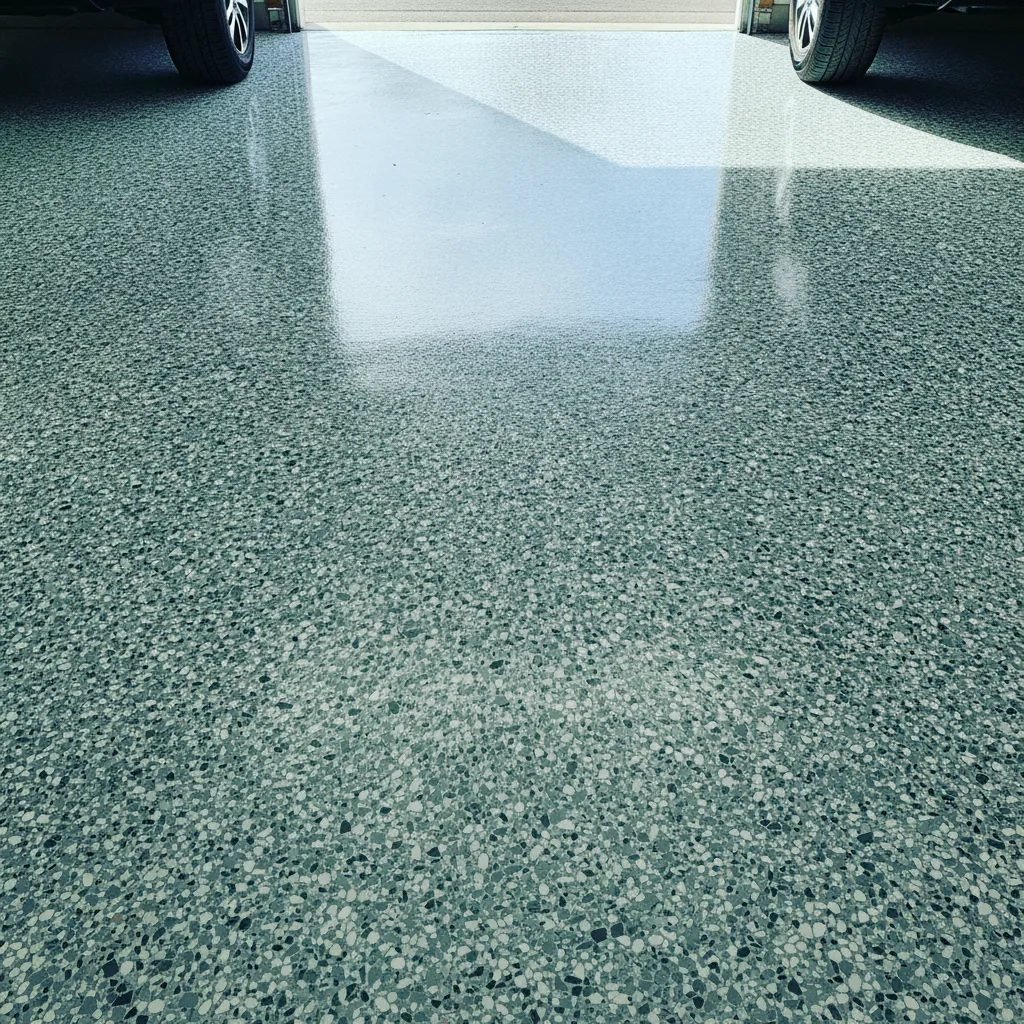
Garage Floor Covering Options: Why Epoxy Leads the Way
When comparing garage floor coverings, epoxy consistently comes out on top for durability, ease of cleaning, resistance to oil and chemicals, and long-term value. Unlike rubber mats, peel-and-stick tiles or floor paint, a properly applied epoxy coating bonds directly to the concrete slab and can last well over a decade with minimal upkeep. For Australian garages that deal with heat, moisture and heavy use, it is the most practical choice by a wide margin.
What are the most common garage floor covering options available today?
The main garage floor covering options are epoxy coatings, polyurea or polyaspartic coatings, interlocking floor tiles (rubber or PVC), garage floor mats or rolls, and concrete floor paint. Each sits at a different price point and delivers a different level of protection, so it pays to understand what you are actually getting before spending a cent.
Here is a plain-English breakdown of each option:
- Epoxy coatings. A two-part resin system that chemically bonds to the concrete. Applied in layers, it creates a hard, seamless surface that resists oil, tyre marks, chemicals and heavy foot traffic.
- Polyurea and polyaspartic coatings. A faster-curing cousin to epoxy, often used as a topcoat. Full cure can happen in as little as a few hours, which suits homeowners who cannot leave the garage empty for long. Often layered over an epoxy base for the best of both systems.
- Interlocking rubber or PVC tiles. Modular, DIY-friendly and easy to replace in sections. They sit on top of the concrete rather than bonding to it, so moisture can get trapped underneath. Not a great fit for garages that see vehicle fluid spills.
- Garage floor mats and rolls. The cheapest entry point. Simple to lay, simple to remove. They offer almost no real protection for the concrete underneath and tend to curl at the edges over time.
- Concrete floor paint. Often confused with epoxy but very different. Single-component floor paint sits on the surface rather than penetrating the slab. It chips, peels and scuffs relatively quickly, especially under the heat of a parked car.
Why do garage floor coverings made from epoxy outperform the alternatives?
Epoxy garage floor coverings outperform alternatives because the coating chemically bonds to the concrete slab, forming a surface that is harder, denser and far more resistant to impacts, chemicals and moisture than anything that simply sits on top. A good epoxy system can handle the weight of a fully loaded ute, regular oil spills, and the abrasion of workshop trolleys without showing serious wear for ten years or more.
Let’s put the key differences side by side:
- Adhesion vs. surface-laying. Rubber tiles, mats and paint do not bond to concrete. Epoxy does. That bond is what stops moisture migrating underneath and causing the covering to bubble, lift or peel.
- Chemical resistance. Workshop chemicals, brake fluid, petrol drips and pool chemicals can all stain or eat into unsealed concrete and painted surfaces. An epoxy coating shrugs most of these off. A quick wipe and the surface is clean again.
- Heat tolerance. Hot tyre pick-up is a real problem with some floor paints and cheaper coatings. You park the car, the hot tyres sit on the surface, and when you drive away chunks of the coating come with them. A properly catalysed epoxy system resists this.
- Longevity and cost per year. A quality epoxy job applied by a professional typically lasts ten to fifteen years. Budget-friendly mats or paint may need replacing or reapplying every two to three years. Spread the cost over a decade and epoxy is usually the more economical option.
- Aesthetics. Decorative flake systems and metallic finishes turn a plain concrete garage into a space that looks as good as the inside of the house. Rubber tiles and mats never quite manage that.
What should you think about before choosing a garage floor covering?
Before choosing a garage floor covering, consider how the garage is used day-to-day, the condition of the existing concrete, how long you plan to stay in the property, and whether you want a DIY result or a professional finish that adds real value to the home. Each of these factors points you toward a different solution on the cost and durability spectrum.
A few practical questions worth asking yourself:
- How is the concrete right now? Cracked, pitted or moisture-affected concrete needs preparation before any covering goes down. Epoxy installers grind the surface to open the pores and ensure proper adhesion. Tiles and mats hide problems without fixing them, which often makes things worse over time.
- Do vehicles park in here, or is it a workshop space? Workshop environments with heavy machinery, dropped tools and chemical spills need a harder, more chemical-resistant surface. A decorative rubber tile is not going to cut it.
- How much downtime can you handle? Solvent-based epoxy systems often need 24 to 72 hours before you can walk on them and up to seven days before vehicles go back in. Polyaspartic topcoats can get you back in on the same day. Your installer should match the system to your schedule.
- Are you planning to sell? A well-finished epoxy floor is a genuine selling point. It photographs well and signals to buyers that the previous owner looked after the property. A cracked concrete floor with a worn-out mat does the opposite.
How does the flake finish work with epoxy garage floor coverings?
A flake finish involves broadcasting small coloured vinyl chips into the wet epoxy base coat before it cures. The chips create a textured, slip-resistant surface that also hides minor imperfections in the concrete below. A clear topcoat is then applied to lock the flakes in, creating a surface that is hard, grippy and easy to clean all at once.
Decorative flake systems have become very popular in Melbourne garages for a few good reasons. The texture from the chips adds meaningful grip, which matters when you are stepping out of a car with wet shoes or moving around a workshop in boots. The pattern also breaks up any visual unevenness in the concrete, so minor surface patches or old cracks that were filled during prep become essentially invisible once the floor is done. You get to choose the chip colour and broadcast density, from a subtle salt-and-pepper look all the way through to a full broadcast where virtually no base colour shows through.
Metallic epoxy finishes are the other popular choice for homeowners who want something that genuinely stands out. Metallic pigments mixed into the epoxy create a swirling, three-dimensional effect that looks very different from the standard speckled floor. No two metallic floors look identical, which suits people who want a feature floor rather than just a practical one.
What makes professional installation worth it compared to a DIY epoxy kit?
Professional epoxy installation is worth the extra cost because surface preparation is the single biggest factor in whether a coating sticks or fails, and that preparation requires commercial diamond grinding equipment and trained judgment that a weekend kit simply cannot replicate. A coating applied over a poorly prepared slab will peel within months, no matter how good the product is.
DIY epoxy kits from the hardware store are usually single-component or low-ratio two-component products that look similar to the professional systems on the tin but perform very differently in practice. The resin content is lower, the bond strength is weaker, and they are far more sensitive to temperature and moisture at the time of application. Melbourne’s weather adds an extra layer of complexity: high summer temperatures can accelerate cure times and cause problems with self-levelling, while winter moisture in a slab can cause adhesion failure if the installer does not test and manage it first.
A professional crew arrives with a grinder, moisture meters, the right primer for the conditions, and product that is formulated for commercial-grade adhesion. The finish is seamless, properly topcoated, and backed by a workmanship guarantee. That peace of mind is worth paying for when you are coating a surface you will be walking on and parking on for the next ten-plus years.
Ready to see which system suits your garage? Book a garage floor coating consult.