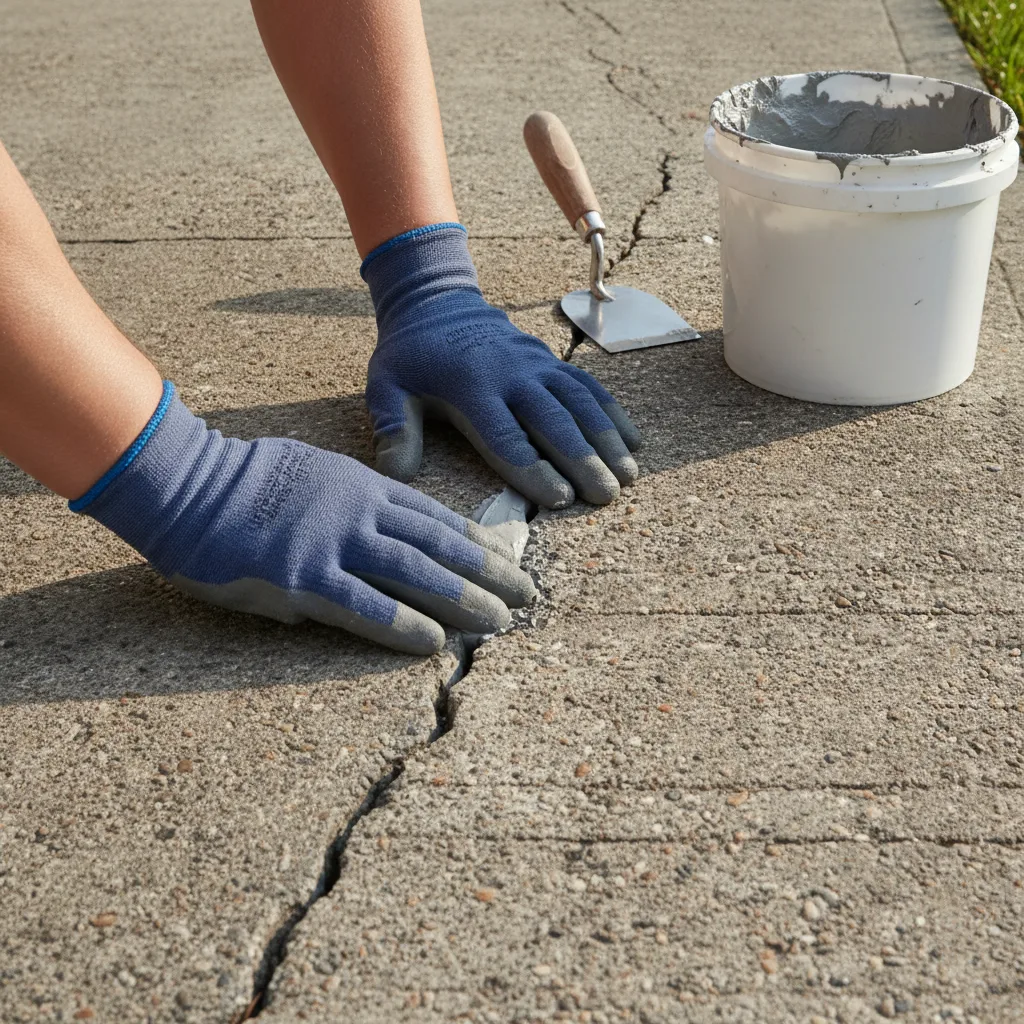
Concrete Repair for Floors and Driveways: A Melbourne Guide
Concrete repair covers everything from filling hairline cracks and patching spalled surfaces to grinding down trip hazards and stabilising sunken slabs. In Melbourne, variable soil movement and wet winters accelerate damage, so the right repair method depends on the crack type, the cause and what the surface will be used for once it is fixed.
Why does concrete crack and deteriorate in the first place?
Concrete cracks and deteriorates because of shrinkage during curing, ground movement beneath the slab, freeze-thaw cycles, tree root intrusion and surface wear over time. Melbourne’s reactive clay soils are a major culprit: they swell when wet and shrink when dry, putting constant stress on slabs from below, which leads to cracks, lifting and settlement that worsen every year without intervention.
Understanding the cause matters because treating the symptom without fixing the source is a waste of money. A crack caused by a tree root three metres away will reopen within a season if the root is still active. A sunken driveway panel caused by washed-out sub-base fill will sink again if the void underneath is not addressed before patching the surface.
The most common damage types you will see on Melbourne driveways and garage floors include:
- Hairline cracks. Usually cosmetic. Common in new slabs as the concrete cures and shrinks.
- Structural cracks. Wide, deep or actively moving cracks that signal slab movement or base failure.
- Spalling. Flaking or pitting on the surface, often caused by moisture getting in and corroding the reinforcing steel below.
- Settlement. One panel sitting lower than the next, creating a lip that is both a trip hazard and a water trap.
- Delamination. A thin top layer separating from the body of the slab, producing a hollow sound when tapped.
What are the most common concrete repair methods?
The most common concrete repair methods are epoxy injection for structural cracks, polyurethane foam lifting for sunken slabs, grinding for surface lips and trip hazards, and polymer-modified patching compounds for spalling and surface damage. Each method suits a different problem, and mixing them up leads to repairs that fail within a year or two.
Here is a plain-English rundown of the main approaches:
Crack injection
Low-viscosity epoxy or polyurethane resin is injected under pressure into the crack. Epoxy bonds the two faces together and restores structural strength. Polyurethane foam expands to fill the void and is better for wet or actively leaking cracks. This is the right call for any crack wider than about 0.3 mm that has not been caused by active slab movement.
Polymer-modified patching
A Portland cement base mixed with polymer additives bonds far better to existing concrete than plain cement does. The patch is applied in layers, keyed into the surrounding slab and finished to match the surrounding surface. It is the standard fix for spalling, potholes and shallow surface defects on driveways and garage floors.
Slab lifting (poly-jacking)
Expanding polyurethane foam is injected through small drilled holes to fill voids and lift a sunken slab back to level. It is faster and less invasive than replacing the panel entirely, and the foam cures in minutes rather than the 28 days a new slab needs. It works best when the surrounding panels are still structurally sound.
Grinding and levelling
Where two adjacent panels have differential settlement of less than about 20 mm, a concrete grinder can feather the high edge down to remove the trip hazard. It is a quick, cost-effective fix for paths and driveways where replacing the whole panel would be overkill.
Full panel replacement
Sometimes the damage is too extensive to patch economically. A panel that is heavily reinforced with multiple cracks, significant settlement or badly corroded steel is often cheaper to break out and repour. The new concrete needs a proper sub-base and at least four weeks before heavy vehicle traffic.
How much does concrete repair cost in Melbourne?
Concrete repair in Melbourne typically ranges from around $200 to $300 for minor crack injection on a single panel up to $3,000 or more for full panel replacement on a residential driveway. Slab lifting sits in the middle, averaging $500 to $1,500 depending on how many holes are needed and how much lift is required. Surface grinding for a trip hazard is usually the most affordable fix, often under $300 for a single edge.
Those figures move based on access, the thickness of the slab, the extent of the damage and whether any reinforcing steel needs treatment. Always get a quote that specifies the repair method, not just a lump sum, so you can compare apples with apples. A cheap patch that uses a non-bonding compound on a spalled surface will delaminate in the next frost and cost you again.
One concrete detail worth knowing: Australian Standard AS 3600 specifies a minimum 20 MPa compressive strength for residential slabs, and most reputable patching products are rated to match or exceed that. If a contractor is mixing up a general-purpose bag-mix cement to fill a structural crack, that is a flag to ask questions.
Should you repair concrete yourself or hire a professional?
You can repair concrete yourself for small cosmetic cracks and minor surface spalling using off-the-shelf patching compounds, but anything structural, sunken or larger than a few square metres is best left to a professional. DIY repairs on structural cracks or settled slabs often fail quickly because surface-level products cannot address the movement or void causing the damage in the first place.
The honest answer for most homeowners is: DIY is fine for a hairline crack on a garden path that is purely cosmetic. Once the crack is wider than a couple of millimetres, the slab is rocking underfoot, there is rust staining pointing to corroded reo, or the surface is delaminating in chunks, you are into professional territory. Getting it wrong on a driveway or garage floor costs more to fix a second time than just calling a pro on the first pass.
When choosing a contractor, look for someone who starts with a proper diagnosis rather than a quote. A good concretor will check whether the crack is active (still moving) or dormant, test for hollow spots, assess the sub-base and only then recommend a method. If someone quotes you before they have looked at the cause, that is worth pausing on.
How does concrete repair work with epoxy floor coatings?
Concrete repair is the essential first step before applying any epoxy floor coating. Epoxy is a thin-film material that conforms to the surface below it, meaning every crack, pit and hollow spot will telegraph through to the finished coat if not filled and levelled first. A properly repaired and prepared slab gives epoxy the flat, sound base it needs to bond and perform for the long haul.
This is especially relevant for garage floors and internal warehouse slabs in Melbourne where owners want a metallic or flake epoxy finish. The surface prep stage, which includes grinding, patching and sometimes moisture testing, is what separates a coating that lasts a decade from one that peels in two years. Skipping or rushing the repair work is the single most common reason epoxy coatings fail prematurely.
If your floor or driveway has cracks, spalling or settlement that you want addressed before a coating goes down, starting with a proper concrete repair assessment is the right order of operations. Get a concrete repair quote