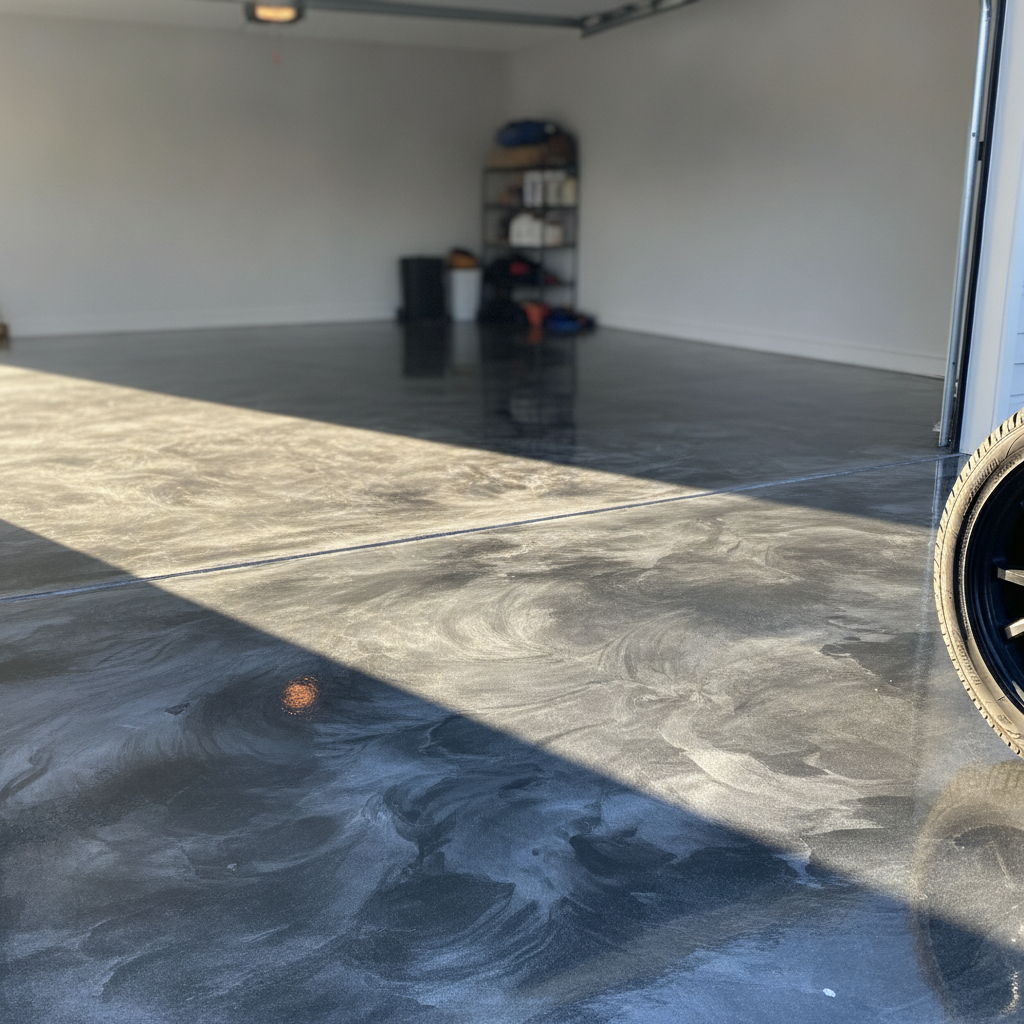
Is Epoxy Flooring Right for Your Garage? A Practical Guide
Epoxy flooring for garages is one of the most practical upgrades an Australian homeowner can make. It seals raw concrete against oil, water and tyre marks, adds a clean finished look, and typically lasts 10 to 20 years with normal use. Whether it suits your garage comes down to slab condition, budget and how you actually use the space.
What makes epoxy flooring for garages different from a standard paint job?
Epoxy is a two-part resin system, not a paint. When the resin and hardener combine, they cure into a rigid, chemically bonded layer that fuses to the concrete surface. Standard floor paint sits on top and peels away over time. Epoxy becomes part of the slab, which is why it handles heavy vehicle traffic, dropped tools and pooled water in ways that paint simply cannot match.
The practical difference shows up fast. A painted garage floor can start lifting within a year, especially in Melbourne where summer heat and humidity cause the concrete to expand and contract. A properly installed epoxy system stays put because the bond strength is measured in MPa, not just adhesion. Most residential epoxy systems achieve a bond strength of around 25 to 35 MPa, well above the pull-off strength of the concrete itself. That means if something fails, it will be the concrete, not the coating.
Colour and texture options also go further with epoxy. The metallic and flake finishes that have become popular in home garages are only achievable with an epoxy base coat. You cannot get that depth of finish or the slip-resistant texture of a broadcast flake floor from a roller-applied paint.
What condition does your concrete need to be in before an epoxy coat?
Your concrete slab needs to be structurally sound, clean and properly profiled before any epoxy system will perform as it should. Cracks, spalling, oil contamination and laitance (that powdery surface layer on new concrete) all prevent a good bond. A professional installer will assess moisture vapour transmission, surface hardness and existing contamination before committing to a coating system.
This is the part that catches a lot of DIYers out. A bag of hardware store epoxy applied over an unprepped slab will bubble, peel and delaminate within months. Proper surface preparation usually means diamond grinding the concrete to an open, textured profile (the industry standard is a CSP 2 or CSP 3 profile for most epoxy systems). This creates the mechanical key the epoxy needs to lock into.
Active cracks need attention too. Hairline cracks that are stable can be filled with a flexible epoxy filler before coating. Moving cracks, sometimes called live cracks, are a different problem and require a different repair strategy before any coating goes down. A quick look at your slab during wet weather will tell you a lot: if water is pushing up through the floor or pooling under the surface, a moisture management primer needs to go in first.
The short version: most garage slabs in suburban Melbourne are fine for epoxy. Older homes with significant oil history or slabs that have heaved may need extra prep work, but that is rarely a reason to walk away from the job entirely.
How long does a garage epoxy floor actually last?
A professionally installed garage epoxy floor realistically lasts 10 to 20 years in a domestic setting, sometimes longer with basic maintenance. The lifespan depends on three things: the quality of the prep work, the coating system chosen, and how the floor gets used day to day.
A single-car garage used for storage and occasional weekend work is a very different environment from a four-car workshop where cars go up on jack stands and angle grinders run regularly. In the second scenario, a thicker broadcast flake system with a polyurethane or polyaspartic topcoat makes more sense than a thin self-levelling metallic floor. Matching the system to the use is something an experienced installer will guide you through.
UV exposure is worth mentioning for garages with large roller doors that stay open. Standard epoxy resins yellow over time under direct sun. A UV-stable polyaspartic or polyurethane topcoat prevents that, keeping the floor looking sharp for years rather than going patchy and amber in high-exposure spots.
Maintenance is simple: sweep out grit regularly (grit acts like sandpaper underfoot), mop with a neutral pH cleaner, and avoid harsh solvents. Wipe up petrol and brake fluid quickly because they can soften the topcoat with prolonged contact. Do those basics and a quality epoxy floor will outlast most other things you put in a garage.
Is epoxy flooring for garages worth the cost compared to other options?
Epoxy flooring for garages is worth the cost for most homeowners when you factor in longevity, low maintenance and the protection it gives the slab. Alternatives like interlocking rubber or PVC tiles cost less upfront but do not seal the concrete, can trap moisture underneath, and typically need replacing within five to ten years. Polished concrete is a premium option but requires more ongoing care and is better suited to indoor living spaces than a working garage.
The honest answer on price: a professionally installed garage epoxy floor in Melbourne typically falls in the range of $50 to $100 per square metre for a standard single or double garage, depending on the system, the prep required and any repairs needed. Metallic finishes and multi-layer flake systems sit toward the higher end of that range. It is a meaningful spend, but one that adds real value to a property and eliminates the ongoing frustration of a bare concrete floor that stains, dusts and never looks clean.
The comparison to doing it yourself is where people sometimes trip up. DIY kits look affordable on the shelf, but the cost of hiring a grinder, buying the right products, dealing with a botched first attempt and losing a weekend or two often brings the total much closer to the professional quote than it seemed at the start. And a DIY job that peels in 18 months costs twice as much in the end.
What should you ask an epoxy installer before they start?
Before any installer lays down a drop cloth, ask them how they prepare the surface. Diamond grinding is the professional standard. Acid etching alone is not sufficient for most modern epoxy systems and is a signal to keep asking questions. A good installer will talk you through their process without hesitation.
Ask about the coating system they recommend and why. A reputable company will match the system to your slab, your environment and your use case, not just default to one product for every job. Ask about the topcoat specifically: is it standard epoxy, polyurethane or polyaspartic? That matters for UV resistance, scratch resistance and cure time.
Find out how long you will need to stay off the floor. Most epoxy systems are walkable within 24 hours but need 72 hours before you drive a vehicle on them. Some faster-cure polyaspartic systems can take a car the same day. Knowing the timeline helps you plan, especially if the garage is your main storage or parking space.
Finally, ask for examples of similar jobs they have done. A company that does garage floors regularly will have photos of finished work, and references are not unreasonable to request for a job of this size.
Metal and Flake specialise in epoxy garage floors across Melbourne and surrounds. If you want a floor that looks sharp, holds up hard and does not need babying, reach out today. Get a free garage floor quote