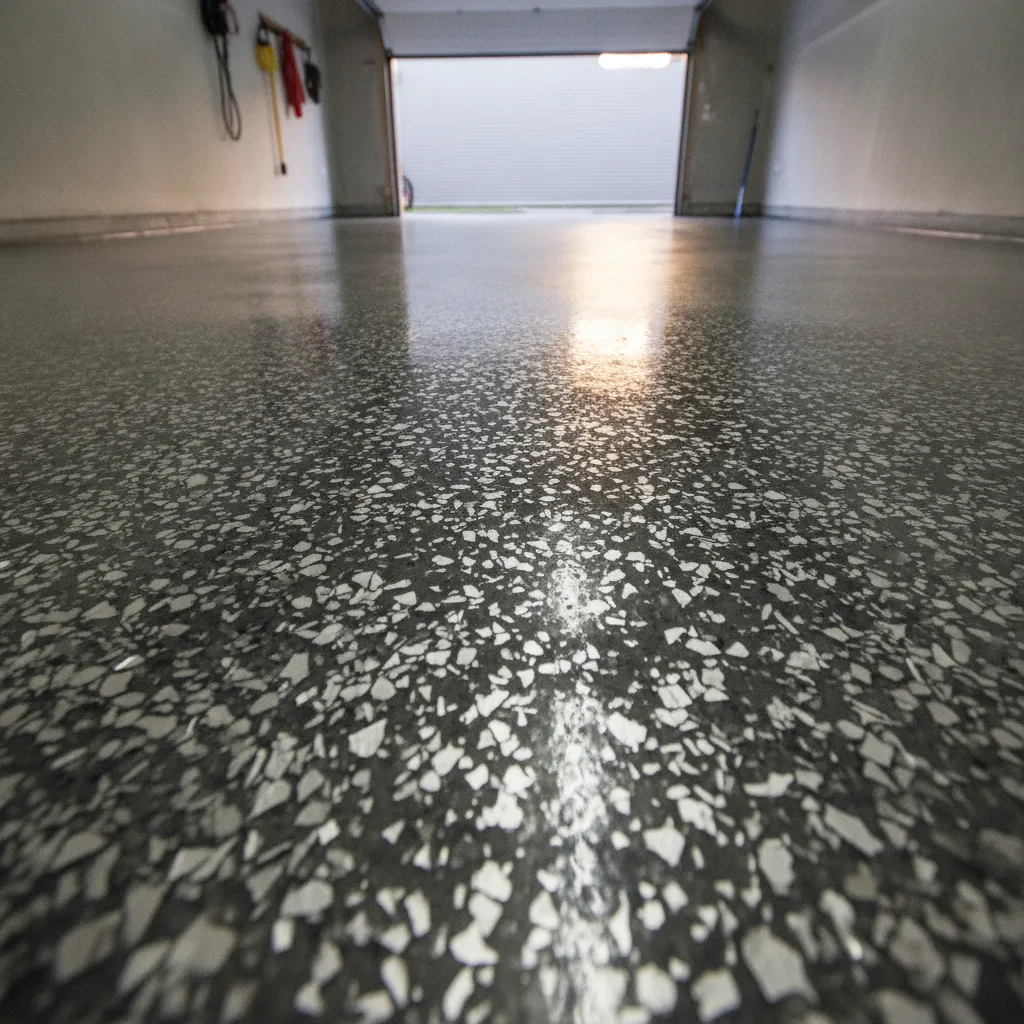
Garage Floor Paint vs Epoxy Coating: Which One Lasts?
Garage floor paint is a water- or oil-based product brushed or rolled directly onto bare concrete. Epoxy coating is a two-part chemical system that bonds into the concrete surface and cures hard. Paint typically starts peeling within one to three years under vehicle traffic. A properly applied epoxy coating lasts ten to twenty years in the same conditions, making it the far more durable long-term option for most Australian garages.
What exactly is garage floor paint, and why do people choose it?
Garage floor paint is a single-component coating, usually acrylic or latex, that you buy off the shelf at any hardware store. It sits on top of the concrete rather than bonding chemically into it. Most homeowners choose it because the upfront cost is low, the application is straightforward, and it can be rolled on over a weekend without specialist gear. For a low-traffic storage shed or a rarely used second garage, it does the job well enough in the short term.
The appeal is real. A ten-litre tin of concrete floor paint covers around twenty-five square metres and costs somewhere between $60 and $120. You clean the slab, let it dry, roll on two coats and you are done by Sunday afternoon. For renters, or anyone planning to sell within a year or two, that logic stacks up.
The problem is that concrete is alkaline and slightly porous. Paint bonds to the surface layer only. The moment moisture migrates up through the slab (which happens constantly in Melbourne’s variable climate), that bond breaks from underneath. Tyre heat compounds the problem: a hot tyre parked on painted concrete creates a suction effect as it cools, pulling the paint clean off in sheets. Most floor paint installations in active garages show lifting and bubbling within eighteen months.
How does garage floor paint compare to epoxy in terms of durability?
Garage floor paint and epoxy coating are not the same category of product, even though both end up as a coloured surface on your garage floor. Epoxy is a two-part resin system where a base and a hardener react together to form a rigid, cross-linked layer that penetrates and mechanically keys into the concrete. The result is closer to a hard plastic shell than a paint film, and it resists tyre wear, chemical spills, impact and moisture far better than any single-component paint.
The durability gap is significant. A quality two-part epoxy coating applied over a properly prepared concrete slab (diamond ground to an open surface profile) will comfortably handle daily vehicle traffic, oil drips, brake fluid, petrol splashes and power-washing for a decade or more. Paint begins to fail under those same conditions within one to three years, often sooner.
Surface preparation is the single biggest factor in how long either product lasts. Paint applied over a dusty, unground slab will fail faster still. Epoxy applied over a diamond-ground slab with the right primer coat has the mechanical grip it needs to go the distance. That preparation step is where professional installers earn their fee: grinding the concrete opens up the pores so the epoxy can actually bond rather than just sit on top.
What about cost: is garage floor paint worth the savings?
At first glance, garage floor paint looks like the budget-friendly option. But the maths shifts when you factor in how often you redo it. A double garage (around forty square metres) might cost $150 in paint and a weekend of your time. Do that every two to three years and over a ten-year period you have spent $500 to $750 in materials alone, plus four or five lost weekends stripping and repainting. You also deal with the mess, the fumes and the frustration each time.
A professionally installed epoxy coating for the same double garage sits at a higher upfront investment, but it is typically a once-per-decade job. There is no stripping, no recoating cycle and no weekend lost to a floor that peeled again. When you spread the cost over the life of the product, epoxy almost always works out cheaper per year of useful service.
There is also the resale angle. A fresh epoxy garage floor with a flake or metallic finish is a visible upgrade that buyers notice. A patchy, peeling painted floor does the opposite: it signals deferred maintenance before they have even walked through the door.
Are there situations where garage floor paint still makes sense?
Honest answer: yes, in a narrow set of circumstances. If you are renting a property and want to tidy up a rough slab without a landlord’s approval for permanent work, a tin of concrete paint is a practical short-term fix. The same applies to a temporary workshop or a structure you plan to demolish or heavily renovate within a couple of years. In those cases, the lower commitment of paint aligns with the timeline.
Paint also works acceptably in spaces that see very little vehicle traffic: a garden shed, a back workshop used only for light hobby work, or a carport that stays dry year-round. Without hot tyres and regular wet weather, the main failure modes simply occur less often.
Outside those specific situations, though, the case for paint over epoxy is mostly about deferring the real decision. You end up doing the epoxy job eventually anyway, often after a messy paint removal process that adds cost and effort to the project. Getting the prep and coating done properly from the start is almost always the cleaner path.
What should you look for in a quality garage floor coating?
Whether you are comparing products or getting quotes from installers, a few markers separate a durable result from a future headache. First, look at the preparation method: diamond grinding is the industry standard for opening up the concrete surface profile. Acid etching is a lesser alternative that leaves residue and produces an inconsistent profile. If a quote does not mention grinding, ask about it directly.
Second, check the system build. A properly layered epoxy installation includes a penetrating primer, a body coat and a clear topcoat (often polyurethane or polyaspartic) for UV stability and scratch resistance. Single-coat systems cut corners on build thickness and wear through faster, especially near the entry where you drive in and out.
Third, look at what is in the coating itself. Broadcast vinyl flake systems add grip, hide minor concrete imperfections and give a consistent finish that holds colour well under UV. Metallic pigment systems create a more visual, showroom-style result. Both are valid choices depending on the look you want, the key is that the flake or pigment is locked under a clear topcoat rather than on the surface where it can abrade away.
Finally, ask about cure time. A quality epoxy system needs at least twenty-four hours before foot traffic and seventy-two hours before vehicle traffic. Anyone promising you can park your car on it the same day is cutting the cure time short, which compromises the hardness of the final surface.
Getting the right product and the right prep is everything. A cheap two-pack epoxy rolled onto an unground slab will outlast paint but will still fail within a few years. A professional-grade system applied over a properly prepared surface is what delivers that ten-plus year service life.
Ready to stop repainting and get a floor that actually holds up? Get a quote for garage floor coating