Garage Floor Epoxy Coating: Is It Worth It in Melbourne?
Garage floor epoxy coating is worth it for most Melbourne homeowners. A properly applied epoxy system seals bare concrete against oil, moisture and tyre scuff, adds decades to the floor’s life, and turns a dull slab into something that actually looks the part. The upfront cost is real, but it pays for itself by protecting a surface that would otherwise cost far more to repair or replace.
What does garage floor epoxy coating actually do to bare concrete?
Garage floor epoxy coating chemically bonds to the concrete surface, filling the pores and creating a hard, seamless shell that resists almost everything a busy garage throws at it. Oil drips, brake fluid, water pooling from wet cars, heavy foot traffic and the weight of vehicles all become a non-issue once the coating has fully cured. Without that protection, bare concrete absorbs every spill, stains permanently, and slowly dusts and flakes under the pressure of daily use.
The chemistry is straightforward. A two-part epoxy, a resin and a hardener, are mixed together and applied to the concrete. As they cure they cross-link into a rigid polymer matrix. That matrix is far harder and less porous than the concrete beneath it. Most quality systems used in residential garages cure to a surface hardness around 80 to 85 Shore D, which is harder than most timber flooring. The result is a floor that feels solid underfoot, reflects light beautifully, and sweeps clean in seconds.
Melbourne’s climate adds an extra layer of reason to coat. The city swings between cold, damp winters and hot, dry summers. That constant expansion and contraction gradually opens up micro-cracks in untreated concrete. An epoxy coating bridges those fine cracks, keeps moisture from working its way in, and slows the whole deterioration process significantly.
How much does garage floor epoxy coating cost in Melbourne?
For a standard single or double garage in Melbourne, professionally applied garage floor epoxy coating typically runs between $50 and $100 per square metre, depending on the system chosen and the condition of the existing slab. A double garage of around 36 square metres generally lands somewhere between $1,800 and $3,600 all in. That figure shifts up if the concrete needs significant grinding, crack repair or moisture remediation before coating can begin.
It sounds like a fair chunk of money, and it is. But compare it against the alternative. A full concrete replacement in Melbourne can cost upwards of $100 per square metre just for the pour, before demolition, disposal or any finishing. A DIY paint-and-seal job from a hardware store will look fine for a year or two, then peel, bubble and flake because most consumer products are water-based and don’t form the same chemical bond as a true two-part epoxy. Peeling paint is harder to strip than bare concrete, so you end up paying more to fix it later.
The practical lifespan of a well-applied professional epoxy system in a residential garage is typically 10 to 20 years with basic maintenance. That works out to less than a cup of coffee a week over the life of the floor. When you frame it that way, the value proposition is hard to argue with.
Does the concrete preparation really matter that much?
Yes, concrete preparation is the single most important step in any garage floor epoxy coating job. A coating is only as good as the bond it forms with the substrate beneath it, and that bond depends entirely on how well the concrete surface has been opened up and cleaned before the epoxy goes down. Skipping or skimping on prep is the number one reason epoxy floors fail.
Professional applicators use diamond grinding or shot blasting to abrade the surface to a profile roughly equivalent to 60-grit sandpaper. That texture gives the epoxy something to grip. Any oil contamination, existing sealers, laitance (the weak dusty layer on top of cured concrete) or moisture sitting in the slab has to be dealt with before the first coat goes on. Oil in particular is invisible once it has soaked in, and it will cause adhesion failure even if everything else is done correctly.
Moisture is worth calling out separately, because Melbourne garages can sit on slabs with high relative humidity coming up from below. A simple plastic sheet test, taping a 500mm square of plastic to the floor overnight and checking for condensation underneath, will tell you whether moisture is an issue. If it is, the right primer or a moisture-tolerant system needs to go down first. A professional will assess this before they quote.
What finishes are available for a garage epoxy floor?
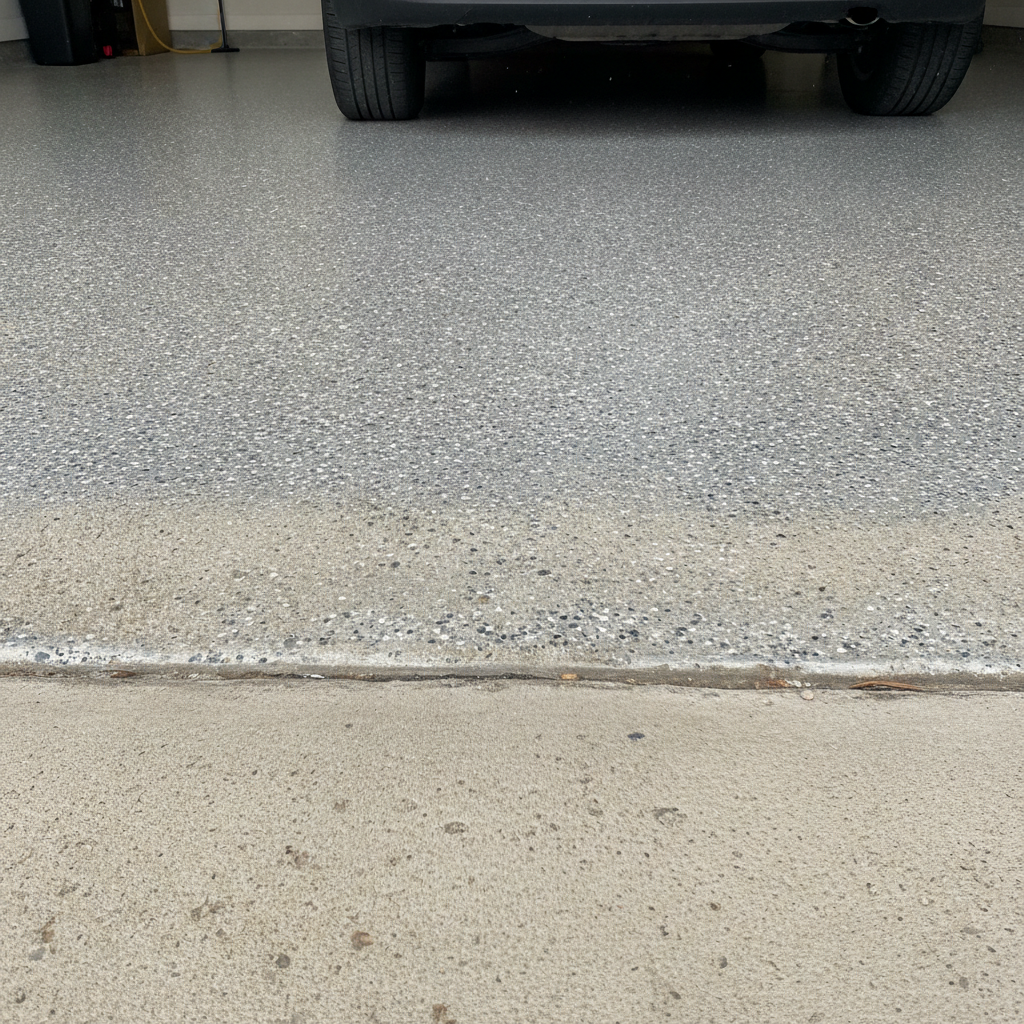
The finish choice is where garage floor epoxy coating gets genuinely fun. The most popular option in Melbourne right now is a flake or chip system, where coloured vinyl flakes are broadcast into the wet base coat and then sealed under a clear topcoat. Flake floors hide everyday dirt and minor scratches well, provide a bit of texture underfoot (useful in a garage where things get wet), and come in a huge range of colour blends to suit any aesthetic.
Metallic epoxy is another option that has grown in popularity. A metallic pigment creates a deep, reflective, almost liquid-looking surface that photographs beautifully and makes a garage look more like a showroom. It is a more technical application and typically sits at the higher end of the price range, but for someone who genuinely uses their garage as a display or workshop space, the result is striking.
Solid colour systems are the most straightforward. One or two coats of pigmented epoxy, finished with a clear sealer. They clean up easily, look sharp, and cost a little less than flake or metallic systems because there are fewer steps involved. Grey and slate tones are popular in Melbourne, though almost any colour can be achieved.
All systems can be finished with a matte, satin or gloss topcoat, and anti-slip aggregates can be broadcast into the final coat for extra grip in wet conditions. It’s worth thinking about how you actually use the space before you commit to a finish. A high-gloss metallic floor looks incredible but will show every piece of grit tracked in from outside. A full broadcast flake in a mid-tone blend is far more forgiving day to day.
Is garage floor epoxy coating a DIY job or do you need a professional?
Garage floor epoxy coating can be a DIY project, but the results are rarely comparable to a professional application, and the margin for error is narrow. The biggest challenge for a homeowner is surface preparation. Hiring a diamond grinder for a day, learning to use it safely, and achieving a consistent profile across the whole floor is harder than it looks. Miss a section and you will see it when the coating starts to lift three years later.
Consumer-grade epoxy kits from hardware stores are also generally water-based or thin solvent-based products rather than true 100 percent solids two-part systems. They look similar in the tin but cure to a much thinner, softer film. They can work in low-traffic applications, but in a working garage with a car, tools and foot traffic, most will start showing wear within a couple of years.
The sweet spot for DIY is a garage that sees very light use, where the concrete is in excellent condition, and where the owner is prepared to invest in proper prep equipment and a quality product. For everyone else, a professional application pays for itself in longevity. A good installer will also spot problems, like a crack that needs routing and filling, or a section with high moisture, before they become your problem after the job is done.
If you’re weighing up the options for your Melbourne garage, the best first step is getting a proper assessment and a straight-up quote. Get a quote for garage floor epoxy coating