Metallic Epoxy Floors in Preston: Design Ideas for Your Garage
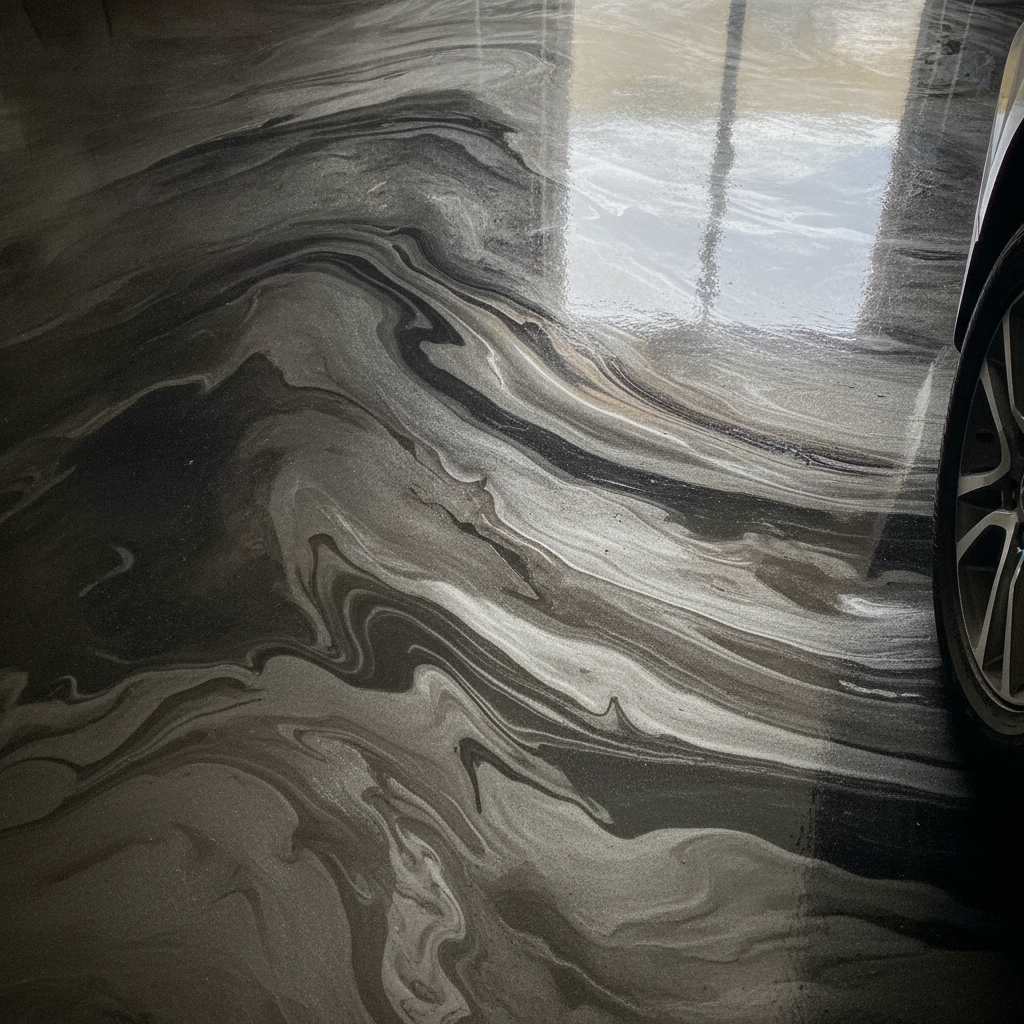
Metallic epoxy in Preston garages delivers a high-gloss, three-dimensional finish that looks far more expensive than standard grey paint. It combines metallic pigments with a clear epoxy resin, creating flowing, lava-like patterns that are completely unique to each pour. It is durable, chemical-resistant and easy to clean, making it a practical upgrade for any working garage.
What exactly is a metallic epoxy floor and why is it popular in Preston garages?
A metallic epoxy floor is a two-part epoxy coating mixed with fine metallic or pearlescent pigments. When spread across a prepared concrete slab, the installer uses a squeegee or blower to manipulate the pigments into swirling, wave-like patterns. No two floors look identical. The result is a seamless, high-build surface typically 2 to 3 mm thick that bonds directly to the concrete. Preston homeowners choose it because the suburb has a strong mix of older double-fronted homes with underused garages, and metallic epoxy turns a scruffy slab into a genuine feature space without a renovation-scale budget.
The finish also holds up to the everyday realities of garage life. Motor oil, brake fluid, coolant and even battery acid sit on the surface rather than soaking in. A quick mop and the floor looks factory-fresh again. Compare that to bare concrete, which absorbs every spill and dusts constantly onto tyres and shoes.
Which metallic epoxy colours and design styles work best for a Preston garage?
The most popular metallic epoxy colour choices for Preston garages are charcoal-silver, bronze-copper, midnight blue and gunmetal grey, because they complement the dark brick and weatherboard tones common to homes in the area. Each colour palette can be layered to create depth: a dark base coat with a lighter metallic mid-coat produces the signature three-dimensional shimmer that metallic epoxy is known for.
Beyond colour, there are a handful of design styles worth considering. The first is the classic single-colour swirl, where one metallic pigment is manipulated into organic wave patterns across the whole slab. It reads as clean and modern and suits garages that double as workshops or home gyms. The second is a dual-tone blend, where two complementary pigments (think pewter and copper, or navy and silver) are poured together and swirled into a marble-like effect. This works beautifully in a showroom-style garage where a car or bike is on display. The third option is a veining design, where a thin contrasting colour is dragged through the wet coat using a notched squeegee to mimic natural stone. For a Preston terrace where the garage opens onto a courtyard, veining in white-and-grey can tie the indoor and outdoor areas together visually.
A practical design tip: go lighter in a single-car garage with limited natural light. Lighter metallics like pearl-white or champagne bounce light around a small space and stop it feeling like a bunker. Darker tones like charcoal and bronze are better suited to double garages or spaces with skylights, where there is enough ambient light to show off the depth in the finish.
How does the metallic epoxy installation process work on a Preston slab?
Getting the prep work right is the single biggest factor in how long a metallic epoxy floor lasts. The concrete must be diamond-ground or shot-blasted to open the surface profile, which gives the epoxy mechanical adhesion. Any cracks, spalls or pitting are filled with a flexible repair compound before the first coat goes down. On a standard single-car garage slab of around 20 square metres, thorough prep typically takes the better part of a day.
Once the slab is clean and profiled, the installer rolls or squeegees a primer or base coat. The metallic pigments are then added to the mid-coat and spread quickly before the installer uses a heat gun or leaf blower to push the pigment into the desired pattern. This is where the craftsmanship shows. Getting clean, controlled movement in the pigment requires experience, because the working time on most metallic systems is around 20 to 30 minutes before the coat starts to set. A clear topcoat (usually a polyaspartic or polyurethane) then goes over the whole floor to protect the metallic layer and add the final gloss level. The complete system needs 24 hours before light foot traffic and around 72 hours before parking a vehicle on it.
Temperature matters in Preston. Melbourne’s northern suburbs can push past 35 degrees in summer, which shortens pot life and working time considerably. A professional crew will schedule metallic pours for cooler parts of the day or use a temperature-controlled curing window. That is one reason DIY kits from the hardware store rarely deliver the swirling, seamless result you see in professional photos.
What should a Preston homeowner budget for metallic epoxy in their garage?
Metallic epoxy costs more than a standard solid-colour epoxy system because the pigments, the additional mid-coat layer and the skill required to create the pattern all add to the job price. As a rough reference point, metallic systems in Melbourne typically run from around $80 to $120 per square metre installed, depending on slab condition, the complexity of the design and the number of coats. A 20-square-metre single garage sits roughly in the $1,600 to $2,400 range. A double garage at 40 square metres brings the per-square-metre cost down a little as fixed set-up costs are spread across more area.
The slab condition in older Preston homes is the biggest wildcard. A slab with significant cracking, previous paint coatings or oil saturation will need more prep time and potentially a moisture barrier, which adds cost. That is why a site visit and a firm written quote is always worth getting before committing to any system.
How do you maintain a metallic epoxy floor in a working garage?
Day-to-day maintenance is straightforward. Sweep out grit and sand regularly, because fine abrasive particles underfoot are the main thing that dulls a high-gloss topcoat over time. Mop with warm water and a small amount of pH-neutral cleaner every few weeks. Avoid bleach and acidic cleaners, which can cloud the topcoat finish. If you use car jack stands, put rubber pads under the feet to prevent point-load indentations in the epoxy. The topcoat on a professionally installed system is hard, but it is not indestructible under a concentrated load.
Most professionally installed metallic epoxy floors in a domestic garage setting will hold their gloss and resist staining for ten years or more with basic care. If the topcoat eventually shows wear in high-traffic areas, a recoat of clear polyaspartic is a far less disruptive fix than starting from scratch, because the epoxy base layer underneath remains bonded to the slab.
Preston garages are worth investing in properly. The suburb is tightly held, property values have tracked consistently upward over the past decade, and a well-finished garage adds genuine appeal when it comes time to sell or lease. A metallic epoxy floor is one of those upgrades that looks impressive to visitors but actually earns its keep through low maintenance and long service life.
Ready to see what a metallic finish would look like on your slab? Request a metallic epoxy floor quote in Preston from Metal and Flake.