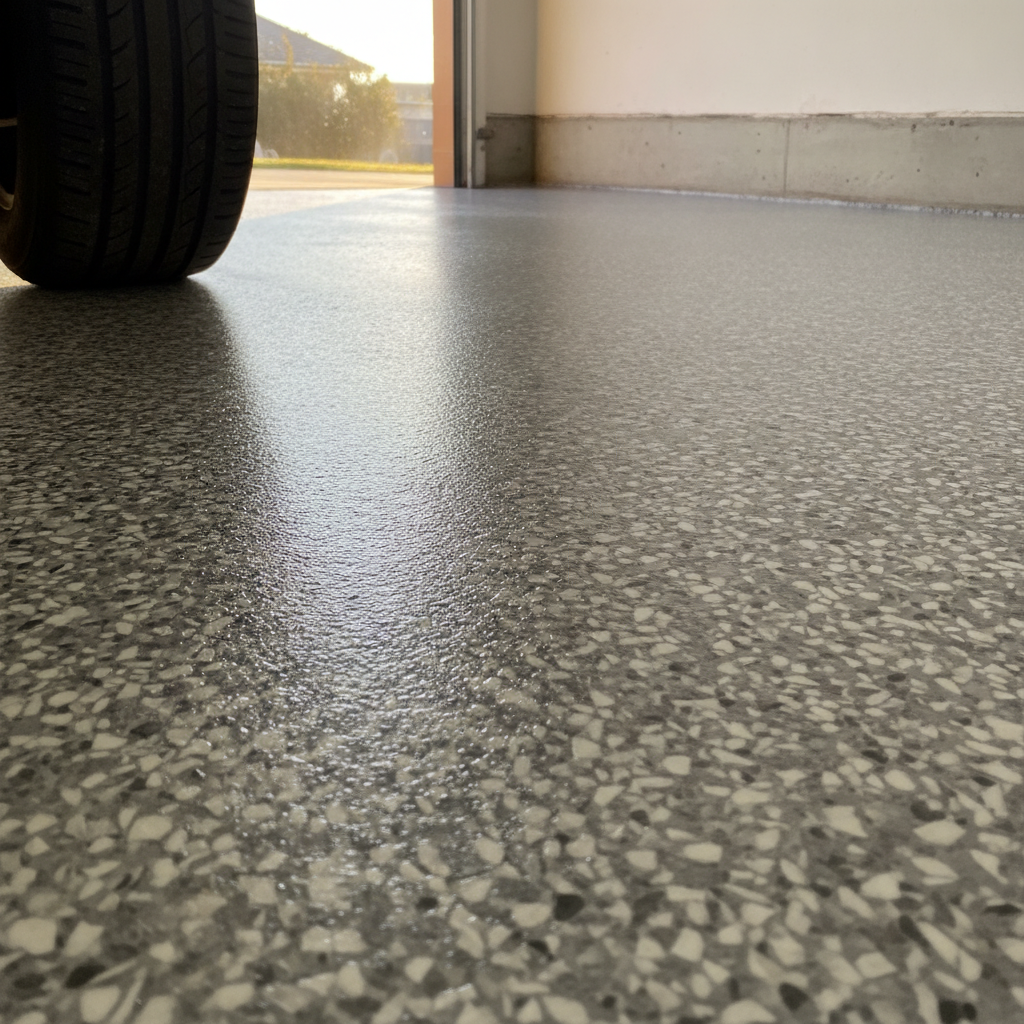
Garage Floor Coating in Coburg: Which Epoxy System Suits You?
A garage floor coating in Coburg protects your concrete slab from oil, tyre marks, moisture and everyday wear while making the space look sharp. The right system depends on your slab condition, how you use the garage and how much prep work the surface needs. Most residential garages suit a two-coat epoxy with a decorative flake broadcast, but there are other options worth knowing about before you commit.
Why does a garage floor coating in Coburg need more than just paint?
Standard floor paint sits on top of concrete without bonding to it properly. Within a year, tyres pulling in and out on a hot Melbourne day will lift it in sheets. A proper garage floor coating in Coburg uses a resin system that penetrates and chemically bonds to the slab, giving you a surface that handles vehicle traffic, dropped tools and the temperature swings that come with an uninsulated garage in Victoria’s climate.
Concrete is porous. Left bare, it absorbs oil drips, brake fluid and water, which weakens the slab over time and makes the floor almost impossible to clean. A bonded epoxy system seals those pores completely. That matters in Coburg, where older homes often have garages built on slabs that are 40 or 50 years old and have already taken a beating.
There is also a comfort and resale angle. A clean, coated garage floor reads as finished space, not a storage afterthought. Buyers notice it. Renters notice it. And you will notice it every time you pull the roller door up.
What epoxy systems are actually available for a garage floor coating?
There are four main systems used in residential garages around Melbourne, each with a different finish, price point and performance profile. Understanding the differences stops you from over-spending on a workshop floor or under-specifying a floor that needs to handle a daily driver plus weekend project cars.
Solid colour epoxy. This is the entry-level workhorse. A primer coat goes down first, then one or two build coats of a pigmented epoxy. You get a clean, seamless surface in a single colour, usually light grey, charcoal or white. It is affordable and hard-wearing, but it shows tyre marks more than a flake system does and any surface imperfections in the slab remain visible.
Metallic epoxy. A metallic pigment is mixed into the epoxy resin and manipulated with a squeegee or roller to create flowing, cloud-like patterns. The result is striking and genuinely one-of-a-kind because no two floors come out the same. It works well in showroom-style garages or man caves where aesthetics matter as much as function. The catch is that metallic systems are thinner than flake systems, so they offer less texture underfoot.
Epoxy flake (chip) system. This is the most popular system for residential garages in Melbourne and for good reason. Coloured vinyl flakes are broadcast into a wet base coat, then locked in with a clear polyurethane or polyaspartic topcoat. The flakes hide slab imperfections, add grip underfoot, and the speckled pattern disguises dust and light dirt between cleans. Metal and Flake specialises in this system, and it is the one most Coburg homeowners land on after seeing a finished example.
Polyaspartic-only system. Polyaspartic coatings are a faster-curing alternative to traditional epoxy. A full floor can be walk-ready in a few hours rather than 24 to 48 hours. They handle UV exposure better than standard epoxy, which matters if your garage door is open most of the day. The trade-off is that the faster cure time means less working time for the installer, so surface prep and application skill become even more critical.
How does slab condition change which system you should choose?
Slab condition is the single biggest factor in matching an epoxy system to your garage. A freshly poured or lightly used slab in good shape can take almost any system. An older slab with cracks, spalling or previous coatings needs honest assessment before any product goes down.
Diamond grinding is the industry-standard method for opening the surface profile of concrete so the epoxy can bond properly. Acid etching is sometimes used on very clean slabs, but grinding gives a more consistent result and is essential if there is any old sealer, paint or contamination present. Skipping this step is the number one reason DIY garage coatings fail within 12 months.
Moisture is a real issue in Coburg’s older housing stock. If the slab was poured without a proper vapour barrier underneath (common in garages built before the 1990s), moisture can push up through the concrete and cause delamination. A moisture check before quoting is not optional. If moisture vapour emission is high, a moisture-tolerant epoxy primer needs to go down first as a dedicated layer, not just a thicker coat of the topcoat system.
Cracks narrower than about 2mm can be filled and overcoated without drama. Structural cracks that move seasonally are a different story. No coating bridges an active crack indefinitely. A good installer will flag this upfront and talk through realistic expectations rather than just slapping product over the top.
What should you expect from the installation process?
A standard two-car garage in Coburg runs roughly 36 to 42 square metres. The preparation work, which includes grinding, crack filling and cleaning, typically takes as long as the coating application itself. Cutting corners on prep to save an hour is false economy.
Day one is surface prep and the base coat or primer. Day two, once the base coat has cured, is the broadcast flake and the first topcoat. Some systems require a second topcoat on day three for maximum chemical resistance. That means the garage is out of action for two to three days. Plan for it. Move the cars out the night before, not the morning of.
Temperature matters a lot. Epoxy does not cure properly below about 10 degrees Celsius, and Melbourne winters can push garage temperatures below that overnight even if the daytime was mild. A professional installer will check ambient and slab temperature before each coat goes down. This is one area where a seasoned local operator knows the seasonal quirks in a way a travelling crew often does not.
The finished surface should be hard and fully bonded within 72 hours of the final topcoat. You can walk on it sooner, but driving on it before the full cure window invites tyre impressions that are very hard to fix.
How do you maintain a coated garage floor long-term?
Maintaining a coated garage floor is straightforward compared to bare concrete. A weekly sweep and a monthly mop with a pH-neutral cleaner is all most floors need. Avoid bleach and ammonia-based cleaners because they dull the topcoat over time. If you are doing mechanical work, lay down a drip mat under the vehicle. A high-quality polyurethane or polyaspartic topcoat is chemical-resistant, but pooled oil sitting for a week will eventually work its way into surface micro-scratches.
Most professionally installed epoxy flake systems in a residential garage last 10 to 15 years with normal use before any recoating is needed. The topcoat tends to wear first. When it starts to look dull or develops isolated worn patches, a fresh topcoat can often be applied without stripping the whole system, which brings the cost of maintenance well below the cost of a full reinstall.
Get a garage floor coating quote in Coburg from Metal and Flake