How to Find a Reliable Epoxy Flooring Installer Near You in Melbourne
Finding reliable epoxy flooring near you in Melbourne means checking for local experience, a solid portfolio of finished jobs, transparent pricing and proper surface preparation practices. A good installer will visit the site, assess your concrete condition, and give you a written quote before any product touches the floor. Skip anyone who skips that step.
Why does “near me” actually matter for epoxy flooring?
Hiring an epoxy flooring installer close to your Melbourne suburb matters because epoxy is a time-sensitive product. Once mixed, most epoxy systems have a working pot life of around 20 to 30 minutes, depending on temperature. An installer travelling from a distant suburb can arrive rushed, or skip a site visit altogether because the travel time doesn’t pencil out for a small job. Local operators have more skin in the game because their reputation lives in your neighbourhood.
Beyond logistics, a local installer knows Melbourne’s climate. The city’s famously variable weather matters more than people realise. Epoxy cures through a chemical reaction that is sensitive to temperature and humidity. An experienced Melbourne installer knows not to coat a cold slab in the middle of a July cold snap, and they’ll time the job around conditions rather than just a booking calendar.
There’s also the question of concrete substrate. Melbourne’s older suburbs often have post-tension slabs, heritage bluestone subfloors or concrete that has been patched and repaired over decades. A tradie who has worked across the inner north, the bayside suburbs and the outer south-east already knows the common problems and comes prepared for them.
What should you look for when comparing epoxy flooring installers?
When comparing epoxy flooring installers near you, look for a portfolio of real local jobs, evidence of diamond grinding or shot blasting for surface prep, clear information about the coating system they use, and reviews that mention the finished result still looking good a year or two later. Price alone is a poor filter.
Here’s what separates a quality installer from a cheap one who’ll leave you with a peeling floor in 18 months:
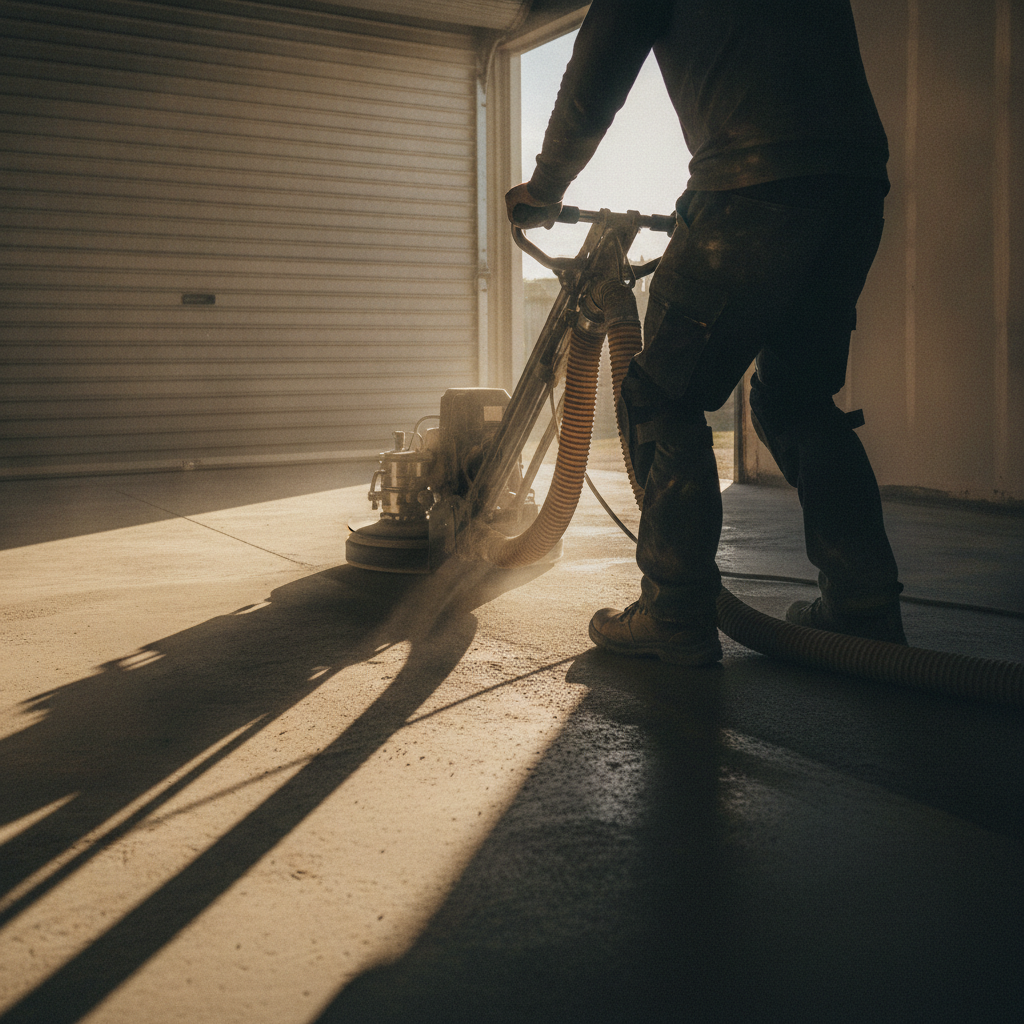
Surface preparation. This is the single biggest factor in whether an epoxy floor lasts. A professional installer grinds or shot-blasts the concrete to open the surface profile, allowing the epoxy to bond properly at a mechanical level. Anyone who skips straight to rolling product over bare, unprepared concrete is cutting corners you’ll pay for later. Ask them directly what prep method they use and why.
The coating system. Not all epoxy is equal. There’s a big difference between a thin, water-based epoxy paint sold in hardware stores and a properly formulated, 100% solids epoxy system applied in multiple coats. A reliable installer will tell you the brand and product line they’re using, the total dry film thickness you’ll end up with, and how many coats are going down. If they can’t answer those questions, walk away.
Moisture testing. Concrete slabs in Melbourne, particularly ground-level slabs without a vapite membrane, can carry enough moisture vapour to cause adhesion failure. A good installer will test moisture levels before quoting. It’s a simple step that prevents a very expensive problem.
References and photos. Ask to see finished jobs from the past 12 months. Photos are fine, but an installer confident in their work will give you a reference you can actually call. A floor looks different six months after installation than it does on install day, so recent references tell you more than anything.
How do you get an accurate quote for epoxy flooring near you?
To get an accurate epoxy flooring quote near you in Melbourne, have the installer visit the site in person. Give them the floor area in square metres, describe how the space is used, and point out any cracks, previous coatings or moisture issues. Phone or online quotes without a site visit are rarely reliable enough to compare properly.
A few practical things to have ready before the visit:
Know your floor area. Measure the length and width of the space in metres and multiply them together. Odd-shaped areas can be broken into rectangles. This saves time and gives the installer something concrete to work with when they arrive.
Be honest about the history of the slab. Has it had a previous coating? Has it been subject to oil spills, chemical exposure or heavy vehicle traffic? Was it a wet area? All of this affects prep time and product choice, and it will come out during prep anyway, so there’s no point hiding it.
Ask about the finish options. Epoxy flooring covers a wide range of looks and performance levels. A metallic epoxy system gives a swirling, high-gloss decorative finish. A flake system (also called a chip or broadcast floor) offers excellent slip resistance and hides minor imperfections well. Solid colour epoxy gives a clean, commercial look. Each has different pricing and different maintenance requirements, so understanding the options helps you make a better decision than just going for the cheapest number on the quote.
What red flags should you watch out for?
Red flags when hiring an epoxy flooring installer near you include: no mention of surface preparation, a quote provided without seeing the floor, pressure to pay a large deposit before work begins, no written breakdown of what the job includes, and reviews that are all five stars posted within the same week. Genuine businesses accumulate reviews gradually over time.
One of the most common complaints about budget epoxy jobs is peeling and delamination within the first year. This almost always traces back to poor prep or using an underpowered product. The cost to remove a failed epoxy floor and redo it properly is significantly more than the money saved going cheap in the first place. Diamond grinding alone, done correctly, can account for 30 to 40 percent of the total labour on a professional install. If a quote looks too low, that’s usually the line item that’s been cut.
Also be wary of installers who can’t or won’t tell you the recoat window. Epoxy systems have a critical overcoat window, the period during which subsequent coats must be applied for proper intercoat adhesion. If that window is missed, the coats can separate. A professional knows these windows and schedules their work around them.
How long does epoxy flooring take to install and when can you use the floor?
Most residential and light commercial epoxy flooring jobs in Melbourne take one to two days for installation, depending on the size of the area and the coating system chosen. Light foot traffic is generally possible after 24 hours, but full cure for heavy use or vehicle traffic typically takes five to seven days. Your installer should give you a clear timeline before work starts.
Weather affects cure time. A warm, dry Melbourne summer day speeds things up. A cold, damp week in winter slows the process down. A good installer factors this into the schedule rather than quoting a flat turnaround regardless of conditions.
During cure, keep the floor clear of foot traffic, moisture and debris. Even small amounts of dust or moisture settling onto a partially cured floor can affect the final surface. Most installers will tape off the area and give you clear instructions on when it’s safe to re-enter.
Planning ahead matters. If it’s a garage, move vehicles out a few days early so the floor is dry and clean. If it’s a commercial space, plan the shutdown around the cure window so you’re not scrambling to reopen before the floor is ready.
Contact Metal and Flake for epoxy flooring installation near you.