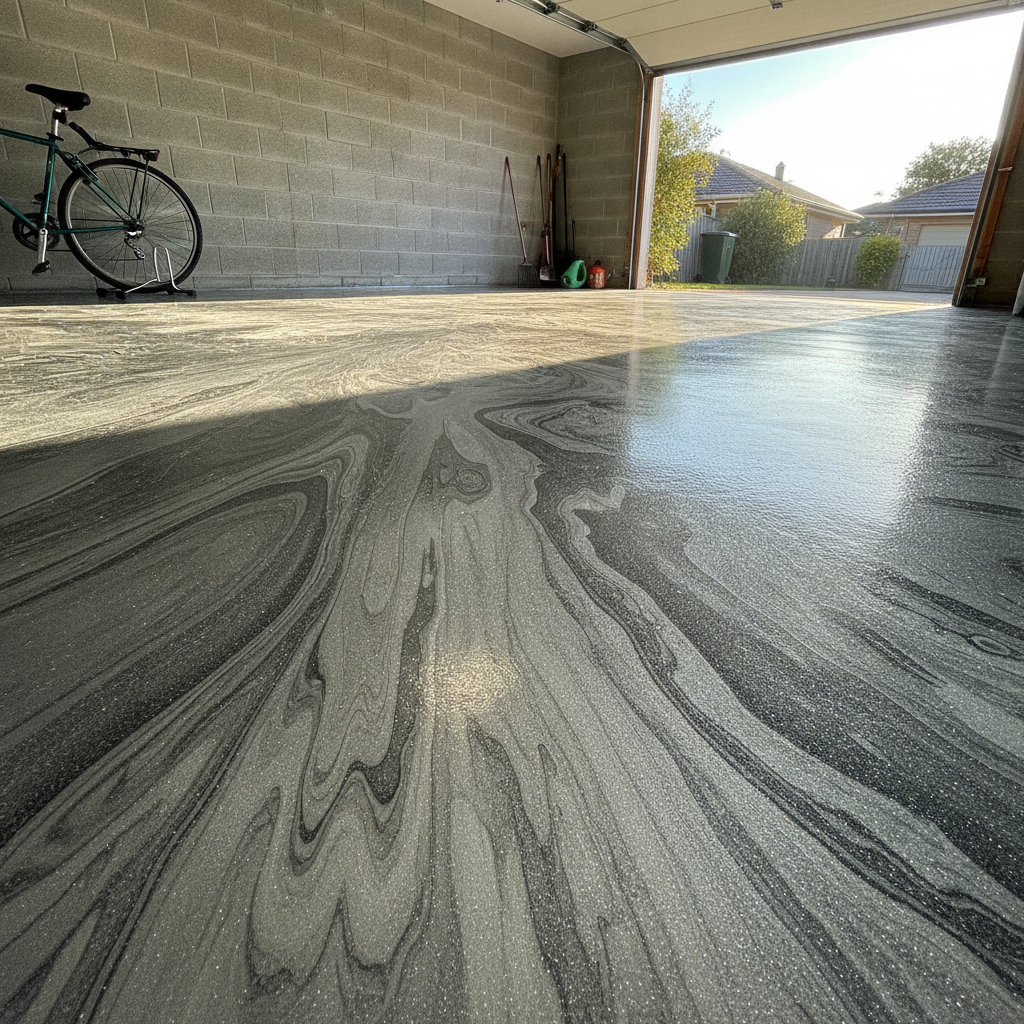
Epoxy Floors in Preston: Garage Coating Options for Local Homeowners
Epoxy floors in Preston are a practical, long-lasting upgrade for homeowners who want a garage that handles daily punishment without looking like a car park. A properly installed epoxy coating bonds directly to the concrete slab, resists oil, tyre marks and chemical spills, and can last well over a decade with basic maintenance. Here is a plain-English breakdown of the main coating options available and what to expect from the process.
Why are epoxy floors popular with Preston homeowners right now?
Preston homeowners are choosing epoxy floors because the suburb’s mix of period homes and newer builds means most garages are sitting on raw, ageing concrete that stains easily and looks tired fast. Epoxy seals that surface completely, stops dust lifting off the slab, and turns what is usually a neglected space into somewhere you actually want to spend time, whether that is a home workshop, a gym or just a clean spot to park the car.
The northern suburbs of Melbourne also deal with some reasonably hot summers. Bare concrete absorbs heat and radiates it back, while a coated floor with a light colour or metallic finish reflects light and keeps the space noticeably more comfortable. On top of that, a clean, sealed garage floor photographs well, and plenty of Preston owners have noticed it adds perceived value when they come to sell.
The bottom line is simple: a raw concrete floor is a liability. It stains, it dusts, and it is impossible to clean properly. An epoxy coating solves all three problems in one hit.
What epoxy floor coating options are available for a Preston garage?
The main coating systems available for garage floors break down into four broad categories, each suited to a different look, budget and level of use. Knowing the difference before you get a quote means you can have a proper conversation with your installer rather than just picking a colour from a brochure.
Solid colour epoxy. This is the entry-level option and still the most common. A primer coat goes down first, then one or two broadcast coats of pigmented epoxy, finished with a clear polyurethane topcoat for extra hardness. Solid colours like battleship grey or off-white are easy to clean and make the space feel bigger. For a single-car garage of around 20 to 25 square metres, this system is generally the most affordable route to a sealed, professional finish.
Flake or chip systems. Coloured vinyl flakes are broadcast into the wet epoxy base coat, creating a speckled finish that hides minor surface imperfections and day-to-day dirt far better than a solid colour. The flake size, density and colour blend are all customisable. A full broadcast (where flakes cover 100 percent of the surface) gives a consistent, almost terrazzo-like look. Partial broadcast leaves more of the base colour showing for a subtler effect. This is one of the most popular systems in residential garages because it performs well and looks sharp without feeling over the top.
Metallic epoxy. Metallic pigments are mixed into the epoxy resin, then manipulated while wet using rollers, blowers or squeegees to create swirling, three-dimensional patterns that catch the light differently depending on the angle. No two floors come out identical. This system suits homeowners who want a showroom-quality result in a home gym, workshop or display space. The process requires more skill and time on site, so it sits at the premium end of the pricing scale.
Anti-slip and heavy-duty coatings. For garages that double as workshops, aggregate such as aluminium oxide or fine quartz sand is added to the topcoat to create texture underfoot. This is worth discussing if you are regularly working around wet equipment, motorbikes or anything mechanical where a slippery surface creates a genuine safety risk.
How does surface preparation affect the quality of epoxy floors in Preston?
Surface preparation is the part most DIY epoxy kits gloss over, and it is the single biggest reason budget floor paint fails within a year or two. Epoxy cannot bond properly to a smooth, sealed or contaminated surface. It needs an open, porous concrete profile to grab on to.
The professional standard is diamond grinding. A commercial grinder fitted with diamond-segment heads removes the top layer of the slab, opens up the concrete pores and levels out minor high spots. The result is a surface with a consistent texture, sometimes described as feeling like 80-grit sandpaper. Acid etching, which is the method most hardware-store kits recommend, is a rougher, less predictable process and leaves residue that needs thorough rinsing and drying time.
Any cracks, spalling or surface voids also need to be filled with an epoxy filler or polyurea before the base coat goes down. Skipping this step means those imperfections telegraph through the finished coating. In older Preston homes where the garage slab has seen 40 or 50 years of use, this repair stage can take as long as the grinding itself.
Moisture is the other major factor. If moisture is coming up through the slab (common in older properties without a proper vapour barrier), the epoxy can blister and delaminate within months. A reputable installer will do a simple plastic sheet test before quoting, taping a square of plastic to the floor overnight and checking for condensation underneath in the morning. If there is a moisture issue, a moisture-tolerant primer or a different coating system is needed.
What should Preston homeowners expect from the installation timeline?
A standard residential garage epoxy job in Preston typically runs across two days, sometimes three depending on the system chosen. Day one is all preparation: grinding, crack repairs and vacuuming. The primer coat goes down and is left to cure overnight. Day two covers the base coat and flake or metallic layer. The topcoat follows, and the floor is left to cure before foot traffic is allowed, usually 24 hours for walking and around 72 hours before you drive a car back in.
Temperature matters here. Epoxy cures best between about 10 and 30 degrees Celsius. In the middle of a Preston summer, a poorly ventilated garage can push past that upper limit and cause the resin to cure too fast, leading to surface issues. A good installer will schedule around the forecast and start early in the day to avoid peak afternoon heat.
Plan to have the garage completely cleared before the crew arrives. That means everything off the floor: shelving, toolboxes, bikes, the lot. Moving belongings mid-job adds time and increases the risk of contaminating a freshly primed surface.
How do you keep an epoxy garage floor looking good long term?
One of the genuine advantages of epoxy over bare concrete is how easy it is to maintain. For routine cleaning, a dust mop or leaf blower handles loose debris, and a damp mop with a pH-neutral cleaner takes care of the rest. Avoid harsh solvents or bleach-based cleaners on a regular basis; they will not destroy the coating overnight, but they will dull the topcoat over time.
Oil spills are best wiped up promptly. While cured epoxy is oil-resistant, letting a large spill sit for an extended period can cause staining, particularly on lighter-coloured finishes. A flake system is more forgiving here because the pattern breaks up any discolouration.
Sharp, concentrated point loads (think the metal feet of a heavy workshop jack or a bike stand) can indent or scratch the surface if dragged. Rubber or felt pads under heavy equipment protect the topcoat without any fuss. With that basic level of care, a quality epoxy floor in a residential garage should hold up comfortably for ten to fifteen years before it needs any attention.
Book epoxy floor installation in Preston with Metal and Flake