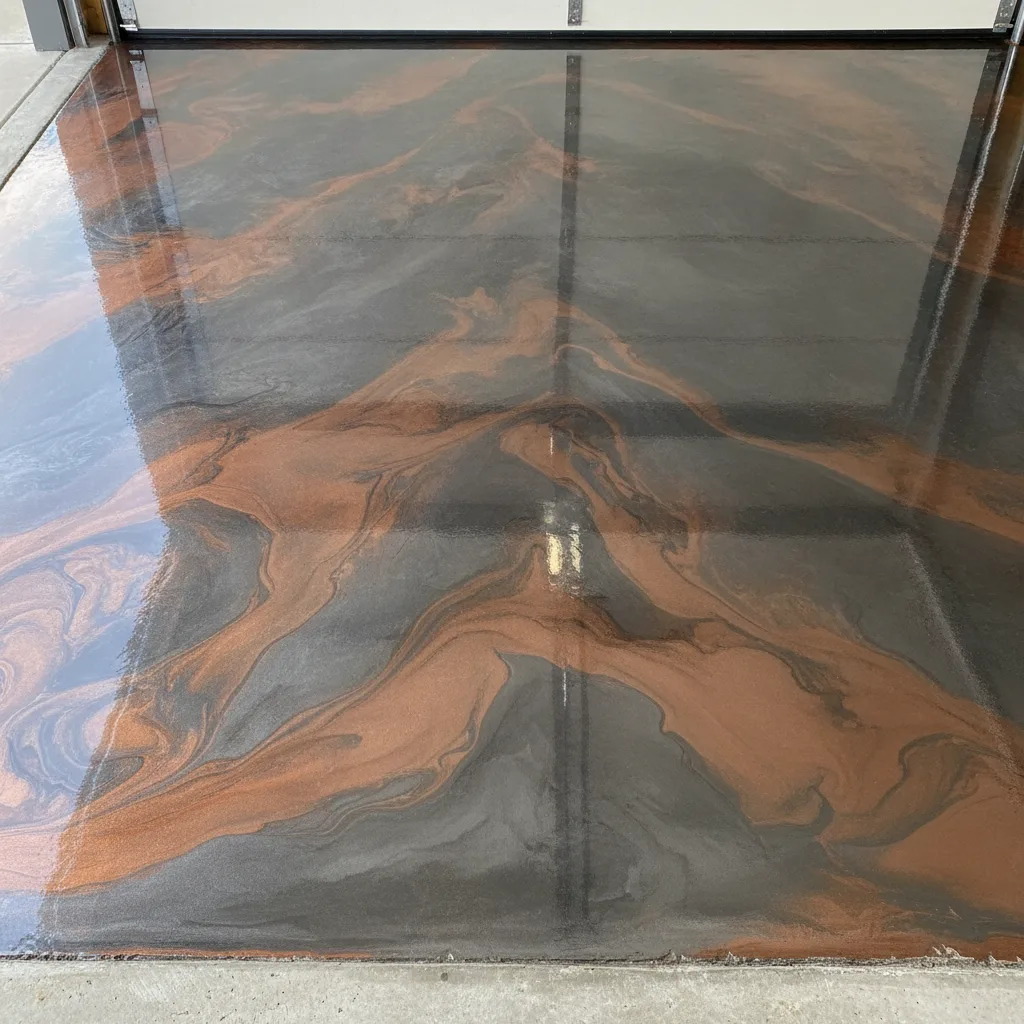
Metallic Epoxy Floors: Design Ideas and What to Expect in Melbourne
Metallic epoxy is a resin flooring system that blends pigmented metallic powders into a clear epoxy coat to create a flowing, three-dimensional effect. It works in garages, living areas, showrooms and commercial spaces. Installations are typically completed in two to three days and produce a hard-wearing, seamless surface that looks nothing like standard painted concrete.
What makes metallic epoxy different from standard epoxy coatings?
Standard epoxy coatings use a solid or flake-broadcast colour to cover a slab. Metallic epoxy works differently: fine metallic pigments are suspended in the resin and manipulated while wet, using rollers, brushes and air tools, to create depth and movement in the finish. The result is a one-of-a-kind surface because no two pours behave the same way.
That unpredictability is actually the point. The installer uses technique to guide the pattern, but the pigments settle and swirl in ways that make every floor genuinely unique. A garage in Doncaster will never look exactly like one in Werribee, even if the same colour palette is used.
The topcoat is usually a polyaspartic or polyurethane clear coat, applied over the metallic layer once it has cured. That clear coat is what gives the floor its gloss and its durability. On a properly prepared slab, a metallic epoxy system can handle the traffic of a busy workshop or a high-end retail space without peeling or dulling.
What metallic epoxy design ideas work best for Melbourne spaces?
The most popular metallic epoxy designs combine two or three pigment colours that blend at their edges. Neutral palettes like warm greys, silvers and whites suit Melbourne’s coastal and industrial-inspired interiors. Darker bases with gold or copper highlights work well in showrooms and entertainment spaces where drama is the goal.
Here are a few approaches that consistently produce strong results:
- Single-colour pearl finish. One metallic pigment, usually silver, white pearl or champagne, is spread and manipulated to create subtle waves. It reads almost like polished concrete but with noticeably more depth. Great for open-plan living areas where the floor needs to feel calm rather than loud.
- Two-tone lava or ocean effect. Two contrasting pigments, for example charcoal and copper or midnight blue and silver, are applied together and blended with a brush or leaf blower while wet. The collision point creates a lava or tide-line effect. This is one of the most requested looks for residential garages and man caves.
- Dark base with veining. A near-black base coat is laid first, then a contrasting metallic pigment is pulled through it in thin veins that mimic stone. The result looks like a high-end marble or granite without the cost or the cold feel underfoot.
- Full-colour statement floor. Bolder pigments, reds, blues, bronzes, are used in commercial or hospitality settings where the floor itself is a branding element. A gym, car dealership or cafe can build an entire visual identity around a floor colour.
The size of the space matters too. In a smaller area like a bathroom or laundry, a single soft pearl colour avoids visual overload. In a wide-open garage or warehouse floor, bolder contrasts read better because there is enough space for the pattern to develop fully.
How does the metallic epoxy installation process actually work?
The installation process follows a clear sequence, and understanding it helps you plan around the downtime. Skipping or rushing any stage is where problems start, so a professional crew will not cut corners here.
First, the concrete slab is diamond-ground or shot-blasted to open up the surface profile. Epoxy bonds to concrete mechanically, not just chemically, so the surface needs to be clean, dry and rough at a microscopic level. Any cracks, spalling or moisture issues are addressed at this stage. Skipping prep is the number one cause of peeling floors, full stop.
Next, a primer or base coat is applied to seal the slab and give the metallic layer something to grip. Once that cures, the metallic epoxy itself is poured and spread. This is the creative stage. The installer works quickly while the product is still wet, using rollers, notched squeegees, chip brushes and sometimes a heat gun or leaf blower to push the pigments into the desired pattern. Pot life (the working window before the epoxy begins to set) is typically 20 to 40 minutes depending on temperature and product formulation, so the pace is deliberate and methodical.
After the metallic layer cures, usually overnight, the clear topcoat goes down in one or two passes. This seals the pigments, adds the gloss and provides the abrasion resistance. Full cure to foot traffic is generally 24 hours. Full cure to vehicle traffic is 48 to 72 hours.
Melbourne’s climate is worth mentioning here. Humidity above 85 percent or concrete temperatures below 10 degrees Celsius can cause adhesion problems and surface cloudiness. Reputable installers carry moisture meters and will reschedule if conditions are not right rather than push ahead and risk a failed job.
What should you budget for metallic epoxy flooring in Melbourne?
Pricing for metallic epoxy in Melbourne typically sits higher than standard solid-colour epoxy because the materials cost more and the installation requires more skill and time. As a rough guide, residential metallic epoxy installations generally range from around $80 to $150 per square metre depending on the complexity of the design, the condition of the existing slab and the number of coats involved.
A standard double garage of roughly 36 square metres might land somewhere between $2,900 and $5,400 all up, but that figure shifts based on how much prep work the slab needs. A slab with significant cracking or contamination from oil spills will cost more to prepare than a clean, freshly poured one. Always get a quote that breaks out the prep cost separately so you know what you are actually comparing between installers.
Cheaper quotes sometimes exclude the topcoat, which is where most of the floor’s durability comes from. A metallic layer without a proper clear coat will scratch and dull within months under foot or vehicle traffic. Confirm that any quote includes at least one full-coverage polyaspartic or polyurethane clear coat as a minimum.
How do you maintain a metallic epoxy floor once it is installed?
Metallic epoxy floors are genuinely low-maintenance, which is one of the reasons homeowners and business owners keep choosing them. Day-to-day cleaning is a dust mop or a damp mop with a pH-neutral cleaner. Avoid vinegar-based or citrus-based cleaners because the acid can break down the topcoat over time.
For garages, put felt pads under the legs of tool cabinets and workbenches. Point-load pressure from sharp metal feet can chip a cured epoxy surface, especially at the edges of the topcoat. A drip mat under vehicles that have a known oil leak also helps keep the surface looking sharp longer.
Most residential metallic epoxy floors will hold their gloss for five to ten years with normal care before any maintenance coat is needed. Commercial floors with heavier traffic might need a maintenance coat every three to five years. Either way, a recoat is straightforward and far cheaper than a full reinstallation.
If you are ready to see what a metallic epoxy floor could look like in your garage, showroom or living space, get a metallic epoxy floor installation quote from Metal and Flake.