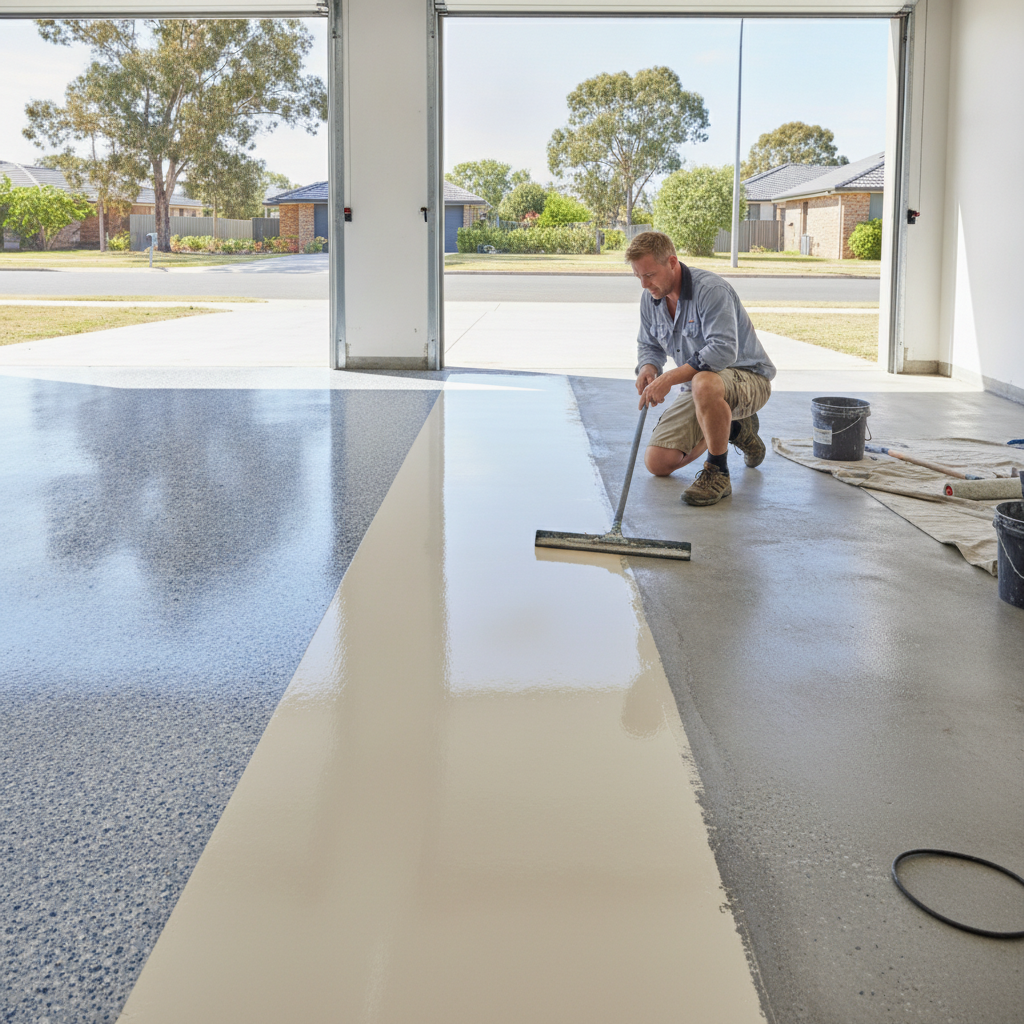
Garage Floor Ideas for Sunbury Homes: Which Coating Suits You?
The best garage floor ideas for Sunbury homes balance durability, appearance and budget. Bare concrete cracks, stains and gets dusty over time. A quality floor coating, such as an epoxy or flake system, seals the surface, handles vehicle traffic and chemical spills, and lifts the whole look of the space. The right choice depends on how you use the garage and what finish you want.
Why does a bare concrete garage floor cause so many headaches?
Bare concrete is porous, which means it absorbs oil, brake fluid and tyre marks almost immediately. Over time it dusts, cracks and becomes impossible to clean properly. For Sunbury homeowners, whose garages often double as workshops, storage areas or even home gyms, that porous surface becomes a constant frustration that no amount of mopping fixes.
Concrete is also weaker at the surface than it looks. Seasonal temperature swings around the Macedon Ranges area put real stress on untreated slabs. You end up with hairline cracks, spalling edges and a floor that looks tired long before the rest of the home does.
A good coating bonds directly to the concrete, creating a sealed, hard-wearing layer that resists moisture penetration and is easy to wipe down after a weekend project. It also reflects light, which makes a garage feel noticeably larger and brighter without touching the walls or ceiling.
What are the most popular garage floor ideas in Sunbury right now?
The most popular garage floor ideas in Sunbury right now are solid-colour epoxy coatings, decorative flake (chip) systems and metallic epoxy finishes. Solid epoxy suits homeowners who want a clean, functional look. Flake systems add texture and hide minor imperfections. Metallic finishes deliver a high-end, showroom appearance that suits people who treat the garage as an extension of the home.
Here is a plain rundown of each option:
Solid epoxy coatings. A two-part epoxy is mixed and applied directly to prepared concrete. The result is a smooth, gloss or satin surface in your chosen colour. It is chemical-resistant and stands up to jack stands, trolley jacks and dropped tools without chipping. It is one of the most cost-effective ways to protect and transform a garage slab.
Flake or chip systems. Coloured vinyl flakes are broadcast into a wet epoxy base coat, then sealed with a clear top coat. The flakes create a speckled, stone-like appearance and add a non-slip texture underfoot. This is a practical choice for a working garage because the pattern disguises dirt between cleans. Metal and Flake in Sunbury specialises in exactly this finish, offering a range of flake blends that suit everything from a suburban double garage to a large workshop.
Metallic epoxy. Metallic pigments are mixed into the epoxy to create a flowing, three-dimensional look similar to polished stone or poured metal. No two floors are identical. This finish tends to suit show garages, home studios or man-cave setups where appearance is front of mind.
Polyaspartic coatings. A polyaspartic top coat can be applied over epoxy or on its own. It cures faster than standard epoxy (often within a few hours), handles UV exposure without yellowing and is highly scratch-resistant. It is often used as a clear coat over a flake system for a finish that lasts longer between maintenance.
How do you choose the right garage floor coating for your situation?
Choosing the right garage floor coating comes down to three questions: How do you use the space? How much preparation does your existing slab need? And what is your budget? A heavily used workshop benefits most from a flake system with a polyaspartic top coat for durability and easy cleaning. A garage used mostly for parking and storage does well with a solid epoxy. A prestige home gym or showroom garage is a natural fit for metallic epoxy.
Slab condition matters a lot. Concrete that has never been coated needs to be properly diamond-ground or acid-etched before any product goes down. Skipping surface prep is the single biggest reason coatings peel within a year or two. A professional applicator will assess moisture levels in the slab, check for previous sealers and determine the right primer before committing to a system.
Budget is real too. A basic solid epoxy on a standard double garage in the Sunbury area will cost less than a full metallic system with multiple coats. But consider the long game: a properly installed flake and polyaspartic system on a 40-square-metre slab is expected to last well over a decade with minimal maintenance, which works out far cheaper than repainting bare concrete every few years.
What preparation does a Sunbury garage slab typically need before coating?
Most Sunbury garage slabs need at least mechanical grinding with a diamond grinder to open the surface pores and create a profile the epoxy can grip. Older slabs may also need crack repair, concrete patching for spalled areas and a moisture barrier primer if water is wicking up from below. Without these steps, even premium coatings will fail early.
This is where the difference between a DIY kit and a professional application becomes obvious. Hardware store kits rely on acid etching rather than grinding, and they use a much thinner coating. Professional-grade products applied after proper mechanical prep are significantly thicker and more durable. The Epoxy Industry Association of Australia notes that surface profile, not coating brand, is the leading factor in how long a floor coating lasts. That is worth keeping in mind when comparing quotes.
Also worth checking: if your garage slab is less than 28 days old, or if it has been previously sealed with a penetrating sealer, some coatings will not bond correctly. A professional will test with a water drop before quoting. If the water beads, the slab needs more prep work before any coating goes down.
How do you keep an epoxy garage floor looking good long-term?
Keeping an epoxy or flake garage floor in good shape is straightforward. Sweep or blow out dust and grit regularly, since fine particles act like sandpaper underfoot over time. Mop with a pH-neutral cleaner when needed. Avoid dragging heavy metal objects directly across the surface, and use rubber-backed mats under car ramps or heavy workshop equipment.
If you have a polyaspartic top coat, the surface is more scratch-resistant and handles UV without fading or yellowing, which is particularly useful for a garage that gets direct afternoon sun. Garages in Sunbury’s western corridor can cop some serious heat in summer, and standard epoxy without a UV-stable top coat will chalk or dull over time when exposed to direct sunlight through open garage doors.
Most professionally installed systems need little more than a light clean every week or two and a closer inspection every couple of years to catch any areas where the top coat might benefit from a touch-up. Compare that to bare concrete, which needs regular sweeping, still stains, and cannot really be restored without a full coating anyway.
Whether you are after a clean, practical finish for a working garage or a head-turning metallic floor for a showroom setup, the starting point is the same: proper prep and the right product for your slab. Get a free epoxy floor coating quote from Metal and Flake in Sunbury.