Epoxy Flake Floors Melbourne: Commercial & Residential Applications
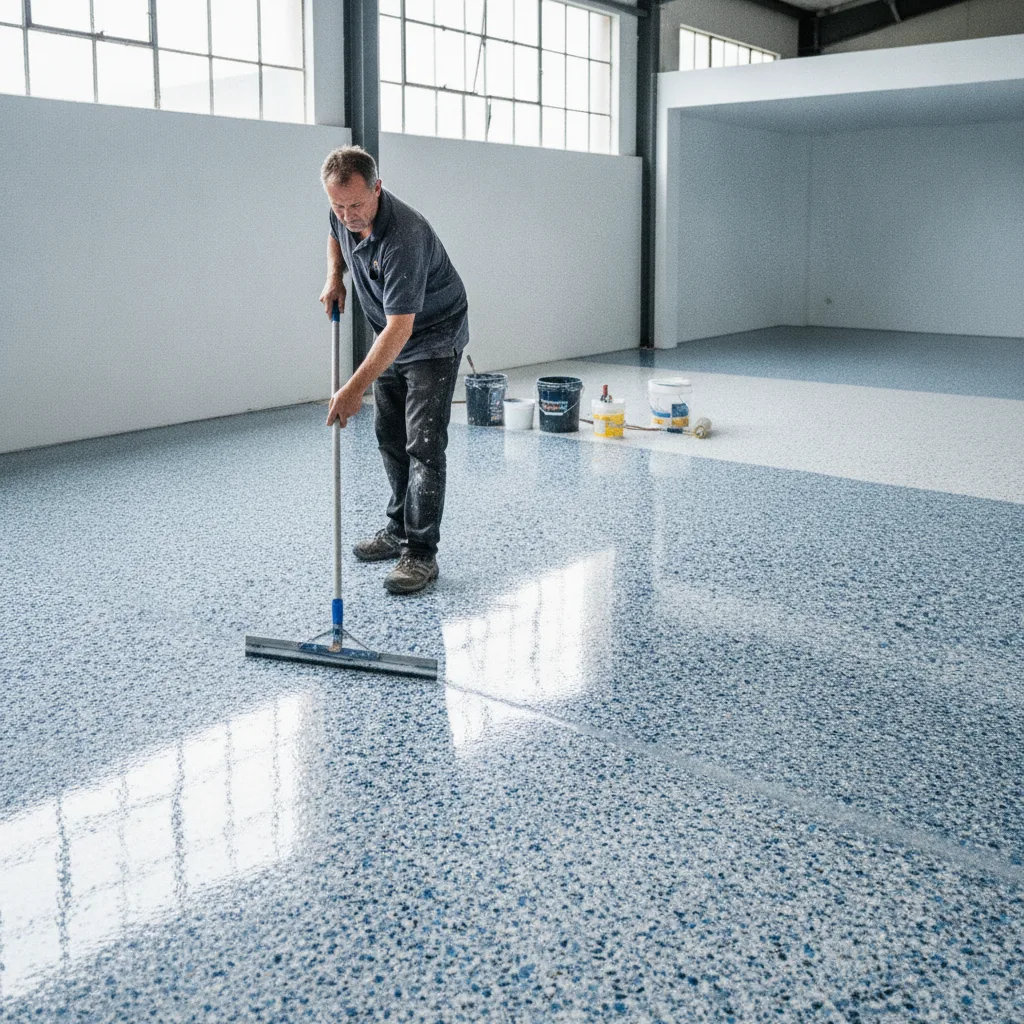
An epoxy flake floor is a multi-layer resin system broadcast with decorative vinyl flakes, then sealed with a clear topcoat. In Melbourne homes and businesses it delivers a seamless, slip-resistant surface that handles heavy traffic, moisture and UV exposure. Installation typically takes one to two days, and the finished floor can last well over a decade with basic maintenance.
What exactly is an epoxy flake floor and how is it installed?
An epoxy flake floor starts with a base coat of pigmented epoxy applied directly to prepared concrete. Decorative vinyl flake chips are then broadcast across the wet coat at a chosen density, allowed to cure, scraped flat and sealed with one or more layers of a polyaspartic or polyurethane topcoat. The result is a thick, monolithic surface with built-in texture and colour.
The process matters as much as the product. Concrete preparation is the step that most separates a long-lasting result from one that peels within a year. Moisture testing, crack repair and diamond grinding or shot-blasting all happen before a single drop of resin touches the slab. Skipping any of those steps is the most common reason epoxy floors fail prematurely, regardless of the brand of coating used.
Flake density is another variable worth understanding. A full broadcast covers virtually every square centimetre of the base coat, producing a bold, highly textured look popular in commercial settings. A partial broadcast leaves patches of the base colour showing through, giving a more speckled, refined appearance that suits residential spaces and boutique retail fitouts. Both approaches result in the same underlying durability.
Where in Melbourne are epoxy flake floors most commonly used?
Epoxy flake floors are most commonly installed in Melbourne garages, warehouses, commercial kitchens, gyms, medical facilities, retail showrooms and residential living areas. Each setting benefits from the surface’s resistance to chemicals, abrasion and heavy point loads, while the decorative flake layer makes it visually appealing enough for customer-facing and family spaces alike.
Residential garages are the single most popular application across Melbourne’s suburbs. A bare concrete slab is porous, stains from oil and tyre rubber almost immediately, and generates fine dust that works its way into the rest of the house. An epoxy flake system seals that porosity, makes spills easy to wipe away and transforms what is often a drab utility space into something genuinely presentable. Many homeowners extend the coating into adjacent laundries or workshops for continuity.
On the commercial side, gyms and fitness studios represent a fast-growing category. A full-broadcast flake floor with a slip-resistant topcoat meets the safety expectations of a training environment while standing up to dropped weights, rubber mats and constant foot traffic. Warehouses and light manufacturing facilities choose epoxy flake for similar reasons, with the added benefit that clearly defined floor zones can be incorporated during installation using contrasting flake colours or inlaid line markings.
Medical clinics, dental practices and veterinary facilities also turn to epoxy flake regularly. The seamless, non-porous surface is straightforward to sanitise, and there are no grout lines or joins where bacteria or moisture can accumulate. That same quality makes it practical in commercial kitchens, where health inspectors expect surfaces that can be properly cleaned and do not harbour contaminants.
How does an epoxy flake floor compare to polished concrete or tiles?
Compared to polished concrete, an epoxy flake floor offers more colour choice, better slip resistance through its textured topcoat and a lower installation cost on slabs that are not in good enough condition to polish. Compared to tiles, it eliminates grout lines, creates a fully seamless surface and can be installed with less labour time. The trade-off is that epoxy is harder to patch invisibly if a section is ever damaged.
Polished concrete is a beautiful finish, but it demands a high-quality, relatively flat slab to begin with. Cracks, pitting and surface variation that would simply be buried under epoxy become visual features in polished concrete, and not always in a desirable way. For Melbourne homes built on older or more variable slabs, epoxy flake is often the more practical path to a premium-looking floor.
Tiles remain popular in wet areas, and with good reason, but the grout issue is real. In busy households or commercial kitchens, grout discolours, harbours mould and eventually cracks. An epoxy flake system sealed with a quality polyaspartic topcoat has no grout at all, and the topcoat itself is formulated to resist moisture penetration. For spaces where hygiene or ease of cleaning is a priority, that difference is meaningful.
How long does an epoxy flake floor last in Melbourne’s climate?
A properly installed epoxy flake floor in Melbourne typically lasts 10 to 20 years before requiring significant attention, depending on traffic levels and topcoat quality. Melbourne’s temperature swings between seasons can stress coatings on slabs with high moisture vapour transmission, which is why moisture testing before installation is non-negotiable. A UV-stable polyaspartic topcoat also prevents the amber yellowing that older epoxy formulations were known for.
The polyaspartic topcoat is worth understanding separately from the epoxy base. While the base coat provides bonding strength and build, polyaspartic is harder, cures faster and offers better UV resistance than standard epoxy topcoats. For Melbourne spaces that receive direct sunlight through garage doors or large windows, that UV stability is the difference between a floor that stays crisp-looking for a decade and one that yellows within a couple of years.
Maintenance is straightforward: regular sweeping and occasional mopping with a pH-neutral cleaner is all that is typically required. Avoid harsh solvents and abrasive scrubbing pads, both of which can dull the topcoat over time. With that basic care routine, the floor holds its finish well and the vinyl flakes remain vivid and intact throughout its service life.
What colours and flake sizes are available for Melbourne properties?
Epoxy flake floors are available in dozens of colour blends, and most suppliers offer flake sizes ranging from roughly 1mm up to 12mm or larger. Small flakes create a finer, more uniform texture, while larger flakes produce a bolder, more dramatic visual. Base coat colour, flake blend and broadcast density all work together, so the best approach is to review physical samples against the space’s lighting and existing finishes before committing.
Neutral blends, think greys, charcoals and warm whites, are the most consistent sellers across Melbourne residential projects because they sit quietly against most interior palettes and do not date quickly. Commercial clients often choose blends that align with their brand colours, or that contrast strongly with yellow safety markings on warehouse floors. The flexibility of the system is one of its genuine strengths: no two blends look quite the same once broadcast and sealed, giving each floor its own character.
It is worth remembering that the topcoat sheen level also shapes the final appearance. A high-gloss finish amplifies depth and colour vibrancy, which works beautifully in showrooms and residential garages. A satin or matte topcoat reduces glare and hides fine surface marks more readily, making it a practical choice for gyms, clinics and any space under fluorescent or industrial lighting.
Choosing well from the start means fewer regrets once the job is done. A reputable installer will walk you through sample boards, ask about the use of the space, the lighting conditions and your expectations for slip resistance, and recommend a specification that fits all of those factors rather than just defaulting to whatever is easiest to apply.
Book Metal and Flake for epoxy flake floor installation in Melbourne