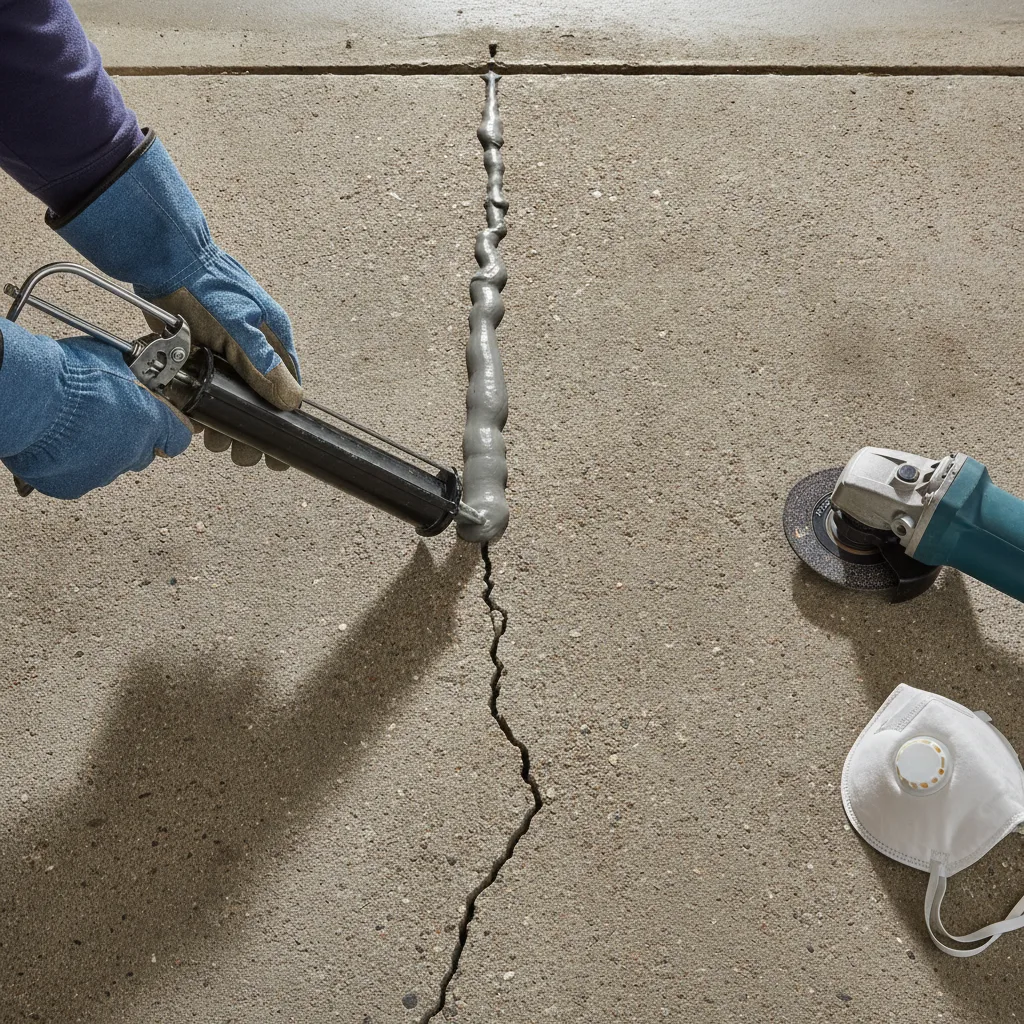
Concrete Crack Repair: How to Fix and Protect Your Concrete
Concrete crack repair involves cleaning out the damaged area, applying a suitable filler or resurfacer, and sealing the surface to stop moisture getting in. Done correctly, it restores structural integrity and prevents further deterioration. The right method depends on crack width, depth, cause and what the slab is used for. Getting those details right is what separates a lasting repair from one that fails within months.
Why does concrete crack in the first place?
Concrete cracks for a handful of well-understood reasons: shrinkage as it cures, movement in the sub-base, thermal expansion and contraction through Melbourne’s season swings, and plain old heavy loading over time. Hairline cracks up to about 0.3 mm wide are almost always shrinkage cracks and are largely cosmetic. Cracks wider than 3 mm, or any crack that shows vertical displacement on either side, signal something more serious happening below the surface.
Tree roots, poor drainage, and inadequate steel reinforcement are repeat offenders in residential slabs. Garages and driveways cop it harder than most because they carry vehicle loads and see constant wet-dry cycles. Understanding the cause matters because if you patch the crack without fixing what caused it, the crack simply comes back, often in the same spot within a year or two.
In Melbourne specifically, the reactive clay soils in many suburbs shrink in dry summers and swell after rain. That seasonal ground movement is responsible for a significant number of the cracked garage slabs and paths that homeowners deal with year after year. Addressing drainage around the slab can reduce how often cracks reappear after repair.
What are the different concrete crack repair methods?
The main concrete crack repair methods are polyurethane or epoxy injection for structural cracks, flexible polyurethane sealant for moving cracks at joints, dry-pack mortar for wide surface voids, and epoxy or cementitious resurfacers for broad surface crazing. The right method depends on whether the crack is active (still moving) or dormant (stable), how wide it is and whether it goes all the way through the slab.
Here is a plain-English breakdown of the most common approaches:
- Polyurethane crack injection. A two-part expanding foam is injected under low pressure into the crack. It bonds to the concrete and stays slightly flexible, which suits cracks that see minor movement. Often used for basement walls and foundations.
- Epoxy injection. Rigid and very strong. Best for dormant structural cracks where the two faces need to be bonded back together. Not suitable for cracks that are still moving because the rigid resin will simply crack again at the same point or an adjacent one.
- Concrete crack filler (polymer-modified mortar). Suitable for surface cracks and spalls up to about 10 mm wide. Trowelled in, feathered at the edges and left to cure. Good for driveways and paths where you need a trafficable surface quickly.
- Epoxy resurfacing over the whole slab. For slabs with widespread surface crazing or multiple cracks, a full epoxy or polyaspartic resurfacer bonds to the prepared concrete and covers the lot. This is exactly what Metal and Flake install on garage floors throughout Melbourne. It locks in repaired cracks, protects the surface from oil, water and abrasion, and gives you a clean, hard-wearing finish.
A key rule: whatever filler you use, the crack must be clean and dry before product goes in. Chase out loose material with an angle grinder or oscillating tool, blow out the dust, and if the concrete is damp, let it dry thoroughly. Filler applied to a dusty or wet crack will debond, usually within one wet season.
Can you do concrete crack repair yourself, or do you need a professional?
Hairline surface cracks on a path or garden slab are a reasonable DIY job if you follow the prep steps carefully and use a quality flexible filler. Anything wider than about 5 mm, any crack showing displacement, or any crack in a structural element like a beam or footing column should be assessed by a professional before you touch it, because the underlying cause needs to be identified first.
The DIY failure rate on concrete crack repair is high, not because the products are bad, but because preparation is skipped. Most off-the-shelf fillers need the crack to be a minimum width (often 6 to 10 mm) to bond properly. Trying to fill a 1 mm hairline with a backer rod product designed for wide gaps leads to a lumpy mess that peels off in a few months.
For garage floors specifically, a professional approach pays off. A tradie who does epoxy coatings for a living will grind the surface, repair individual cracks with a compatible epoxy filler, and then apply a bonded coating over the top. That process creates a continuous membrane, so individual repaired cracks do not become weak points that telegraph through the finished surface. You end up with a floor that looks sharp, resists moisture and is far easier to keep clean than bare concrete.
How do you protect concrete after crack repair to stop new cracks forming?
Protecting repaired concrete comes down to three things: sealing the surface from water, controlling drainage around the slab and reducing thermal stress where possible. A penetrating concrete sealer or a bonded epoxy coating keeps moisture out of the slab body, which is the single biggest factor in freeze-thaw spalling and ongoing crack growth in Melbourne winters.
Expansion joints are often overlooked. If a slab longer than about four metres has no control joints cut into it, shrinkage cracks will form wherever the concrete decides to relieve stress, which is rarely where you want them. When repairing a cracked slab that has no joints, it is worth sawcutting proper control joints at the same time. Fill those joints with a flexible polyurethane sealant rather than rigid mortar, so the joint can open and close with temperature without forcing the crack to reappear elsewhere.
For garage floors, an epoxy or polyaspartic topcoat does double duty: it seals the concrete against water and oil ingress while giving a surface tough enough to handle vehicle traffic, trolley jacks and dropped tools. The coating bonds to the concrete substrate and creates a barrier that slows carbonation, which is the chemical process that weakens the paste matrix around aggregate over time. Garages treated with a bonded floor coating consistently show less surface deterioration a decade on than untreated slabs sitting next door.
What should you ask a concrete crack repair contractor before hiring them?
Before hiring anyone to repair cracked concrete, ask how they plan to identify the cause of the cracking, what surface preparation method they use, whether the repair product is compatible with any coating going over the top, and what warranty they offer on the finished work. A contractor who jumps straight to quoting without asking about your drainage, soil type or slab age is likely cutting corners on the diagnostic side.
Check that the products they specify are compatible end to end. An epoxy crack filler under a polyaspartic topcoat works well. A cementitious filler under a moisture-sensitive epoxy coating can cause adhesion failure if the filler holds residual moisture. Ask to see a previous job on a similar slab type, and find out how long the business has been operating in your area. Experience with Melbourne’s reactive soils is a genuine advantage over a generalist operator who has mostly worked on stable ground.
Price matters, but the cheapest quote almost always means thinner product, skipped prep or no primer coat. On a 40 square metre garage floor, cutting corners on preparation can mean the whole coating lifts within two years, leaving you to pay twice. A quality job done once is the better investment.
Get a quote for professional concrete crack repair