Concrete Driveway Repairs in Melbourne: What Are Your Options?
Concrete driveway repairs in Melbourne typically cover four main paths: crack injection, resurfacing with a bonded overlay, grinding and patching individual sections, or full slab replacement. The right choice depends on how deep the damage goes, how old the slab is, and what result you want. Most surface issues can be fixed without ripping everything out.
Why do Melbourne driveways crack in the first place?
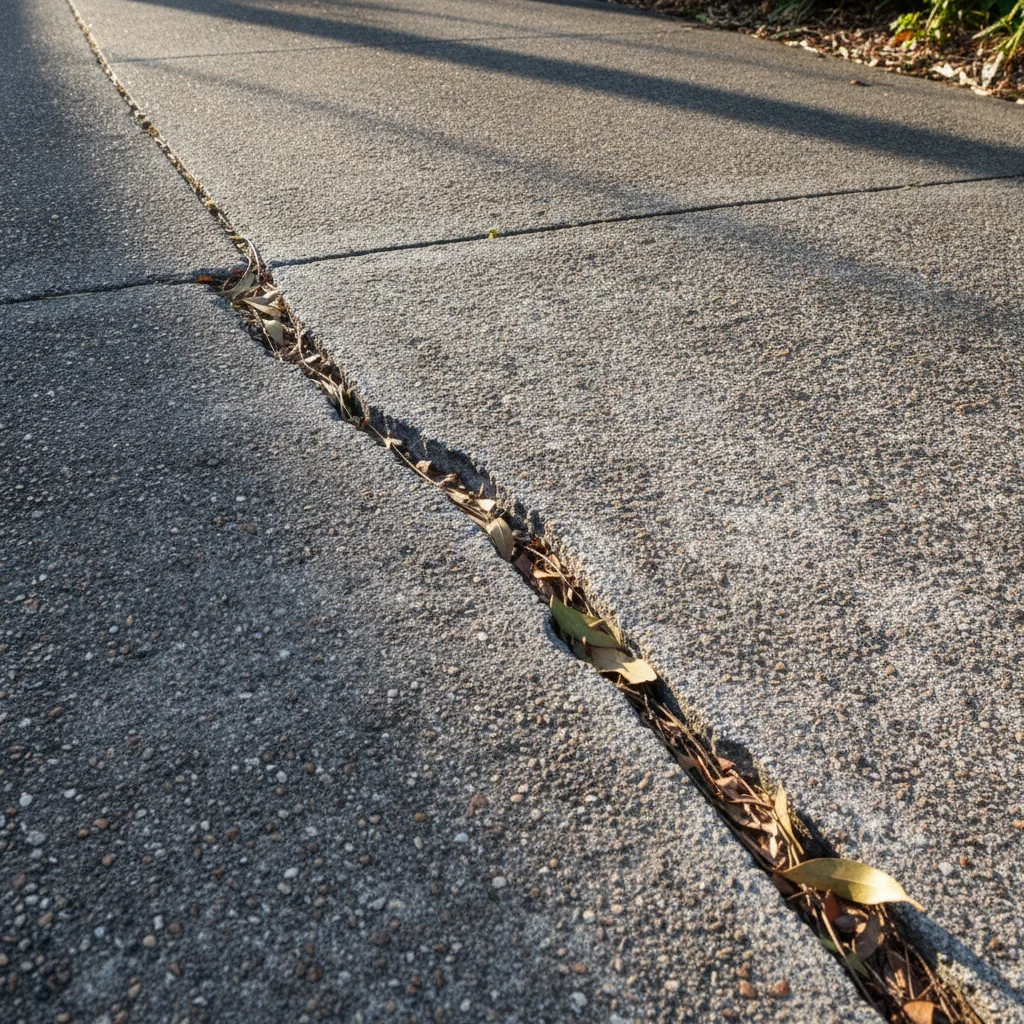
Melbourne’s clay-heavy soils expand when wet and shrink when dry, and that constant movement is the number-one reason concrete driveways crack here. Tree roots, poor drainage, heavy vehicles and inadequate control joints at the time of pour also play a big part. Understanding the cause tells you which repair will actually stick long term.
The city sits on a band of highly reactive soil classified as Class H1 and H2 under AS 2870, the Australian standard for residential slabs and footings. That soil can move by several centimetres across a single season. A driveway poured without properly spaced control joints has nowhere to flex, so it cracks along the path of least resistance. Gum tree roots are a classic culprit in older suburbs like Templestowe, Eltham and Doncaster, where established gardens sit right alongside 40-year-old slabs.
Once you know the cause is soil movement rather than poor concrete mix, you know a simple surface patch will not be a permanent fix. You need to address drainage or root intrusion first, then choose your repair method.
What are the main concrete driveway repair options available?
The main concrete driveway repair options are: crack sealing for minor hairline fractures, epoxy or polyurethane crack injection for structural cracks, resurfacing with a bonded coating or overlay for widespread surface wear, slab lifting (mudjacking or polyurethane foam injection) for sunken sections, and full removal and replacement for slabs that are beyond saving. Each option sits at a different price point and delivers a different lifespan.
Here is a plain-English breakdown of each:
Crack sealing. A flexible polyurethane or silicone sealant is worked into hairline cracks up to about 3 mm wide. It stops water getting in and making the crack worse over winter. It does not restore structural strength, but it buys time and keeps the surface tidy. Good for newer driveways with isolated minor cracking.
Epoxy crack injection. A low-viscosity epoxy resin is injected under pressure into cracks wider than about 3 mm. Once cured, the repair is often stronger than the surrounding concrete. This suits structural cracks where the two sides of the crack are still roughly level with each other.
Concrete resurfacing. A bonded overlay, typically 10 to 20 mm thick, is applied over the existing slab after grinding and profiling the surface. This hides surface scaling, minor cracking and general weathering. A good-quality overlay can last 10 to 15 years with proper prep. This is also the stage where decorative finishes like exposed aggregate texture or a coloured coating can be added.
Slab lifting. Where one panel has sunk relative to its neighbour, a technician drills small holes and injects expanding polyurethane foam (or pumps in a cement-sand slurry in older mudjacking methods) to lift it back to level. Polyurethane foam is lighter and faster to cure. This is far cheaper than replacement and works well when the slab itself is still structurally sound.
Full replacement. When a slab is shattered, severely sunken across multiple panels, or contaminated by oil deep into the concrete, the most cost-effective long-term fix is to break it up, remove it and pour fresh. A 40 square metre residential driveway replacement in Melbourne typically takes two days of labour and then a 28-day curing period before full traffic loads.
How do you know which concrete driveway repair is right for your situation?
The right concrete driveway repair depends on three things: the depth and width of the damage, whether the slab is structurally stable, and your budget versus how long you want the result to last. Surface-only damage almost always suits resurfacing. Cracks with vertical displacement between panels usually point to a drainage or subbase problem that needs fixing before any surface work.
A simple tap test helps here. Walk the slab and tap it firmly with the handle of a hammer. A solid slab gives a dull thud. A hollow sound means the concrete has debonded from the subbase underneath, and patching the top will not solve the problem. Any professional should do this before quoting.
Also look at the crack pattern. A single straight crack running across a panel is usually a control joint failure and is straightforward to inject and resurface. A spider-web pattern (called map cracking or crazing) across the whole surface suggests alkali-silica reaction or freeze-thaw damage deep in the concrete mix. Resurfacing can cover it cosmetically, but the root cause keeps going, so managing expectations matters.
Age is another honest indicator. A 10-year-old driveway with surface wear is a good candidate for resurfacing. A 35-year-old slab with multiple cracked panels, oil staining and significant settlement is often better replaced, because you are spending money on a foundation that has already done its time.
Can an epoxy or decorative coating be part of a concrete driveway repair?
Yes. Once the structural issues are resolved and the surface is properly prepped, an epoxy coating or decorative overlay can be applied to give the repaired driveway a clean, consistent finish. Coatings bond best to mechanically prepared concrete, so the diamond grinding done as part of a good repair job is exactly the same prep that a quality coating requires anyway.
This is where a business like Metal and Flake comes in. Applying a high-performance epoxy or flake floor coating over a properly repaired concrete slab transforms the result from a patched-up surface into something that looks intentional and holds up to daily vehicle traffic. The same chemistry that makes epoxy coatings popular in garages works just as well on exterior concrete that has been properly sealed and prepared.
The key word is preparation. No coating will perform well on a slab that is still moving, still damp or still has loose material on the surface. Skipping the repair step to jump straight to a decorative finish is how jobs fail inside 12 months.
What should you ask a contractor before committing to concrete driveway repairs?
Before committing to any concrete driveway repair, ask the contractor how they identified the cause of the cracking, what surface preparation method they use, what warranty they offer on both materials and labour, and whether the repair approach they are recommending will actually address the underlying cause or just the surface symptom.
A contractor who skips straight to a quote without walking the slab is a red flag. The diagnostic step matters as much as the repair itself. You also want clarity on curing times. Epoxy repairs need at least 24 hours before foot traffic and 72 hours before vehicles. A freshly poured replacement slab needs 28 days before you park on it, full stop.
Ask for references from jobs done in similar Melbourne suburbs on similar soil conditions. A contractor who has worked on reactive clay sites in the outer east knows what to expect in ways that a general concreter may not.
Finally, get the warranty in writing. Good-quality resurfacing work should carry at least a two-year product warranty from the manufacturer and a workmanship warranty from the installer. If neither is offered, keep looking.
Ready to get a clear picture of what your driveway actually needs? Book a concrete driveway repair assessment.