Concrete Floor Coating Options: A Guide for Melbourne Properties
When it comes to floor coating for concrete, Melbourne property owners have several solid options: epoxy, polyurea, polyaspartic and penetrating sealers are the most common. The right choice depends on your slab condition, how the space is used, UV exposure and how long you need the finish to last. Most quality systems sit between 10 and 20-plus years when installed correctly.
Why does the right floor coating for concrete matter so much?
Choosing the wrong concrete floor coating means spending money twice. An incompatible product lifts, peels or yellows within a season, and you are back to square one with extra prep costs on top. The right system bonds tightly to the slab, resists the specific wear that space dishes out, and still looks sharp years later without constant maintenance.
Melbourne’s climate throws a specific mix of challenges at concrete floors. You get cold, damp winters that can drive moisture up through slabs, and blazing summer days that push UV through garage doors and skylights. A coating that handles Brisbane humidity fine might yellow or blister in a south-facing Melbourne garage. That temperature swing, sometimes 30-plus degrees in a single week, is rough on coatings that do not flex.
Beyond climate, think about what the floor actually has to survive. A home garage sees car tyres, hot rubber, oil drips and the occasional dropped socket set. A commercial warehouse gets forklifts, pallet jacks and point loads that would destroy a domestic-grade sealer inside a month. Getting the spec right from the start saves you a lot of grief.
What are the main types of concrete floor coating available?
The main concrete floor coating types are epoxy (two-part, high-build), polyurea and polyaspartic (fast-cure, UV-stable), and penetrating sealers (low-sheen, breathable). Epoxy offers excellent build thickness and chemical resistance. Polyaspartic cures in hours and resists UV yellowing. Penetrating sealers suit driveways and outdoor slabs where you want protection without changing the look.
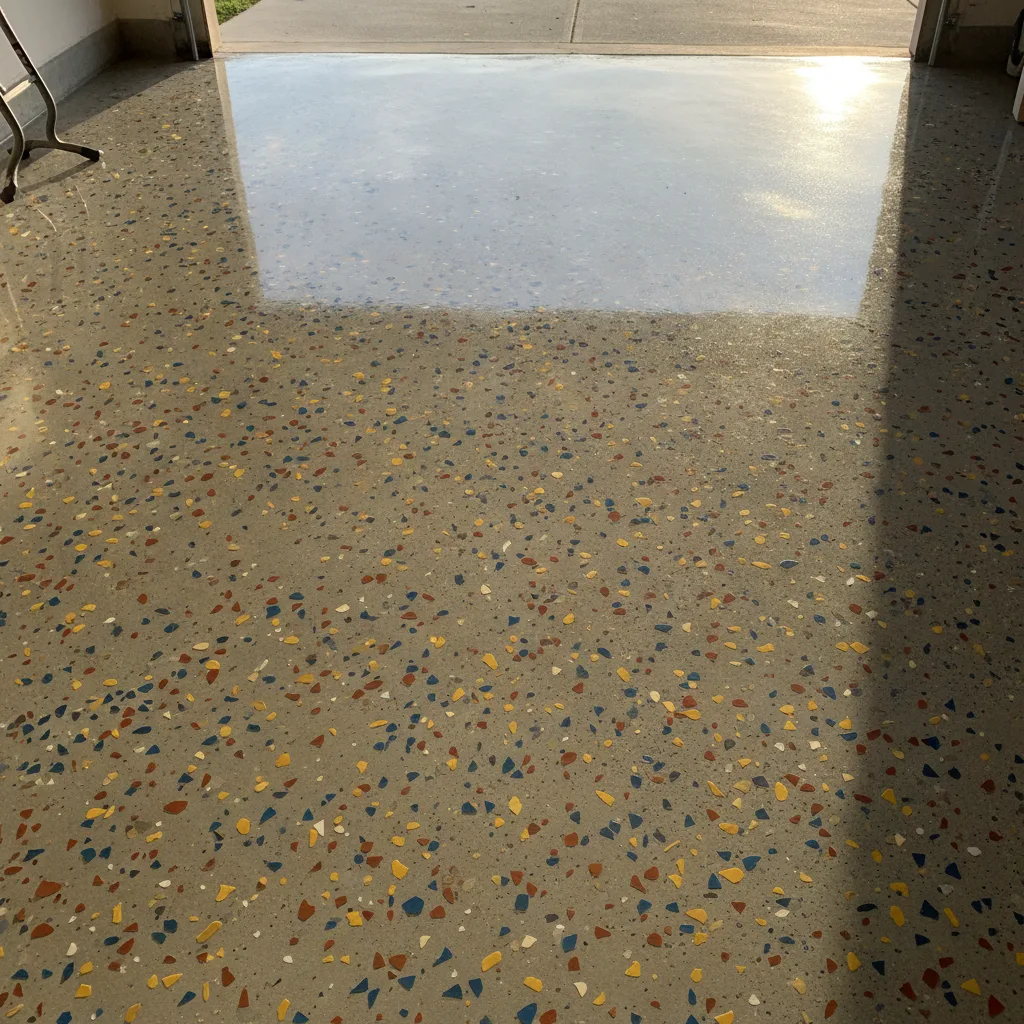
Two-part epoxy is the workhorse most people picture when they think of a coated garage floor. It bonds hard to prepared concrete, builds up a thick film, and handles oil, battery acid and cleaning chemicals without flinching. Colour flake systems, like the ones Metal and Flake specialise in, sit on top of an epoxy base coat. The decorative flakes are broadcast into the wet epoxy, then locked in under a clear topcoat. The result hides surface imperfections well and gives grip underfoot.
The catch with standard epoxy is UV sensitivity. Direct sunlight causes the resin to amber over time. That is not a problem in an enclosed workshop, but for garages with open roller doors or any space that gets afternoon sun, you need to plan for it. A polyaspartic or polyurea topcoat solves this, because those chemistries are inherently UV-stable.
Polyaspartic coatings have become popular in recent years because they cure fast, sometimes in three to four hours, and they hold their colour outdoors. A single-day installation is genuinely possible with a polyaspartic system, which matters if you cannot afford to have a garage or warehouse out of action for days. They are also flexible enough to handle the concrete movement that comes with Melbourne’s clay-heavy subsoils, which expand and contract with moisture.
Penetrating sealers are a different beast entirely. They do not sit on top of the slab; they chemically react with the concrete to block moisture and contaminants from the inside out. The floor looks more or less the same after treatment, just denser and slightly darker when wet. These suit driveways, outdoor entertaining areas and heritage spaces where you do not want a plastic sheen.
How does slab preparation affect the final floor coating result?
Slab preparation is the single biggest factor in how long a concrete floor coating lasts. No coating, regardless of its price, will perform on a poorly prepared surface. The concrete must be mechanically profiled, typically by diamond grinding or shot blasting, to open the pores and give the coating something to grip. Skipping this step is the number-one reason DIY coatings fail within months.
Before any product goes down, a professional installer will check moisture vapour transmission through the slab. Concrete is never fully dry, and moisture pushing up from below is a primary cause of delamination. In Melbourne, slabs poured on poorly drained sites or in low-lying suburbs can read quite high on a moisture meter even years after the pour. If moisture is present, a moisture-tolerant primer or a breathable system is the right call rather than a standard epoxy that will trap vapour and bubble.
Cracks, expansion joints and surface voids all need attention before coating. Hairline cracks can be chased out and filled with a flexible epoxy filler. Larger structural cracks need an assessment because a coating will not stop a moving crack from reappearing. Any oil contamination, common in older garages, must be degreased and mechanically removed, not just wiped over, because oil penetrates several millimetres into the concrete and will prevent adhesion no matter how good the product is.
Which floor coating for concrete suits a Melbourne garage specifically?
For a typical Melbourne residential garage, a colour flake epoxy base with a polyaspartic or polyurea topcoat is the most practical system. It gives you UV stability for open roller-door situations, a decorative finish that adds genuine value to the home, chemical resistance for oils and brake fluid, and a hard-wearing surface that handles daily tyre traffic without showing wear lines.
The flake layer does more than look good. It adds texture that reduces the slipping risk on a wet floor, which matters when you walk in from the rain. It also conceals the minor surface variation that most residential slabs have after years of use. A solid-colour epoxy shows every undulation under certain lighting; a broadcast flake system does not.
For outdoor concrete around pools, alfresco areas and driveways, a penetrating sealer or a UV-stable polyaspartic with a slip-rated aggregate suits better. These products cope with direct sun, rain and the freeze-thaw cycles (rare but real in outer Melbourne and the hills) without lifting at the edges.
Commercial and industrial floors generally need a higher-build epoxy system, sometimes self-levelling, that can take forklift traffic, chemical spills and heavy point loads. Line marking can be incorporated into the topcoat for warehouse layouts or car park bays.
What questions should you ask before getting a quote?
Before getting a concrete floor coating quote, ask about slab preparation methods, whether a moisture test will be done, the specific products being used (brand and product code), the number of coats, and what the warranty covers. A reputable installer will have clear answers to all of these. Vague answers about “premium epoxy” without specifics are a red flag.
Ask about the cure time and when you can drive on the floor. A quality polyaspartic system is typically walkable in a few hours and ready for vehicles within 24 hours. A standard epoxy base usually needs 24 to 48 hours before foot traffic and up to seven days for full chemical cure, meaning you should not park a car on it straight away even if it feels hard.
Get clear on surface prep in writing. The quote should specify whether the slab will be diamond ground, how cracks will be treated and whether a primer coat is included. If a quote is significantly cheaper than others, the difference is almost always in prep, not product.
Finally, look at the installer’s past work in real Melbourne conditions. Garage floors installed in Perth or Queensland have had a different climate to contend with. Local experience with Melbourne’s variable weather and clay soils counts for something real.
Ready to get your garage or commercial slab sorted? Book a consult for concrete floor coating with the Metal and Flake team and find out which system suits your specific slab.