Concrete Floor Sealing in Craigieburn: A Local Homeowner’s Guide
Concrete floor sealing in Craigieburn protects your slab from moisture, oil, UV fade and the general punishment of daily life. A quality sealer penetrates or coats the surface to stop stains setting in, reduce dusting and make cleaning a five-minute job. Done properly, a sealed concrete floor in a garage or alfresco area can stay in good nick for five to ten years before it needs attention again.
Why does concrete floor sealing matter for Craigieburn homes specifically?
Craigieburn sits on the northern fringe of Melbourne where new estates and growing families mean plenty of fresh slabs and busy garages. The area’s clay-heavy soil shifts with seasonal moisture changes, and hot summers followed by cold, wet winters put real stress on unsealed concrete. Sealing creates a barrier that stops water working its way in, reducing the risk of surface spalling and efflorescence, which is that chalky white salt bloom you see on driveways that have never been sealed.
New builds in the Craigieburn, Mickleham and Kalkallo corridor often have garage slabs that are poured and left bare. Builders hand over the keys and move on. Without a sealer, motor oil from the car, fertiliser from the lawn mower and the general grime of suburban life soak straight in within the first year. Once a stain is in raw concrete it is very hard to remove. Sealing before you ever park the car is the easiest move you can make.
What types of concrete sealers are available for garage and alfresco floors?
The main sealer types are penetrating sealers, acrylic sealers and epoxy or polyurethane topcoats. Penetrating sealers soak into the concrete and repel water from within, leaving no visible film. Acrylic sealers sit on top, dry relatively fast and give a low to medium sheen. Epoxy and polyurethane coatings are the heavy-duty end: they form a thick, hard-wearing layer that resists chemicals, abrasion and traffic far better than a basic acrylic can.
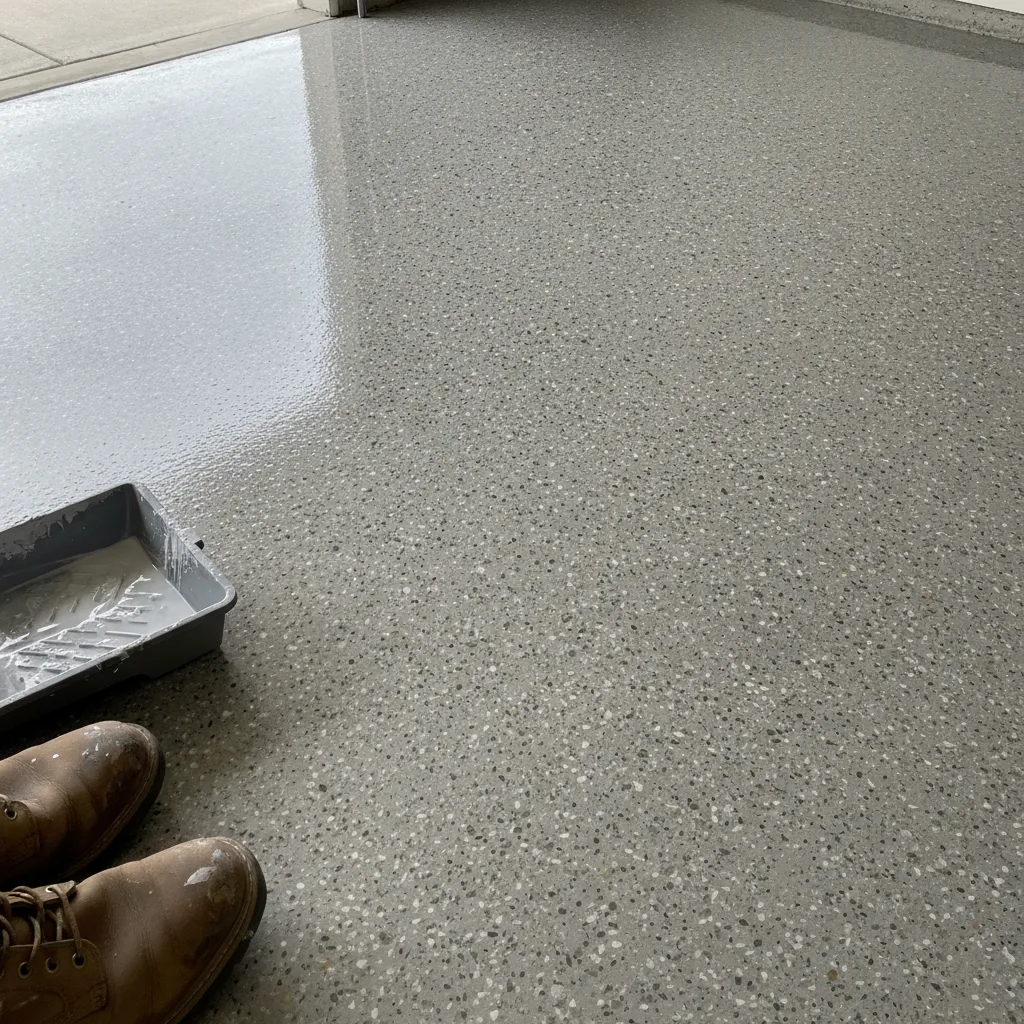
For a standard Craigieburn garage that takes daily car traffic, a penetrating silane-siloxane sealer is a solid base choice. It handles moisture well and doesn’t peel. If you want the floor to look sharp and wipe clean easily, a polyurethane topcoat over a prepared surface is a step up. For those who want the full visual impact of a metallic or flake finish, a broadcast epoxy system with a clear polyurethane topcoat is the top of the range.
One thing worth knowing: the Australian Concrete Pavement Association recommends waiting at least 28 days after a pour before applying any sealer, because fresh concrete needs to cure fully. Rush it and you trap moisture under the coating, which causes blistering and adhesion failure down the track.
How should you prepare a concrete floor before sealing?
Surface prep is the part most DIYers skip or rush, and it is exactly where most sealed floors fail. The concrete needs to be clean, dry and open-textured so the sealer can bond properly. That means degreasing oil spots, treating any existing efflorescence with a diluted acid wash, and giving the whole slab a thorough pressure clean. Let it dry for at least 24 to 48 hours depending on weather conditions.
For coatings thicker than a basic acrylic, the slab needs to be mechanically abraded, either by diamond grinding or shot blasting. This opens up the concrete profile so the epoxy or polyurethane grips tight. If you skip this step with a thicker coating, you are basically sticking it to a dusty surface, and it will peel within months. Professional applicators will always grind or blast first. It adds time and equipment cost, but it is the difference between a floor that lasts a decade and one that looks rough by year two.
Check for moisture before you seal. A simple plastic sheet test works well: tape a 500mm square piece of plastic to the slab overnight. If you see condensation under it in the morning, the slab is still passing moisture. Applying a non-breathable coating over a damp slab leads to bubbling and delamination. On new estates in Craigieburn where the water table can run high in winter, this is a common trap.
How long does concrete floor sealing last, and when does it need redoing?
How long a sealed concrete floor lasts depends on the product used, how well the surface was prepared and how hard the floor is worked. A quality penetrating sealer on a residential driveway typically needs reapplication every three to five years. A well-applied epoxy coating in a domestic garage can hold up for ten or more years with basic maintenance. Acrylic sealers sit somewhere in the middle, usually needing a fresh coat every two to four years because they wear from foot and tyre traffic.
Signs it is time to reseal: water no longer beads on the surface and instead soaks straight in, the finish looks dull or chalky, or you notice the concrete is dusting again when you sweep. Tyre marks that used to wipe off now stain permanently. These are all signals that the sealer has worn through and the bare slab is exposed again.
Maintenance between reseals is simple. Sweep regularly to stop grit acting like sandpaper underfoot. Clean spills quickly, especially petrol and brake fluid, which are harsh on most coatings. For floors with a decorative topcoat, a neutral pH cleaner is all you need. Avoid bleach or ammonia-based products as they break down the binder in the sealer over time.
Is concrete floor sealing something you should do yourself or leave to a professional?
A basic penetrating sealer on a clean, sound slab is within reach for a capable DIYer. The product is available from trade suppliers, application is straightforward with a roller or pump sprayer, and the margins for error are relatively forgiving. If you are sealing an alfresco path or a laundry floor that takes light foot traffic, doing it yourself can be a reasonable call.
Once you move into a garage floor that takes vehicle traffic, or you want a decorative finish with metallic pigments or vinyl flakes, the job becomes a different animal. Surface grinding requires commercial equipment. Mixing and applying epoxy in the right temperature window takes experience. Apply it too thick and it runs. Apply it in direct sun when the concrete is hot and you get pinholes from outgassing. Apply it over a surface with hidden moisture and it bubbles. Professional applicators carry moisture meters, surface thermometers and commercial grinders for a reason. The upfront cost of getting it done right is far less than the cost of stripping a failed coating and starting again.
Metal and Flake operates across Melbourne’s northern growth corridor, including Craigieburn and surrounding suburbs, specialising in epoxy and decorative concrete floor coatings for garages, workshops and residential spaces. If your slab is ready for a finish that looks great and actually holds up, we can help you choose the right system and apply it properly from the ground up.
Book concrete floor sealing in Craigieburn with Metal and Flake