Garage Flooring Ideas for Melbourne Homes: What Are Your Options?
The best garage flooring ideas for Melbourne homes include epoxy coatings, decorative flake systems, polyurethane topcoats, concrete sealers and rubber or interlocking tiles. Each option suits a different budget, use case and aesthetic. Epoxy and flake systems are the most popular for homeowners who want a durable, attractive finish that handles oil, moisture and daily traffic without cracking or peeling.
Why does your choice of garage flooring matter more than most people think?
A garage floor takes a hiding every single day. Oil drips, tyre scuff, power tools, garden equipment, water tracked in from Melbourne’s wet winters , it all adds up. The right flooring choice protects your concrete slab from moisture ingress, chemical staining and surface degradation that can cost thousands to repair. Beyond protection, the finish you choose changes how the entire space feels, making it more liveable, easier to clean and genuinely enjoyable to use.
Bare concrete is porous. Left untreated, it absorbs oil and moisture, develops efflorescence (the white salt residue you see on damp slabs) and grinds down into fine dust that settles on everything in the garage. A surface treatment of some kind is not a luxury. It’s basic maintenance for a space most households use daily.
The good news is that the range of garage flooring ideas available today is broader and more affordable than it was even a decade ago. Here’s a plain-language breakdown of the main options.
What are the most popular garage flooring ideas for Australian homes?
The most popular garage flooring options in Australia are epoxy coatings (with or without decorative flake), polyurethane sealers, concrete densifiers, rubber tiles and interlocking modular systems. Epoxy and flake floors dominate because they bond directly to the slab, resist chemicals and can be finished in dozens of colours and textures. Tiles and rubber mats suit renters or those who want a removable solution.
Here’s how each one stacks up in practice:
Epoxy floor coatings
Epoxy is a two-part resin system that bonds chemically to prepared concrete. When applied correctly , starting with mechanical diamond grinding to open the surface, then a penetrating primer coat , epoxy forms a hard, semi-gloss film that resists petrol, oil, brake fluid and most household chemicals. A single-colour epoxy floor in a standard double garage typically takes one to two days, including prep and cure time. The result is clean, bright and easy to hose out.
Decorative flake and metallic systems
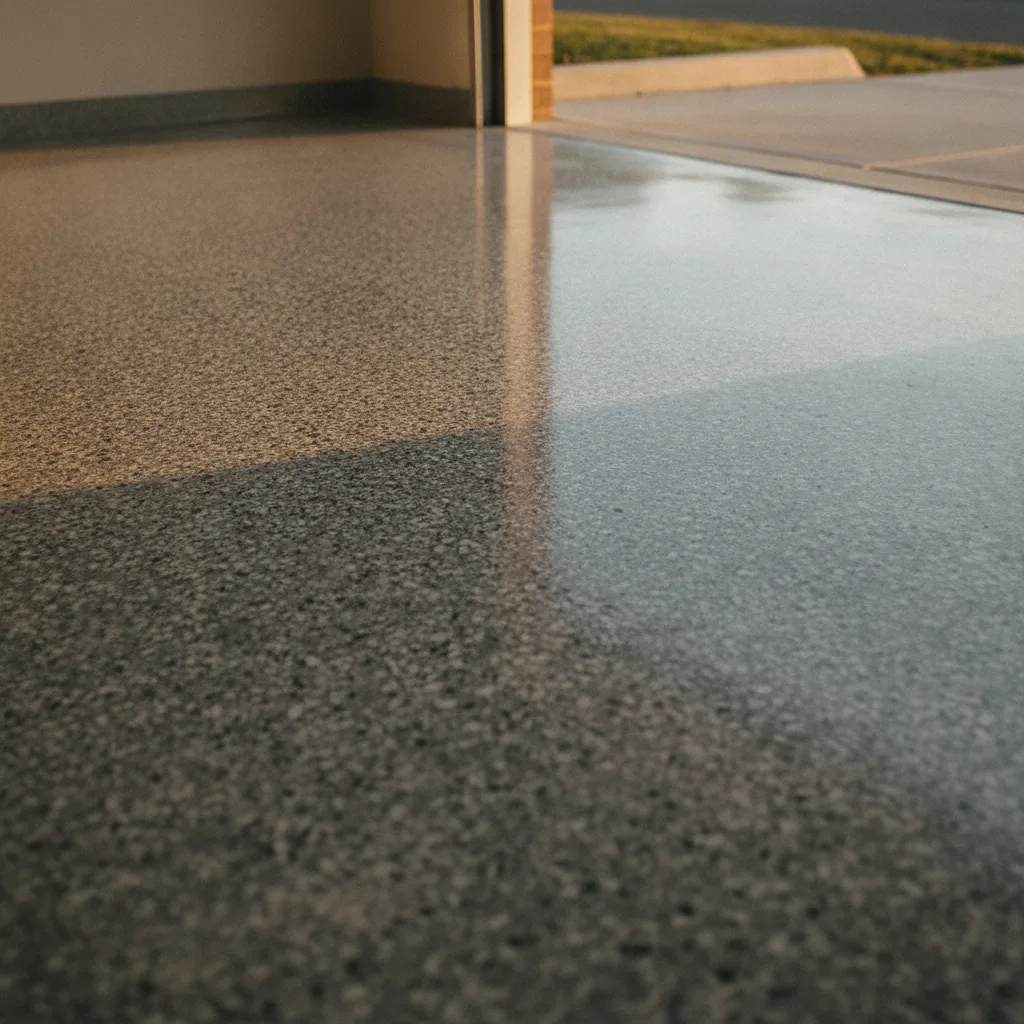
This is the finish you’ve probably seen in high-end showrooms and custom garages. Vinyl flake (sometimes called colour flake or broadcast flake) is scattered over a wet epoxy base coat, then locked in with one or two clear polyurethane or epoxy topcoats. The flake adds texture, hides minor imperfections in the slab and creates a finished look that holds up in heavy use. Metallic epoxy systems use pigmented mica powders to create swirling, marble-like effects , a genuinely striking finish that has become more accessible for residential garages over the past few years.
Polyurethane sealers and topcoats
Polyurethane is often applied over an epoxy base as a final protective layer. It’s more UV-stable than epoxy alone, which matters in Melbourne garages with skylights or roller doors that let in direct sunlight. Some installers use polyurethane as a standalone sealer on lightly used garage floors, though it doesn’t offer the same build thickness or chemical resistance as a full epoxy system.
Concrete densifiers and sealers
These are penetrating products that react with the lime in concrete to harden the surface from within. They don’t add colour or gloss, but they reduce dusting, improve abrasion resistance and make the floor easier to clean. Good for sheds and utility spaces where appearance isn’t a priority. Budget-friendly but limited in performance compared to a coated floor.
Rubber tiles and interlocking mats
Modular rubber or PVC tiles sit on top of the existing concrete without any bonding. They’re comfortable underfoot, provide cushioning for workshop use and can be lifted and replaced if damaged. The downside is that moisture and grit can work underneath them over time, and they rarely look as refined as a coated floor. They’re a practical choice for renters or for covering one section of a garage used as a gym or workshop.
What should Melbourne homeowners consider before choosing a garage floor finish?
Before choosing a garage floor finish, Melbourne homeowners should assess four things: the condition of the existing slab, how the garage is used day to day, whether the space gets moisture from below or through the walls, and the desired appearance. A contaminated or damaged slab needs preparation before any coating will stick, and skipping that step is the number-one reason DIY epoxy jobs fail within twelve months.
Melbourne’s climate adds a specific consideration. The city’s temperature swings, particularly in the western and outer northern suburbs where summer concrete temperatures can reach 50 degrees or more, put stress on coatings that aren’t properly formulated for the conditions. A coating that’s applied when the slab is too hot, or that lacks sufficient flexibility in the topcoat, will bubble, peel or delaminate. Professional installers account for this by choosing products suited to local conditions and scheduling work at appropriate times of day.
Moisture is the other Melbourne-specific issue worth mentioning directly. Many older Melbourne homes, particularly those in low-lying areas near the Yarra or in bayside suburbs, have slabs that wick groundwater upward. A moisture vapour emission test (a basic calcium chloride or RH probe test) before coating tells you whether you need a moisture-tolerant primer system. Skip this test and a beautiful new floor can lift from the slab within months.
How do garage flooring ideas differ in cost and longevity?
Garage flooring costs in Australia range from around $15 per square metre for a basic penetrating sealer up to $80 to $120 per square metre for a fully installed decorative flake or metallic epoxy system. Longevity tracks roughly with cost: sealers may need reapplication every two to four years, while a professionally installed epoxy and polyurethane system, properly maintained, can last ten to fifteen years in a residential setting.
The cheapest option is rarely the most economical over time. A $500 DIY epoxy kit from a hardware chain sounds appealing until it peels at the two-year mark and you’re paying a professional to grind it all back and start again. Professional surface preparation, including diamond grinding and crack repair, typically accounts for 30 to 40 percent of the total project cost for good reason: it’s what makes everything else stick and last.
For most Melbourne homeowners doing a full double garage of roughly 36 to 40 square metres, a quality decorative flake system installed by a specialist represents the best balance of upfront cost, durability and visual result. It transforms a functional space into something that genuinely adds to the appeal of the home, which matters if you’re ever thinking about selling.
Can you choose the colour and finish of an epoxy garage floor?
Yes, epoxy garage floor systems offer a wide range of colours and finishes. You can choose from solid single colours, multi-tone flake blends in dozens of combinations, metallic effects with swirling depth, or matte, satin and high-gloss topcoat options. The right choice depends on your garage’s light conditions, how much you want to hide dirt and tyre marks, and the overall look you’re going for.
Lighter flake blends make a garage feel larger and brighter, which is particularly useful in single-car garages or those with limited natural light. Darker blends with charcoal, graphite or slate tones give a more industrial or showroom look. Matte topcoats are forgiving on minor scuffs; high-gloss finishes are more reflective and suit showcase garages or those used primarily for storage. A colour and finish consultation before committing helps you see real samples against your actual slab and lighting before anything is mixed or applied.
Whatever garage flooring ideas you’re considering for your Melbourne home, getting the colour and finish decision right from the start saves you from living with a choice you’re not happy with for the next decade.
Book a garage floor colour and finish consultation with Metal and Flake