Garage Floor Ideas for Epping Homes: Epoxy, Flake and Beyond
The best garage floor ideas for Epping homes come down to a few proven systems: broadcast flake epoxy, solid-colour epoxy, and metallic epoxy. Each suits a different budget, look and use case. A properly prepared and coated concrete floor resists oil, tyre marks and daily wear for well over a decade when installed correctly by an experienced applicator.
Why do Epping homeowners bother upgrading their garage floors?
Most Epping homeowners upgrade their garage floors because bare concrete is a constant headache. It absorbs oil, raises dust every time you sweep, and looks tired almost immediately after the house is built. A quality epoxy coating seals the concrete, makes cleaning a five-minute job with a mop, and turns a grimy utility space into something you’re actually proud to show off.
Epping sits in Melbourne’s outer north, and the homes out here tend to have generous double and triple garages. That extra floor space is valuable. Whether you’re running a home workshop, storing bikes and sporting gear, or simply parking two cars and keeping the space tidy, the floor condition sets the tone for everything else. A coated floor also adds a measurable level of perceived value when it comes time to sell, because buyers notice the difference between a clean, sealed garage and a stained, crumbling one.
Beyond appearances, concrete in Melbourne’s northern suburbs deals with real temperature swings. Hot summers and cold winters cause concrete to expand and contract, which can worsen existing hairline cracks over time. A properly applied epoxy system, especially one that includes a penetrating primer coat, helps stabilise the surface and keeps moisture from working its way up through the slab.
What are the main garage floor coating options to consider?
The main options for garage floor coatings are broadcast flake epoxy, solid-colour epoxy, and metallic epoxy. Broadcast flake is the most popular choice for residential garages because the decorative vinyl flakes hide minor surface imperfections, add grip underfoot, and come in dozens of colour blends. Solid-colour epoxy is cleaner and more industrial in look, while metallic epoxy creates a flowing, high-gloss finish that resembles polished stone.
Here is a closer look at each:
Broadcast flake epoxy
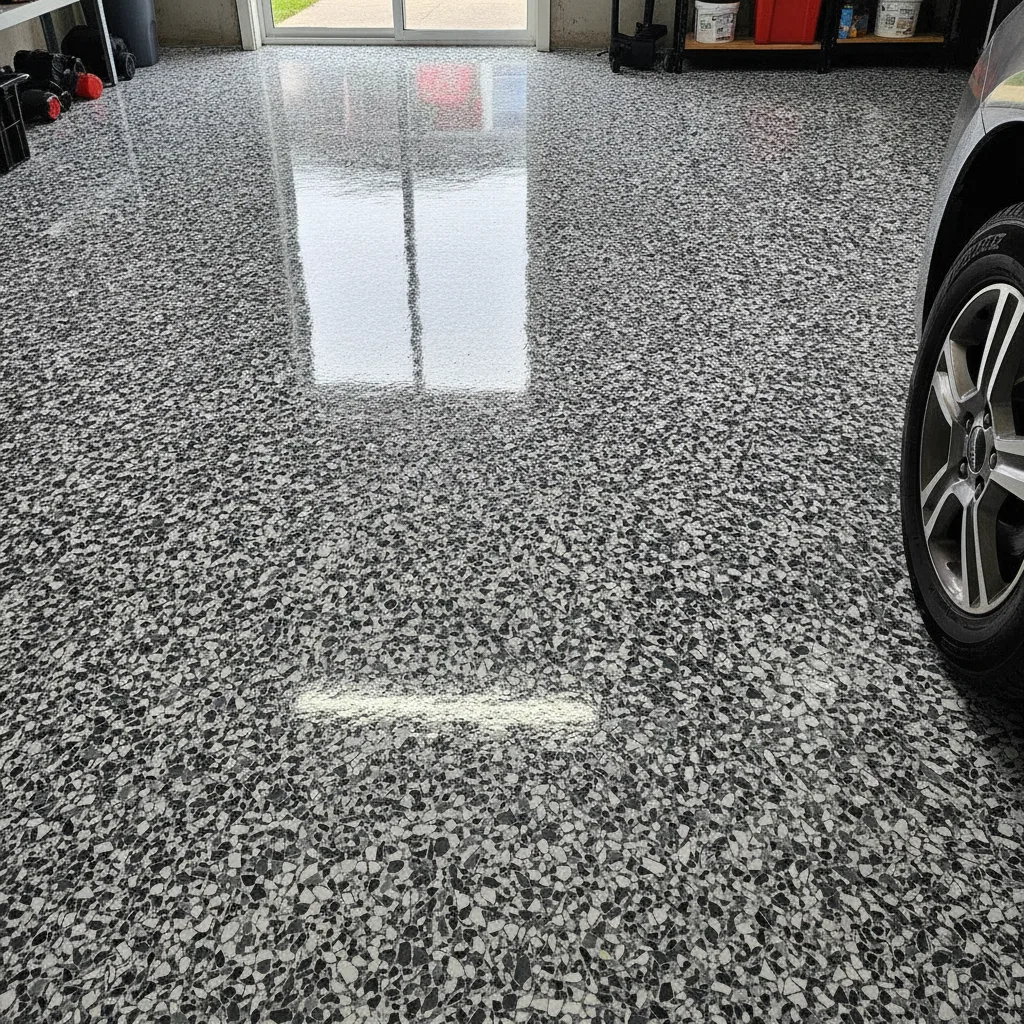
This is the workhorse of residential garage flooring and the system that the team at Metal and Flake does a lot of. A basecoat is applied to the prepared concrete, then decorative vinyl flakes are broadcast across the wet surface. Once cured, the excess is scraped back and a clear topcoat is applied. The result is a tough, slip-resistant floor with real depth to it. Flake blends range from subtle grey-and-white mixes that complement a modern home to bold charcoal, black and copper combos that suit a man-cave setup. The topcoat is typically a polyaspartic or polyurethane product, which handles UV exposure far better than a standard epoxy topcoat, an important consideration for garages with side doors or windows that let in direct sunlight.
Solid-colour epoxy
If you want a clean, seamless look without the visual texture of flake, a solid-colour system delivers that. It suits workshops where you want the floor to look sharp but need to see dropped screws and small parts against a uniform background. Light greys and mid-tone blues are popular. The trade-off is that any surface prep marks or aggregate variation in the concrete may telegraph through, so the surface grinding and profiling stage matters even more here.
Metallic epoxy
Metallic epoxy uses pigmented epoxy combined with metallic powder to create a unique, marbled effect. No two floors look exactly the same because the finish is manipulated by hand during application. It is genuinely striking in a large garage and works especially well under LED strip lighting. It is generally the most expensive of the three systems and is more sensitive to preparation quality, but the visual result is hard to match.
How important is surface preparation for garage floor ideas in Epping?
Surface preparation is the single most important factor in how long any garage floor coating lasts. Skipping or rushing the prep stage is the reason coatings peel. Diamond grinding opens the concrete’s pores so the epoxy bonds mechanically to the slab rather than just sitting on top of it. Without proper adhesion, even the best products will lift within a year or two, especially in a garage where hot tyres and moisture are regular features.
A professional applicator will grind the entire floor, fill any cracks or spalled areas with an appropriate filler product, and then vacuum the surface thoroughly before the first coat goes down. This part of the job takes as long, or longer, than the coating application itself. If someone is quoting you a one-day job on a standard double garage, ask them how much time they are allocating to prep. The honest answer should be at least a few hours of grinding alone.
Moisture in the slab is the other big variable. Epping properties built on clay soils can have slabs that hold moisture, particularly in winter. A simple plastic sheet test, taped flat on the slab overnight, will show if moisture is a problem. If it is, a moisture-tolerant primer is the correct starting point rather than a standard epoxy basecoat.
What colours and flake blends work best for Epping garages?
The most popular colour directions for Epping garages right now are cool grey blends, warm charcoal and white mixes, and earthy beige and tan combinations. Cool greys work particularly well with the modern rendered facades common in Epping’s newer estates, while the warmer tones suit brick homes from the late 1990s and early 2000s that still dominate parts of the suburb.
When choosing a flake blend, think about the whole space, not just the floor in isolation. If your garage walls are painted white or light grey, a medium flake with a darker base colour creates strong contrast and makes the floor a feature. If the walls are unpainted concrete block, a lighter flake blend with a white or cream base lifts the whole space and makes it feel less cave-like.
Flake chip size also plays a role. A fine or micro flake gives a smoother, more refined finish and is easier to clean. A coarse or large flake adds more texture and grip, which is worth considering if kids are riding bikes or scooters in the garage. Most applicators can blend chip sizes or even layer two sizes for a custom depth effect.
For homeowners who want something a bit different, a full broadcast flake system, where the flakes completely cover the basecoat with no gaps, creates a terrazzo-like look that is genuinely impressive in person. Metal and Flake specialises in exactly this kind of detailed, tailored finish that you won’t get from a big-box DIY kit.
How do you maintain an epoxy garage floor long term?
Maintaining an epoxy or flake garage floor is straightforward. A regular sweep to remove grit, which acts like sandpaper underfoot, and a damp mop with a pH-neutral cleaner every few weeks is all that’s needed for most households. Avoid bleach-based cleaners, which can dull a polyurethane topcoat over time, and use a proper degreaser on any oil drips rather than letting them sit.
One practical tip: put felt pads or rubber caps on the feet of metal shelving units and workbenches. Steel legs dragged across an epoxy floor will scratch the topcoat. It takes thirty seconds to fit the pads and saves the surface over years of use.
Most quality topcoats applied over a flake system will hold up for ten to fifteen years in a residential garage with normal use. Commercial or workshop environments with heavy foot traffic, forklifts or chemical spills are a different story, but for a home garage in Epping, a well-installed system should look good for a long time before it needs a light buff and topcoat refresh.
Book a garage floor colour consultation in Epping with Metal and Flake.