Concrete Floor Sealing in Essendon: A Local Homeowner’s Guide
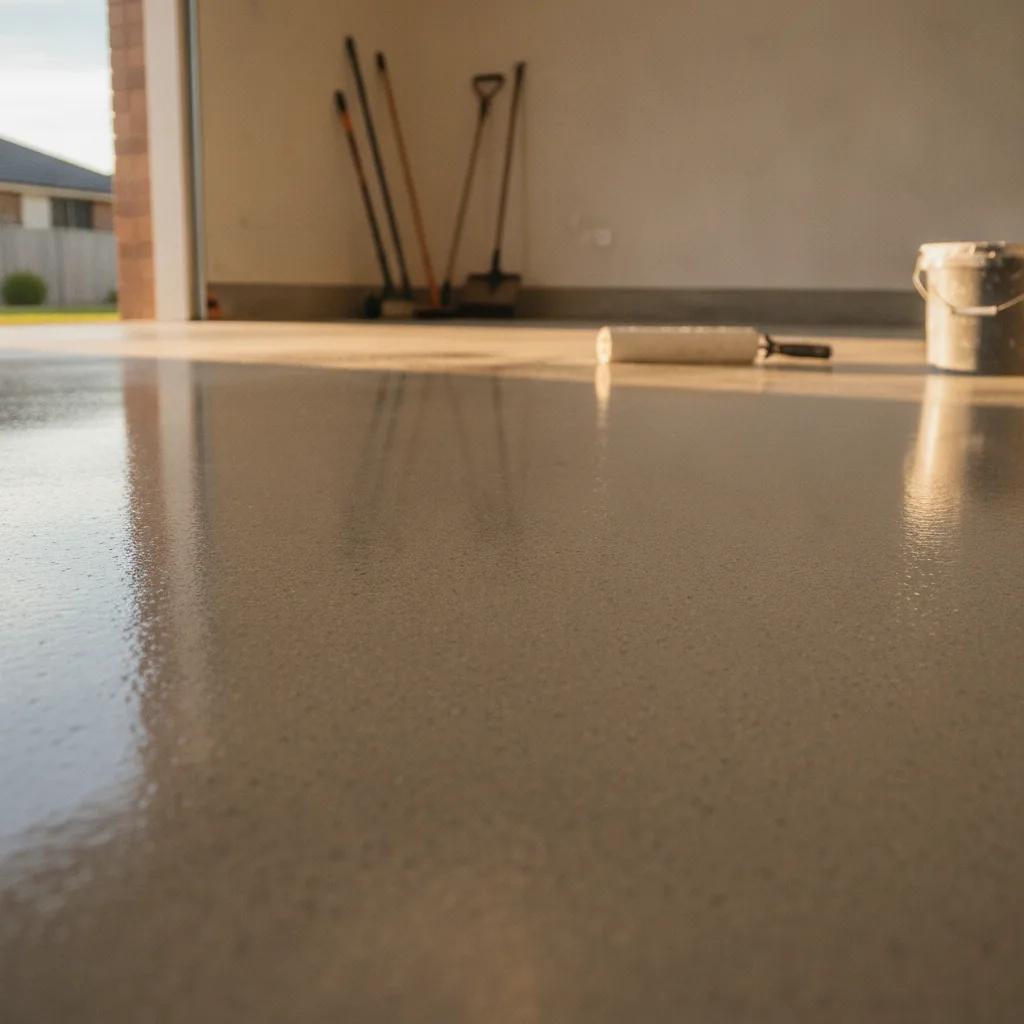
Concrete floor sealing in Essendon means applying a protective coating to bare or polished concrete so it resists moisture, stains, tyre marks and surface wear. A properly sealed slab lasts significantly longer than an unsealed one, holds up to Melbourne’s weather swings and is far easier to clean day to day. For most homes one coat of the right product does the job.
Why does concrete floor sealing matter so much in Essendon?
Essendon sits on older residential land with a lot of original concrete slabs, period-era garages and post-war extensions. Unsealed concrete in those spaces is porous, which means it soaks up oil, dirt and water almost instantly. A good sealer closes that porosity, stopping stains from bonding at the surface and cutting down on the gritty dust that unsealed slabs constantly shed.
Melbourne also throws up some brutal temperature swings across the year. A bare slab expands and contracts with every cold snap and hot week, and over time that movement opens up micro-cracks that let moisture in from below. A penetrating or topical sealer bridges those micro-cracks and keeps moisture movement from doing long-term damage.
For Essendon homeowners with garages, alfresco areas or internal polished concrete, sealing is simply the maintenance step that protects the investment you have already made in the slab itself.
What types of concrete sealer are commonly used on residential floors?
The main categories are penetrating sealers, acrylic sealers and polyurethane or epoxy topcoats. Each one suits a different surface, budget and level of foot or vehicle traffic. Choosing the wrong type for your situation is the most common mistake homeowners make, and it usually means re-doing the job within a couple of years.
Penetrating sealers (silane, siloxane or silicate-based) soak into the concrete and repel moisture without changing the look of the surface at all. They are a solid choice for external paths, driveways and alfresco slabs where you want invisible protection with no sheen.
Acrylic sealers sit on top of the concrete and give a low-to-high gloss finish depending on the product. They are affordable and easy to apply, but they scratch and wear faster than harder-wearing options. In a busy garage or workshop they need re-coating every two to three years.
Polyurethane and epoxy topcoats are the most durable residential options. They are tough enough to handle vehicle traffic, chemical spills and heavy foot traffic, and they come in a range of finishes from flat matte to high gloss. When combined with metallic or flake elements, these coatings turn a plain grey slab into a feature floor. This is where the real performance gain is for most Essendon homeowners looking at garage or internal living spaces.
How do you prepare concrete in Essendon before sealing?
Preparation is the step that most DIY sealers skip or rush, and it is the single biggest reason sealed floors fail early. The concrete surface needs to be clean, dry, free of grease, free of any old sealer residue and mechanically opened up so the new product can bond properly.
In practice that means degreasing with an alkaline cleaner, acid etching or diamond grinding to open the surface profile, and then letting the slab dry completely. In Melbourne’s climate, even during summer, a concrete slab on ground can hold surprising amounts of moisture. A simple plastic sheet test, taped down overnight, will tell you whether the slab is dry enough to seal: if condensation forms on the underside the moisture content is too high and you need to wait.
Old slabs common in Essendon homes often have surface contamination from years of use: oil from parked cars, paint splashes, glue residue from old floor coverings. Each of those contaminants needs to be dealt with individually before a sealer goes down. Grinding is the most reliable method for getting back to a genuinely clean surface profile.
One concrete detail worth knowing: the Concrete Institute of Australia recommends a minimum compressive strength of 25 MPa for residential slabs that will carry a coating. Most slabs poured in Melbourne suburbs from the 1960s onward meet that standard, but if you have a very old or visibly cracked slab it is worth getting the concrete assessed before committing to a premium coating system.
How long does concrete floor sealing last and when should you reseal?
Lifespan depends almost entirely on the product type, the quality of the preparation and the amount of traffic the floor sees. A penetrating silane sealer on a driveway typically lasts five to ten years before it needs re-application. An acrylic topcoat in a busy garage may need refreshing every two years. A properly applied polyurethane or epoxy system in a residential garage can last a decade or more with basic cleaning and no mechanical damage.
The signs that a sealed floor needs attention are straightforward: water stops beading on the surface and starts soaking in, stains become harder to wipe off, the finish looks dull and worn in traffic areas, or you start seeing fine scratches and scuff marks that go right through the coating.
For internal polished concrete floors in living areas or kitchens, the maintenance routine is simpler than most people expect. A pH-neutral cleaner, a microfibre mop and the occasional light buff is all it takes to keep a well-sealed floor looking sharp for years. Avoid anything acidic, including some stone floor cleaners, as they can break down the sealer over time.
What should Essendon homeowners look for when choosing a concrete sealing contractor?
Get a contractor who talks specifics rather than generalities. They should be able to tell you exactly which product they are using, its expected lifespan, the surface profile they are aiming for after prep and the number of coats going down. A quote that just says “seal your garage floor” without any product detail is a red flag.
Ask to see finished examples from other local jobs. Essendon and the surrounding suburbs of Moonee Ponds, Flemington and Strathmore all have similar housing stock and similar slab conditions, so a contractor with local experience will have a good read on moisture and condition issues common to the area.
Also check that the contractor will repair any cracks or surface damage before sealing. Sealing over cracks without filling them first just locks in the damage and usually means the coating fails at those points within months.
Metal and Flake work across Melbourne’s northern and western suburbs, including Essendon, specialising in epoxy and polyurethane floor coating systems that go beyond basic sealing to give homeowners a floor that genuinely performs and looks the part.
Book concrete floor sealing in Essendon with Metal and Flake