Garage Makeover in Craigieburn: Epoxy Floor Options for Local Homes
A garage makeover in Craigieburn typically starts with the floor. Epoxy coatings are the most popular choice because they bond directly to the concrete slab, resist oil and tyre marks, and can handle Melbourne’s wide temperature swings. Most residential garage floors in the area are completed in one to two days, with a full cure in about seven days before parking cars back on them.
Why is an epoxy floor the right starting point for a Craigieburn garage makeover?
An epoxy floor is the right starting point for a Craigieburn garage makeover because it transforms a raw, dusty concrete slab into a sealed, hardwearing surface in a single visit. Everything else you add, storage shelving, a workshop bench, a car hoist, looks sharper against a clean, finished floor. Getting the floor right first means you are not working around other trades or dragging furniture out twice.
Craigieburn sits on the northern fringe of Melbourne’s growth corridor. Most homes here were built within the last fifteen to twenty years, which means the concrete slabs are relatively young and in reasonable condition. That is actually good news for epoxy work. Younger slabs tend to have less cracking, fewer oil stains from decades of use, and better porosity readings, all of which contribute to a stronger bond for the coating.
The area does get warm summers, with days pushing past 38 degrees, and cool winters that can drop close to zero. Epoxy formulations designed for Australian conditions handle that range without peeling or bubbling, provided the surface preparation is done properly with a diamond grinder rather than acid etching. Grinding opens the concrete pores mechanically, giving the epoxy something solid to grab onto regardless of the season.
What epoxy floor options are available for a garage makeover in Craigieburn?
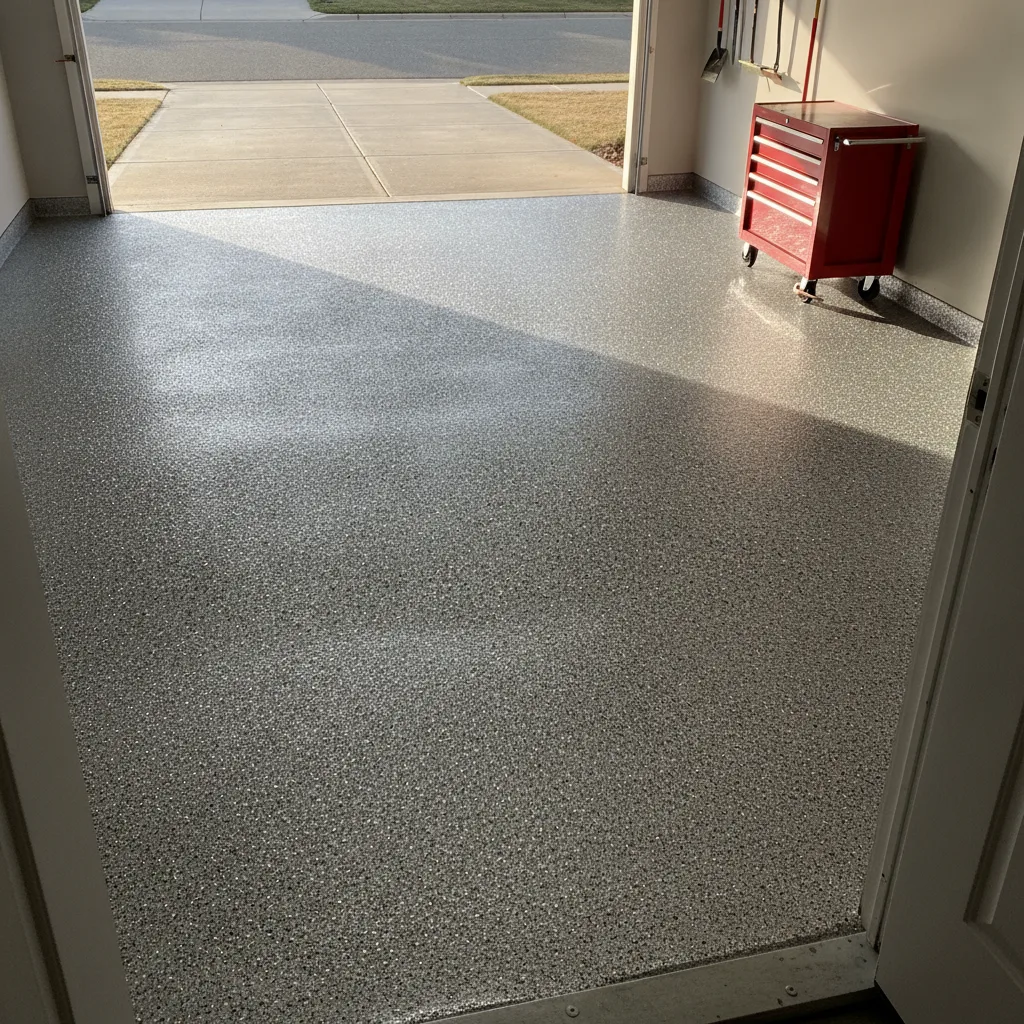
The main epoxy floor options for a Craigieburn garage makeover are a solid colour base coat with a clear topcoat, a metallic epoxy finish, and a flake or chip broadcast system. Each suits a different budget and look. Solid colour is the most straightforward and economical. Metallic finishes create a flowing, marbled effect and suit homeowners after something showroom-quality. Flake systems sit in the middle: durable, slip-resistant, and available in dozens of colour blends to match any garage aesthetic.
Here is a plain breakdown of the three main systems:
- Solid colour epoxy. A pigmented base coat sealed with a polyaspartic or polyurethane topcoat. Easy to clean, hides minor imperfections in the slab, and works well in a working garage where looks are secondary to function. Grey, charcoal and tan are the most popular colours in new Craigieburn estates.
- Metallic epoxy. A pigmented metallic base that is manipulated while wet to create depth and movement in the finish. Each floor is unique. It is the premium option, often chosen by homeowners who are converting a garage into a home gym or display space for a car collection.
- Flake or chip broadcast. Coloured vinyl flakes are broadcast into a wet base coat and then sealed with a clear topcoat. The result is textured, which adds grip underfoot. This is a practical choice for a busy family garage where kids, bikes and tool trolleys are a daily reality. Flake systems also hide dust and minor scuffs better than a solid colour over time.
All three systems can include a slip-resistant additive in the topcoat, which is worth considering if the garage doubles as a laundry entry or a side access point that gets wet in the rain.
How do you prepare a Craigieburn garage slab before coating?
Preparing a Craigieburn garage slab before coating means grinding the entire surface with a diamond grinder to open the concrete pores, repairing any cracks or expansion joints with a flexible epoxy filler, and cleaning off any oil contamination with a degreaser before grinding. Skipping or rushing this step is the single biggest reason epoxy floors peel within a year or two of installation.
One thing that comes up regularly in Craigieburn specifically is moisture. Because the area is still developing, some newer slabs were poured and built on top of quickly, meaning they have not had as long to fully dry out. A moisture test using a calcium chloride kit or a simple plastic sheet taped to the floor overnight will tell you whether the vapour transmission rate is within acceptable limits for epoxy application. If moisture readings are high, a moisture-tolerant primer coat is applied first before the colour system goes down. It adds a step but it prevents the dreaded bubbling that ruins a floor within months.
Oil stains from a previous car or lawnmower need to be addressed before grinding, not after. A concentrated alkaline degreaser, scrubbed in and left to dwell, pulls the contamination out of the pores. If you skip this and grind over an oil-soaked patch, you are just spreading the problem deeper. Professionals will often do a water bead test after degreasing: if water soaks in evenly, the surface is clean enough to proceed.
How long does a garage makeover epoxy floor actually last?
A properly installed epoxy floor in a residential garage lasts between ten and twenty years before it needs any significant attention. The topcoat is the part that eventually wears from UV exposure and tyre friction. In most cases, a fresh topcoat applied over the original base at the ten-year mark is all that is needed, which costs considerably less than a full new installation.
The longevity comes down to two things: the quality of the surface prep and the quality of the topcoat. A polyaspartic topcoat, for example, is UV-stable and harder than a standard epoxy clear, which matters in a garage that gets afternoon sun through a west-facing roller door. It is also fast-curing, meaning a car can often be driven back in within twenty-four hours rather than the standard seven-day wait for a pure epoxy system.
Day-to-day maintenance is simple. A microfibre mop with warm water and a mild pH-neutral cleaner is all that is needed for weekly cleaning. Chemical spills like brake fluid or petrol should be wiped up promptly rather than left to sit, but they will not immediately damage a properly sealed floor if caught within a reasonable time. Dragging sharp metal objects across the surface can scratch the topcoat, so fitting felt pads to tool stands and using rubber-wheeled trolleys helps preserve the finish.
What does a garage makeover in Craigieburn typically cost?
A garage makeover epoxy floor in Craigieburn typically costs between $1,500 and $4,500 for a standard double garage, depending on the system chosen, the condition of the slab, and whether any crack repair or moisture treatment is required. Metallic finishes sit at the higher end of that range. Flake and solid colour systems are more mid-range. The best way to get an accurate number is a site visit, because slab condition varies significantly from property to property even within the same estate.
When comparing quotes, watch for the detail on surface preparation. A quote that comes in noticeably cheaper than others is often leaving out the grinding step or using a thin single-coat system without a proper sealed topcoat. The floor might look fine on day one but start delaminating within six to eighteen months. Asking directly how many coats are included and whether mechanical grinding is part of the process will quickly separate the serious operators from the cheap-and-fast ones.
Most homeowners in Craigieburn combine the floor coating with at least one other upgrade at the same time, whether that is wall-mounted storage, a new roller door, or LED strip lighting. Doing it all while the garage is already cleared out makes practical sense and gives a far more satisfying end result than tackling each element months apart.
Book a garage makeover quote in Craigieburn with Metal and Flake