Concrete Floor Sealing: Which Method Suits Your Garage?
Concrete floor sealing protects your garage slab from oil, moisture, dust and wear. The right method depends on how much traffic your garage sees, what look you want and how well your concrete was laid. Penetrating sealers, acrylic coatings and epoxy systems each suit different situations, and picking the wrong one often means redoing the job within a couple of years.
Why does concrete floor sealing matter so much for garages?
Concrete is porous. Without sealing, moisture wicks up from the slab, oil and fuel soak straight in and concrete dust never really stops. Sealing closes those pores, making the floor easier to clean and far less likely to spall or stain over time. For a working garage, that difference is felt every single week.
Melbourne garages cop a particular kind of punishment. The city swings between cold, damp winters and hot summers, and that thermal movement causes concrete to expand and contract constantly. Unsealed slabs crack and crumble faster here than in more stable climates. A sealed floor resists moisture ingress that would otherwise work its way into those cracks and make them wider.
Beyond protection, sealing makes cleaning genuinely quick. A sealed surface lets you wipe up a brake fluid spill before it sets in, rather than spending an hour scrubbing a stain that has soaked two centimetres deep into raw concrete.
What are the main concrete floor sealing options available?
There are three broad categories of concrete floor sealing: penetrating sealers, film-forming sealers (like acrylics and polyurethanes) and full coating systems such as epoxy. Each sits at a different price point, requires different preparation and delivers a different result underfoot and underwheel.
Penetrating sealers soak into the concrete rather than forming a layer on top. Silane and siloxane sealers are common examples. They repel water and salts without changing the look of the floor at all. These are low maintenance and breathable, which matters for slabs that sit on ground prone to moisture vapour. The trade-off: they offer minimal protection against oil and petrochemicals, so a heavy workshop environment will eat through their benefits fast. Expect to reapply every three to five years depending on traffic.
Acrylic and polyurethane sealers form a thin film on the surface. They add a sheen, improve chemical resistance and are easy to apply. Many homeowners go down this path as a DIY project. The honest reality is that film-forming sealers scratch, scuff and wear through in high-traffic zones, and if the surface prep was not done properly, they peel. Reapplication every one to three years is realistic in a working garage.
Epoxy coating systems are a different thing altogether. Rather than a thin sealer, epoxy is a two-part resin that bonds to the concrete and builds up a tough, seamless layer typically two to three millimetres thick. It handles vehicle traffic, dropped tools, chemical spills and years of hard use without flinching. A well-prepared and properly applied epoxy floor can last a decade or more before any meaningful maintenance is needed.
How does surface preparation change the outcome of concrete floor sealing?
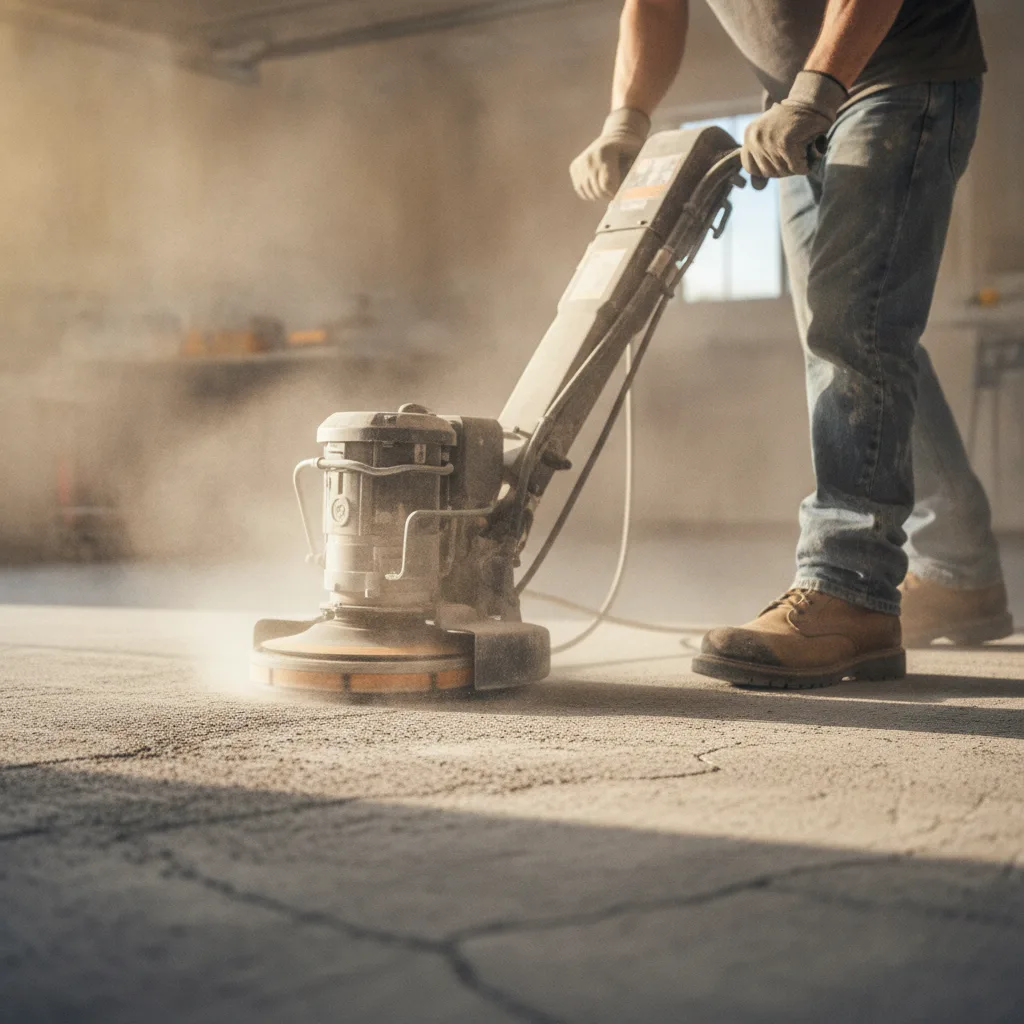
Surface preparation is the single biggest factor in whether any concrete floor sealing method sticks around or peels up within months. No matter which system you choose, the concrete needs to be clean, sound and correctly profiled before anything goes on top of it.
For penetrating sealers, the concrete needs to be free of existing coatings, contaminants and curing compounds. A chemical clean or light acid etch usually does the job. For epoxy systems the standard is diamond grinding, which opens the concrete’s surface profile so the resin has something to grip. The Concrete Institute of Australia recommends a concrete surface profile (CSP) of 3 to 4 for most epoxy and polyurethane coatings, which means grinding rather than just etching.
Moisture is the other critical variable. Applying any coating over a slab with high moisture vapour emission causes blistering and delamination. A proper moisture test before you start, not just a visual check, tells you whether the slab is ready or whether a moisture barrier is needed as part of the system.
Cutting corners on prep is where most DIY sealing jobs come unstuck. The sealer or coating looks fine for a few weeks, then bubbles and flakes start appearing, usually in the spots with the most traffic or the most moisture movement. Stripping and redoing the job correctly costs more than getting it right the first time.
Which concrete floor sealing method is best for a residential garage?
For most residential garages in Melbourne, an epoxy coating system delivers the best long-term value. It handles daily parking, weekend workshop use and the occasional chemical spill without constant reapplication. The initial cost is higher than a roller-applied acrylic, but when you factor in the labour and product cost of resealing every couple of years, epoxy generally wins over a ten-year window.
If your garage is purely for storage, sees no vehicle traffic and you simply want to suppress dust and moisture, a penetrating silane or siloxane sealer is a practical and affordable choice. Apply it, leave it alone, and repeat the process when water stops beading on the surface.
For garages that sit somewhere in between, a polyurethane or polyaspartic topcoat over a proper epoxy base gives flexibility. Polyaspartic topcoats in particular cure fast (some are trafficable within hours), tolerate UV exposure without yellowing and add a layer of scratch resistance that straight epoxy sometimes lacks.
One honest caution: if your slab has significant cracks, active moisture vapour transmission or areas where previous concrete has crumbled, no sealer alone will fix those problems. Structural issues need to be addressed before a coating goes down, otherwise the coating fails and you are back to square one.
What should you ask a concrete floor sealing contractor before hiring them?
Before you commit to any contractor for concrete floor sealing, ask three things. First, how do they profile the concrete: diamond grind or acid etch? Grinding is the professional standard for epoxy and polyurethane systems. Second, what moisture testing do they carry out and what happens if the slab fails? A contractor who skips this step is gambling with your money. Third, what is the exact system they are applying, and what does the manufacturer’s warranty say? A reputable installer will hand you a product data sheet without hesitation.
Also worth asking: do they supply references or a portfolio of completed garage floors? Seeing a two-year-old job in person tells you far more than a fresh photo taken the day the work was done.
Concrete floor sealing done well is one of the most practical upgrades you can make to a Melbourne garage. Done poorly, it is an expensive frustration. The method matters, but the preparation and the installer matter more.
Enquire about concrete floor sealing and preparation with Metal and Flake