Epoxy Garage Floor Ideas: Styles and Finishes for Melbourne Homes
Epoxy garage floor ideas range from simple solid-colour coatings to high-gloss metallic pours and multi-tone vinyl flake blends. The right choice depends on how you use the space, the existing concrete condition and the look you want to carry from your home’s interior into the garage. This article walks through the most popular options available to Melbourne homeowners today.
What are the most popular epoxy garage floor ideas for Australian homes?
The most popular epoxy garage floor ideas in Australia are vinyl flake (also called chip or broadcast) systems, solid-colour epoxy with a topcoat, and metallic pigment epoxy. Vinyl flake is the most common choice because it hides minor surface imperfections, provides grip underfoot and suits the practical demands of a working garage without sacrificing appearance.
Walk down any new-build street in Melbourne’s outer suburbs and the garage floor is increasingly part of the fit-out conversation. People are spending real money on their garage spaces. Whether it is a home gym, a workshop, a show car bay or just a cleaner version of a working garage, the floor sets the tone for the whole room.
Here is a breakdown of the main systems worth considering.
Vinyl Flake Epoxy
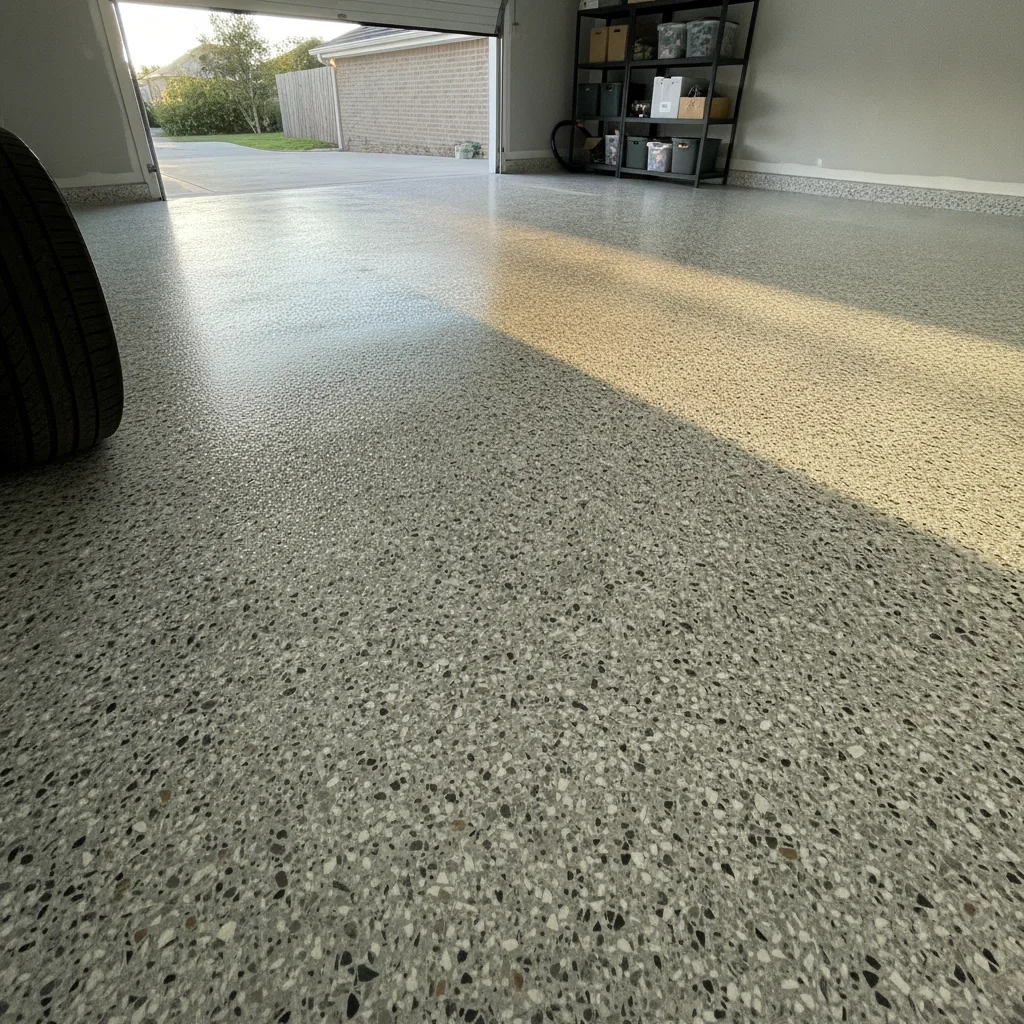
A base coat of coloured epoxy is applied to the prepared concrete, then decorative vinyl flake chips are broadcast across the wet surface. Once cured, the excess is scraped back and a clear polyurethane or epoxy topcoat is applied over the top. The result is a seamless, textured surface that looks sharp and wears extremely well under tyre traffic and foot traffic alike.
Flake blends come in dozens of colour combinations. Neutral blends with greys, whites and blacks remain the most requested because they pair easily with dark cabinetry and raw steel finishes. Warm blends with tans and creams suit homes with timber accents. You can also push into bolder territory with blue, green or red-dominant blends if the garage is more of a showroom than a functional space.
One practical detail worth knowing: a full broadcast flake system (where chips are thrown until they fully cover the base coat) creates a more uniform, mottled look that hides any future scuffs or chips far better than a partial broadcast, which leaves more of the base colour visible between chips.
Solid Colour Epoxy
A flat, single-colour epoxy coating sealed with a gloss or satin topcoat is the most straightforward option. It photographs beautifully and gives a clean, industrial feel. The catch is that concrete preparation has to be close to perfect. Any pitting, crack repairs or surface variation in the concrete will read through a solid colour in a way that a flake blend would hide entirely. For a freshly ground slab in good condition, a solid grey or charcoal looks genuinely impressive.
Metallic Epoxy
Metallic epoxy uses pigmented metallic powders suspended in a clear or tinted epoxy. The installer manipulates the coating while it is wet, using air tools and rollers to create organic flowing patterns that look like polished stone, molten metal or deep water. No two floors look the same. This system is more technically demanding than flake, which means the skill of the installer matters more. When it is done well, a metallic epoxy garage floor is a genuine centrepiece. When it is done poorly, the movement in the finish looks muddy rather than deliberate.
How do you choose the right garage floor colour and finish?
Choose your garage floor colour and finish by considering three things: how much natural light the space gets, how hard the floor will be used and what look you want to achieve. Light colours expand a dim garage visually, darker tones hide oil drips and grime between cleans, and higher-gloss topcoats are easier to mop but show every speck of dust in bright light.
Lighting is the biggest factor most people underestimate. A garage with a single fluorescent tube and no windows will make even a bold flake blend look flat and grey. If you are planning to upgrade the floor, it is worth also considering LED strip lighting along the perimeter or overhead panels. The floor will look dramatically better and the practical usability of the space lifts substantially.
Tyre marks are a real-world concern. Certain epoxy formulations are more resistant to plasticiser migration, which is the chemical process by which hot tyres leave yellow or brown stains on the surface. A quality polyurethane topcoat significantly reduces this problem. It is worth asking specifically about tyre-mark resistance when you are comparing quotes, because not all topcoat products perform the same.
Finish sheen is a personal call. High-gloss topcoats give that showroom look and are very easy to keep clean with a mop. Satin finishes are less reflective and tend to look more understated. Flat finishes are rarely used in garages because they hold dirt more readily and are harder to clean.
What does the concrete preparation process involve, and why does it matter for epoxy garage floor ideas?
Concrete preparation for an epoxy garage floor involves mechanically grinding or shot-blasting the slab to open the surface, removing any existing coatings, filling cracks and addressing moisture issues before any product is applied. Skipping or shortcutting this stage is the single most common reason epoxy floors fail, peel or bubble within a year of installation.
Grinding opens the pores of the concrete so the epoxy can form a proper mechanical bond. On a slab that has simply been acid-etched (a common shortcut), that bond is far weaker and is especially vulnerable in Melbourne’s climate, where garages can see significant temperature swings between winter mornings and summer afternoons.
Moisture is the other major issue. Concrete slabs in Melbourne, particularly in older homes or those close to the water table, can push moisture vapour upward through the slab. Moisture trapped under an epoxy coating causes delamination, which looks like bubbling or peeling starting from the edges or anywhere the coating is weakest. A moisture test before application is not optional. It is a basic part of a professional job.
Crack repairs also need to be done with the right products. A flexible polyurea filler handles minor working cracks better than rigid epoxy filler, which can telegraph cracks back through the topcoat over time.
What should you budget for an epoxy garage floor in Melbourne?
For a standard double garage in Melbourne (roughly 36 to 40 square metres), expect to pay somewhere in the range of $2,500 to $5,000 for a professionally installed vinyl flake system, depending on the condition of the concrete, the system spec and the installer’s level of finish. Metallic epoxy and more complex decorative work sits toward the higher end of that range or beyond it.
Price-per-square-metre comparisons between quotes can be misleading. A lower rate per square metre often reflects fewer coats, cheaper products, less thorough surface preparation or all three. Asking for a written spec that details the number of coats, the specific products used and the preparation method lets you compare quotes properly rather than just on price.
Warranty terms are worth reading carefully. A warranty that covers the product but not the labour is not particularly useful. Look for an installer who backs their workmanship as well as the materials.
How do you keep an epoxy garage floor looking good long-term?
To keep an epoxy garage floor in good condition, sweep or blow it regularly to remove grit that acts as an abrasive underfoot, mop with a diluted neutral pH cleaner and deal with oil spills quickly rather than letting them sit. Avoid dragging sharp or heavy metal objects directly across the surface without protection.
A well-installed epoxy floor in a domestic garage should realistically last ten or more years without needing recoating, provided it was installed properly and the concrete below it is stable. Placing a rubber mat under a motorcycle kickstand or under heavy gym equipment distributes load and prevents point damage. These are small habits that make a real difference over a decade.
If the topcoat does eventually show wear in high-traffic areas, a maintenance coat applied over the existing surface (once the area is cleaned and lightly abraded) can refresh the floor without stripping everything back to bare concrete. This is far less disruptive and significantly cheaper than a full reinstall.
Book a garage floor colour and finish consultation with Metal and Flake