Epoxy Floor Metallic: Finishes, Colours and What to Expect
A metallic epoxy floor is a resin coating mixed with metallic pigment powder that creates a flowing, three-dimensional effect on your concrete. It comes in dozens of colours, can mimic marble or molten metal, and cures to a hard, seamless surface. Most residential installs take two to three days from prep to final topcoat, with a light-traffic cure time of around 24 hours after the last coat.
What does an epoxy floor metallic finish actually look like?
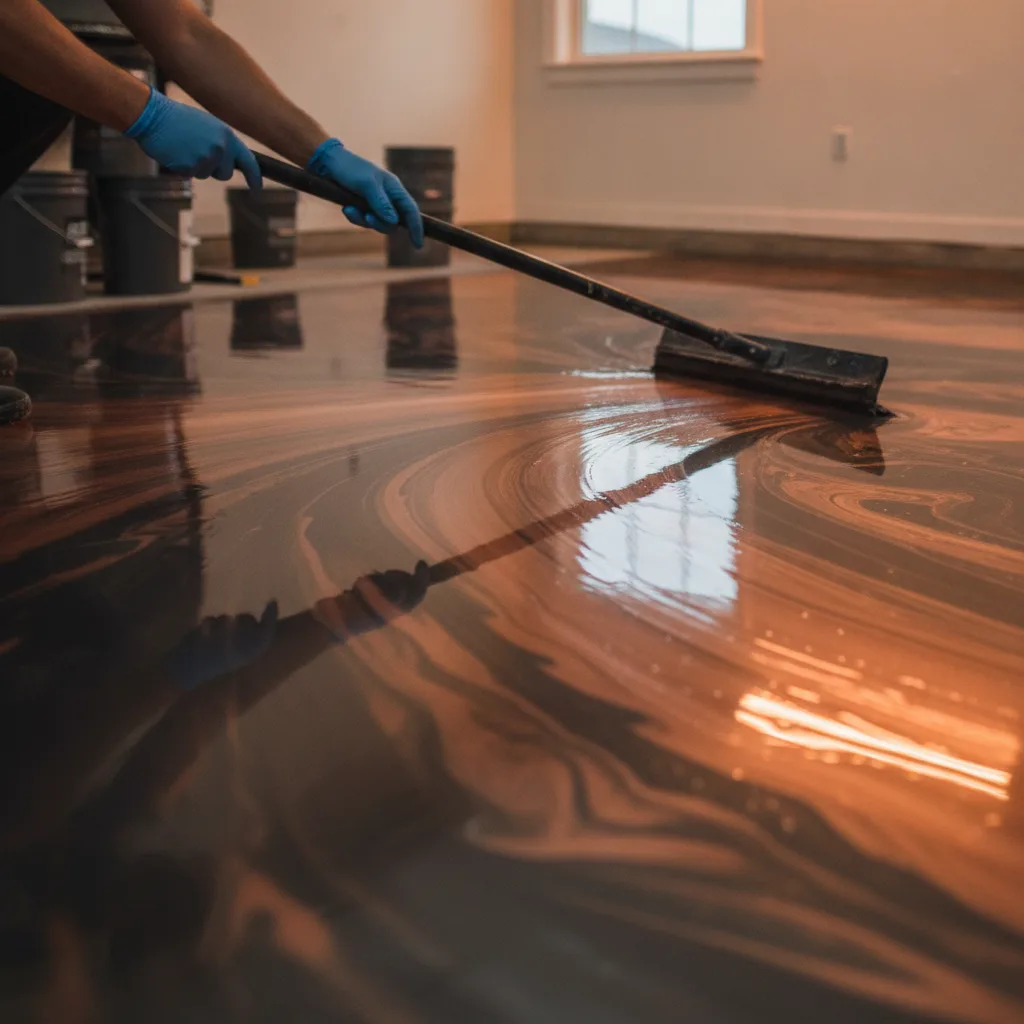
A metallic epoxy floor finish produces a deep, glossy surface with natural-looking movement and depth. The pigment particles shift as you walk around it, catching light from different angles. No two floors are identical because the spreading technique, colour combinations and even air temperature during the pour all influence the final pattern. That unpredictability is exactly what makes it look expensive rather than printed or stamped.
The most popular visual styles fall into a few broad camps. Pearl and shimmer finishes use fine metallic powder in single tones like champagne, silver or bronze, giving a clean, upscale look that suits garages and living areas equally well. Marble-effect floors blend two or three colours, usually a dark base with lighter veining colours pushed through with a squeegee or blower. Molten or lava effects use strong contrasting colours, often charcoal with copper or navy with gold, and the installer manipulates the wet resin to create dramatic swirling patterns.
The gloss level is controlled by the topcoat rather than the metallic layer itself. A full gloss polyurethane topcoat gives a mirror-like finish. Satin cuts the shine back to something closer to polished concrete. Matte topcoats are less common with metallic because they reduce the depth effect, but they do exist for certain design briefs.
What colours are available for a metallic epoxy floor?
Metallic epoxy pigments are available in well over 50 standard colours, and most suppliers can custom-blend shades on request. The colour you see in the tin shifts once it is spread and topcoated, so it pays to look at cured sample boards rather than wet pigment swatches when making your decision.
The most consistently popular choices in Australian homes and garages include:
- Gunmetal grey and silver: A neutral that suits both industrial and contemporary residential spaces. It shows dirt less than white and pairs well with dark cabinetry.
- Copper and bronze: Warmer tones that read as premium in a showroom or entertainment space. Copper tends to look different under warm versus cool lighting, which adds to its appeal.
- Pearl white and cream: Bright, reflective and popular in inner-city garages where owners want to maximise light in a lower-ceiling space.
- Ocean blue and teal: A bold choice that photographs well and is increasingly common in man-caves, gyms and workshop floors.
- Charcoal with gold veining: One of the most requested marble-style combinations. The contrast is strong enough to read clearly without looking garish.
Colour choice should also take into account the room’s primary light source. Natural north-facing light will lift cooler tones like silver and teal. South-facing rooms or artificial lighting can flatten those same colours, so warmer tones in copper, bronze or gold often perform better in those environments.
How is a metallic epoxy floor installed, step by step?
The installation process is straightforward when you understand what each stage is doing. Cutting corners on surface preparation is the single most common reason metallic epoxy floors fail, so a reputable installer will spend as much time on prep as on the actual coating.
Day one: surface preparation. The concrete is diamond-ground or shot-blasted to open up the surface profile. This creates a mechanical key for the epoxy to bond to. Any cracks, expansion joints or pitting are filled and allowed to cure. The slab moisture content is checked, because concrete that is still off-gassing moisture will cause the coating to bubble or delaminate. A moisture vapour barrier primer may be applied if readings are elevated.
Day two: base coat and metallic layer. A pigmented epoxy base coat goes down first to create a consistent background colour. While that is still tacky or immediately after it cures (depending on the product system), the metallic epoxy is poured and spread. The installer uses a spiked roller, squeegee and sometimes a heat gun or leaf blower to move the pigment and create the desired pattern. This is the most skilled part of the job. Once the installer is happy with the movement and depth, the floor is left to cure undisturbed.
Day three: topcoat. A polyurethane or polyaspartic topcoat is applied in one or two coats. This layer determines the final sheen level and provides the chemical and abrasion resistance that makes the floor practical. Polyaspartic topcoats cure faster (some within a few hours) and offer excellent UV resistance, which matters in areas with direct sun exposure. The floor is ready for light foot traffic in about 24 hours and full vehicle traffic in around 72 hours, though this varies by product and temperature.
How durable is a metallic epoxy floor compared to plain epoxy?
A metallic epoxy floor is just as durable as a standard solid-colour epoxy system when the same quality base and topcoat products are used. The metallic pigment itself does not affect the structural integrity of the coating. What changes the performance is the topcoat thickness and quality, the concrete preparation standard and the product brand. A well-installed metallic epoxy floor in a residential garage will typically last 10 to 20 years before it needs a refresh coat, provided it is not subjected to prolonged chemical spills or sharp impact damage without any protective matting.
One practical point: the high-gloss topcoat common on metallic floors shows scratches from grit more readily than a textured finish. Adding a broadcast of fine aluminium oxide or similar anti-slip aggregate to the topcoat can reduce scratch visibility and improve grip in wet conditions. If the floor is in a gym or workshop where equipment gets dragged, a satin topcoat is worth considering because surface scratches are less obvious than on full gloss.
Is a metallic epoxy floor worth it for a garage?
For most homeowners who want their garage to look as finished as the interior of the house, a metallic epoxy floor is worth the extra cost over a plain grey flake or solid-colour system. The visual result is dramatically different. A well-executed pearl or marble-effect floor can make a standard double garage look like a showroom, and that tends to have a positive effect on property presentation when it comes time to sell.
The cost premium over a standard epoxy system is real but not extreme. A metallic finish typically adds to the labour time because of the skill and care involved in manipulating the pigment, and the metallic powder itself costs more per kilogram than standard colour pigments. That said, the substrate prep, topcoat and most of the process cost the same regardless of which decorative finish sits in the middle.
The more important question is whether you are getting a proper three-coat system over mechanically prepared concrete, or a thin single-coat product over an unground slab. The finish type matters far less than the preparation and product quality underneath it.
Book a metallic epoxy floor installation with Metal and Flake