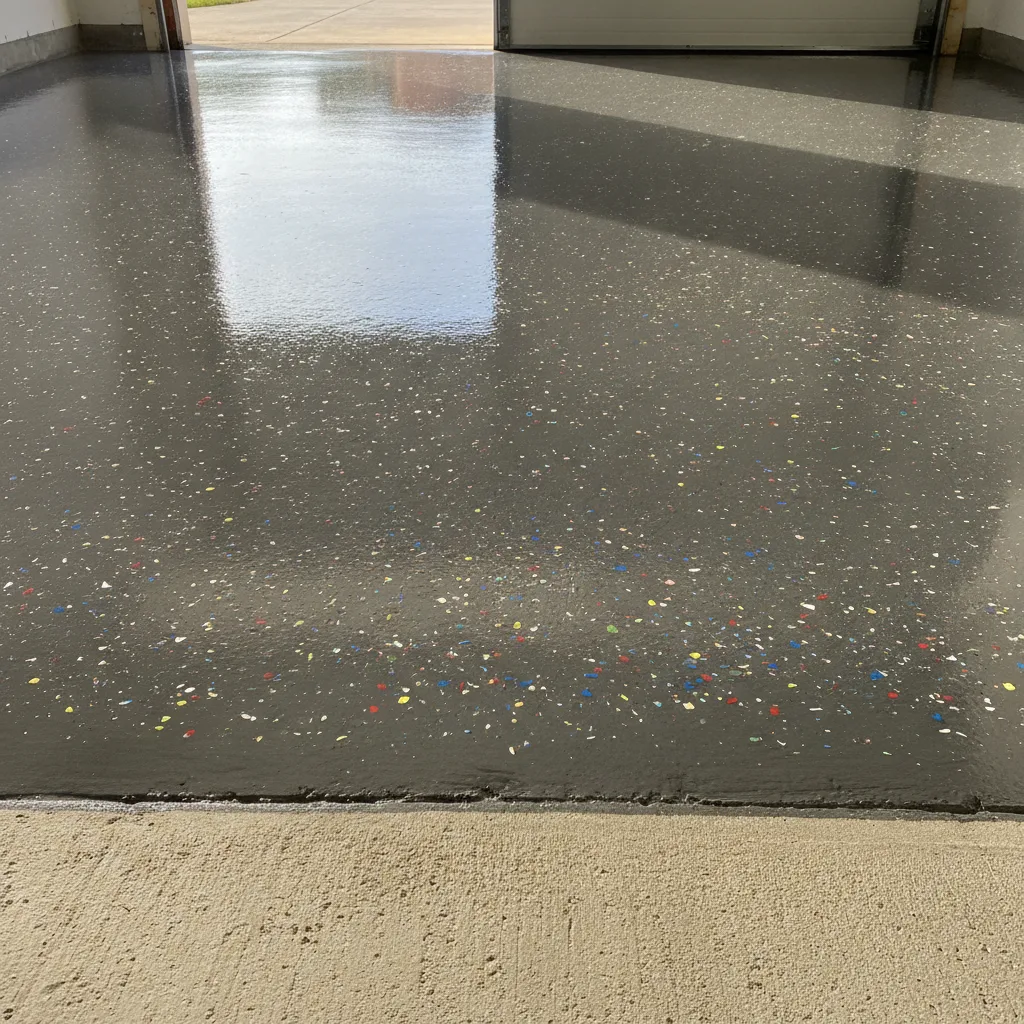
Epoxy Coating for a Garage Floor: What Melbourne Homeowners Need to Know
An epoxy coating for a garage floor is a multi-layer resin system applied directly to bare concrete that bonds chemically to the slab, creating a hard, seamless surface that resists oil, tyre marks, chemicals and heavy foot traffic. A professionally installed system typically lasts 10 to 20 years with basic maintenance, making it one of the most cost-effective upgrades you can make to a residential garage.
Why do Melbourne homeowners choose epoxy coating for their garage floor?
Melbourne garages cop a lot of punishment. Wet winters, gritty summer dust, leaking cars and years of foot traffic turn raw concrete into a pitted, stained eyesore. An epoxy coating seals all of that out, gives you a surface you can actually hose down in minutes, and transforms a grubby utility space into something that looks sharp. Beyond looks, a sealed floor stops concrete dust from coating everything you store in there.
There are a few practical reasons the coating trend has taken off in suburbs like Cheltenham, Frankston and the Mornington Peninsula:
- Dust elimination. Bare concrete constantly sheds fine particles. Epoxy seals the surface so your tools, car and stored gear stay cleaner.
- Chemical resistance. Brake fluid, engine oil and degreasers wipe straight off a cured epoxy surface. They permanently stain raw concrete.
- Slip resistance. A broadcast decorative flake system adds texture, giving you grip even when the floor is wet from a car dripping after rain.
- Property value. A tidy, coated garage photographs well and signals to buyers that the home has been looked after.
What goes into a proper epoxy garage floor system?
A proper epoxy garage floor system has at least three distinct layers: a primer or base coat that penetrates and bonds to the concrete, a mid-coat that carries the colour and any decorative flake, and a clear topcoat that provides abrasion and UV resistance. Skipping or thinning any of these layers is where DIY attempts and budget jobs fall over within a couple of years.
Here is how the layers stack up on a quality residential installation:
- Surface preparation. This is where most of the work happens. The concrete is ground or shot-blasted to open the surface profile so the primer soaks in rather than sitting on top. No preparation, no adhesion. Full stop.
- Moisture check. Melbourne slabs, particularly those poured before the 1990s, often have no vapour barrier beneath them. A moisture reading above about 75 percent relative humidity (measured via a Tramex or similar meter) needs to be managed before coating or you risk delamination bubbles appearing within months.
- Epoxy base coat. A 100 percent solids or high-solids epoxy is rolled or squeegeed across the prepped surface and allowed to cure to a tacky stage.
- Decorative flake broadcast. Coloured vinyl flake chips are scattered across the wet base coat. The flake provides texture, hides minor surface imperfections and is the main visual element of a metal and flake finish.
- Clear polyurethane or polyaspartic topcoat. Two coats of clear are applied over the scraped and sealed flake layer. Polyaspartic topcoats cure faster than standard epoxy clears and hold their colour outdoors, which matters for garages with roller doors open to direct sunlight for hours at a time.
What are the most common mistakes with DIY epoxy coating on a garage floor?
The most common DIY mistake with epoxy coating on a garage floor is skipping proper concrete preparation. Hardware store kits come with a mild acid etch, but etching alone rarely opens the concrete profile enough for solid adhesion, particularly on power-trowelled slabs. The result is a coating that looks fine for six months then peels in sheets, often taking chunks of concrete surface with it.
Other mistakes that cause early failures:
- Applying over contaminated concrete. Oil that has soaked into a slab over years cannot be removed with a mop and a degreaser. It needs mechanical grinding to physically remove the contaminated layer. If you coat over it, the epoxy never bonds properly in those spots.
- Ignoring temperature and humidity on install day. Epoxy is fussy. Applying below 10 degrees Celsius or above 85 percent ambient humidity causes the chemistry to go wrong. Melbourne’s shoulder seasons (late autumn and early spring) can catch people out when the garage temperature drops overnight mid-cure.
- Using the wrong product for the topcoat. Some DIY kits use a water-based acrylic sealer as the final coat. It looks fine on day one but softens under hot tyre contact, leaving permanent marks every time you park.
- Applying too thin. A single thin coat gives you colour but not durability. A professional system builds to between 1.5 and 3 millimetres of total coating thickness, which is roughly three to four times what most DIY kits deliver.
How long does an epoxy garage floor coating take, and when can you park on it?
A professional epoxy garage floor coating on a standard double garage takes one to two days on-site, split across preparation on day one and coating on day two. Light foot traffic is usually safe after 24 hours. Full cure for vehicle traffic, including the heat and weight of a car, typically requires five to seven days. Rushing this step is one of the most common reasons for tyre mark damage in the first few weeks after installation.
The exact timeline shifts based on a few factors specific to Melbourne conditions:
- Ambient temperature. Warmer weather accelerates cure. A job done in January may be drive-ready in five days. The same job done in July might need the full seven days or more.
- Coating system used. Polyaspartic topcoats cure significantly faster than standard epoxy clears, which is one reason professional installers favour them on residential jobs where the homeowner wants their garage back quickly.
- Slab condition. Heavily pitted or contaminated concrete sometimes needs a skim coat or filler application, which adds a day to the schedule.
The practical advice here: plan for a full week off the floor. Move the car out before the installer arrives and do not rush it back in. The coating will still be hardening through that first week even when it looks and feels solid.
How much does epoxy coating for a garage floor cost in Melbourne?
For a professionally installed epoxy coating on a Melbourne residential garage floor, expect to pay roughly $50 to $100 per square metre for a full decorative flake system with a polyaspartic topcoat, depending on the condition of the slab, the complexity of the job and the system specified. A standard single garage of around 18 square metres typically lands between $900 and $1,800 installed. A double garage in the 36 square metre range generally runs $1,800 to $3,600.
Those numbers assume the concrete is in reasonable condition. Heavily cracked slabs, oil-saturated concrete or surfaces that need shot-blasting rather than just grinding add to the preparation cost. Get that scope agreed upfront in any quote so there are no surprises mid-job.
Comparing that cost against cheap alternatives is worth doing. A painted concrete floor using standard floor paint costs less up front but typically needs redoing every two to three years. Over a decade, the repainting cost often exceeds the price of a single quality epoxy installation, and you never get the same finish or durability.
How do you maintain an epoxy-coated garage floor?
Maintaining an epoxy-coated garage floor is straightforward: sweep or blow out loose grit regularly, mop with a neutral pH cleaner when needed, and wipe up chemical spills before they have time to sit. Avoid strong solvents like acetone directly on the surface. The flake and polyaspartic topcoat combination used in quality installations is resistant to most household chemicals but no coating is completely indestructible.
A few habits that keep the floor looking sharp for years:
- Put a rubber mat or drip tray under the car if it leaks oil or coolant. Even though epoxy resists oil, it is easier to lift a mat than to scrub a stain off a textured flake surface.
- Use felt pads under metal shelving legs to stop point-load scratching when shelves are dragged across the floor.
- Avoid dragging sharp metal objects directly across the surface. A piece of aluminium flashing or a steel bracket dropped at the wrong angle can chip the topcoat.
Most quality installations carry a manufacturer or installer warranty of between two and five years. Keep your invoice and any care instructions provided at handover so you have documentation if a warranty issue comes up.
If you are ready to stop looking at cracked, dusty concrete every time you open the roller door, Book a garage floor coating quote with Metal and Flake.