Garage Floor Ideas for Reservoir Homes: Coating Options Compared
The best garage floor ideas for Reservoir homes come down to four main options: floor paint, epoxy coatings, flake (chip) systems, and polyurea topcoats. Each suits a different budget and use case. For most residential garages, a broadcast flake epoxy system gives the best balance of durability, slip resistance, chemical resistance and good looks for the money.
Why do garage floor ideas matter so much for Reservoir homes specifically?
Reservoir sits in Melbourne’s north, where homes range from solid pre-war brick places to newer knockdown-rebuilds. Garages in this area take a real beating. The summer heat pushes concrete slab temperatures high enough to cause bubbling in cheaper coatings, and Melbourne’s variable humidity means moisture vapour transmission through the slab is a genuine concern. Choosing the wrong coating means you are peeling and recoating within two or three years, which costs more in the long run than getting it right the first time.
Most Reservoir homeowners use their garage as a workshop, a storage area or a second living space as much as they use it to park a car. That means the floor needs to handle oil drips, tyre scuffing, dropped tools and foot traffic, not just look nice on day one.
What are the main garage floor coating options available?
The four coating types you will realistically encounter when researching garage floor ideas are floor paint, single-coat epoxy, broadcast flake epoxy systems, and polyurea or polyaspartic topcoats. Each has distinct strengths and weaknesses worth understanding before you spend a dollar.
Floor paint is the cheapest entry point. Most hardware stores stock it for around $60 to $100 for a two-part epoxy paint kit. The problem is that paint is thin, usually less than 100 microns dry film thickness, which means it scratches, chips and fades quickly under real-world use. It is a fine short-term cosmetic fix but not a serious solution for a working garage.
Single-coat epoxy steps things up. Applied properly by a professional, a single broadcast coat of 100-percent solids epoxy adds meaningful protection and creates a surface that resists petrol, oil and cleaning chemicals. It is a solid choice for light-use garages. The limitation is that a plain epoxy surface can be slippery when wet and shows tyre marks over time.
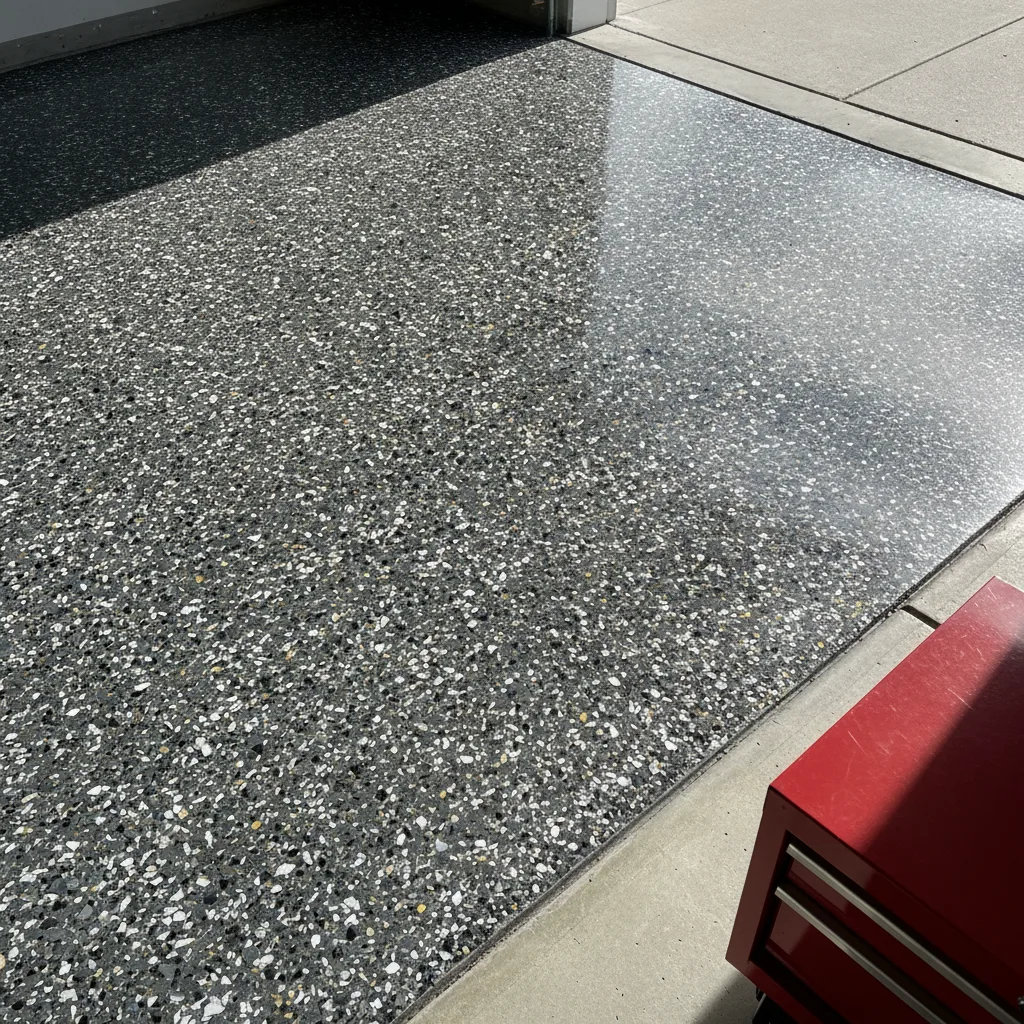
Broadcast flake systems are the most popular option for residential garages right now. A base coat of epoxy goes down, coloured vinyl flakes or chips are broadcast into the wet coat, excess flakes are scraped back, and a clear topcoat (usually polyurea or polyaspartic) locks everything in. The result is a surface with built-in texture for grip, genuine visual depth, and a coating system that typically runs 2 to 3 millimetres thick in total. Flake systems hide minor concrete imperfections well and come in dozens of colour blends to suit different tastes.
Polyurea and polyaspartic coatings are sometimes marketed as standalone systems, but in residential garages they do their best work as a clear topcoat over a flake base. Polyurea cures extremely fast, often touch-dry within an hour, and offers excellent UV stability, which matters for garages with large roller doors that let in plenty of afternoon sun. Using polyurea as a topcoat over a flake system combines the best of both: the body and grip of the flake layer, and the hardness and UV resistance of the polyurea seal.
How do you pick the right option for your Reservoir garage?
The honest answer is that most Reservoir homeowners are best served by a broadcast flake system with a polyurea topcoat. Here is a practical way to think through the decision.
Start with how you actually use the space. If you park a car, run a bench grinder occasionally and store garden gear, almost any professional system will hold up fine. If you are doing regular mechanical work, running a compressor, dragging heavy toolboxes across the floor and letting chemicals sit, you want the full flake-plus-polyurea build for maximum thickness and chemical resistance.
Consider your slab condition. Older Reservoir homes often have slabs that have never been coated before and may have surface contamination from years of oil drips or previous paint. Good concrete preparation, typically diamond grinding rather than acid etching, is the single biggest factor in whether a coating bonds and stays bonded. A coating applied over a poorly prepared slab will delaminate, full stop. When getting quotes, ask specifically what prep method is used and whether it includes moisture testing.
Think about light. Garages that face west or have large openings need a UV-stable topcoat. Standard epoxy yellows in UV light, which is worth knowing if you want the colour to stay true year after year. A polyaspartic or polyurea clear keeps the flake colours looking sharp for much longer.
Finally, consider your timeline. A standard flake system applied by a professional crew can be done in a single day and be ready for foot traffic within 24 hours, with vehicles back on within 48 to 72 hours. That means minimal disruption to the household.
What does a garage floor coating actually cost in Reservoir?
Cost in residential garage coating depends on the system chosen, the size of the slab and the amount of prep work needed. As a rough guide based on current Melbourne market rates, a full broadcast flake system with a polyurea topcoat for a standard double garage (around 36 to 40 square metres) typically lands somewhere between $1,500 and $3,000 fully installed. That includes grinding, crack filling, the full coating system and cleanup.
Floor paint kits from a hardware store look tempting at under $200, but factor in that most need reapplication every one to two years, and the cost picture changes fast. A professionally installed flake system done properly should last a decade or more with basic maintenance: an occasional sweep and a mop with a pH-neutral cleaner is genuinely all it needs.
One concrete detail worth knowing: vinyl flake systems have been used in commercial environments like warehouses and food processing facilities precisely because they are easy to clean and resist the kinds of abuse those spaces dish out. That same durability translates directly to a residential garage, and it is one reason the product has moved so strongly into the home improvement space over the past decade.
What maintenance do coated garage floors need in Reservoir?
Maintaining a coated garage floor is straightforward. Sweep or blow out dust and debris regularly. For spills, wipe them up sooner rather than later, especially brake fluid, which is genuinely aggressive on most coatings if left to sit. Mop with warm water and a mild detergent when the floor needs a deeper clean. Avoid dragging sharp metal edges directly across the surface without protection underneath, and put rubber furniture feet under any heavy shelving units that sit on the floor.
For coatings in Reservoir specifically, the main seasonal consideration is grit tracked in from wet weather. Melbourne winters bring plenty of it, and fine grit acts like sandpaper underfoot over time. A simple entry mat at the door and a regular sweep through winter keeps abrasion to a minimum and the coating looking good for the long haul.
Ready to stop looking at a bare concrete slab every time you walk into your garage? Book a garage floor coating in Reservoir with Metal and Flake.