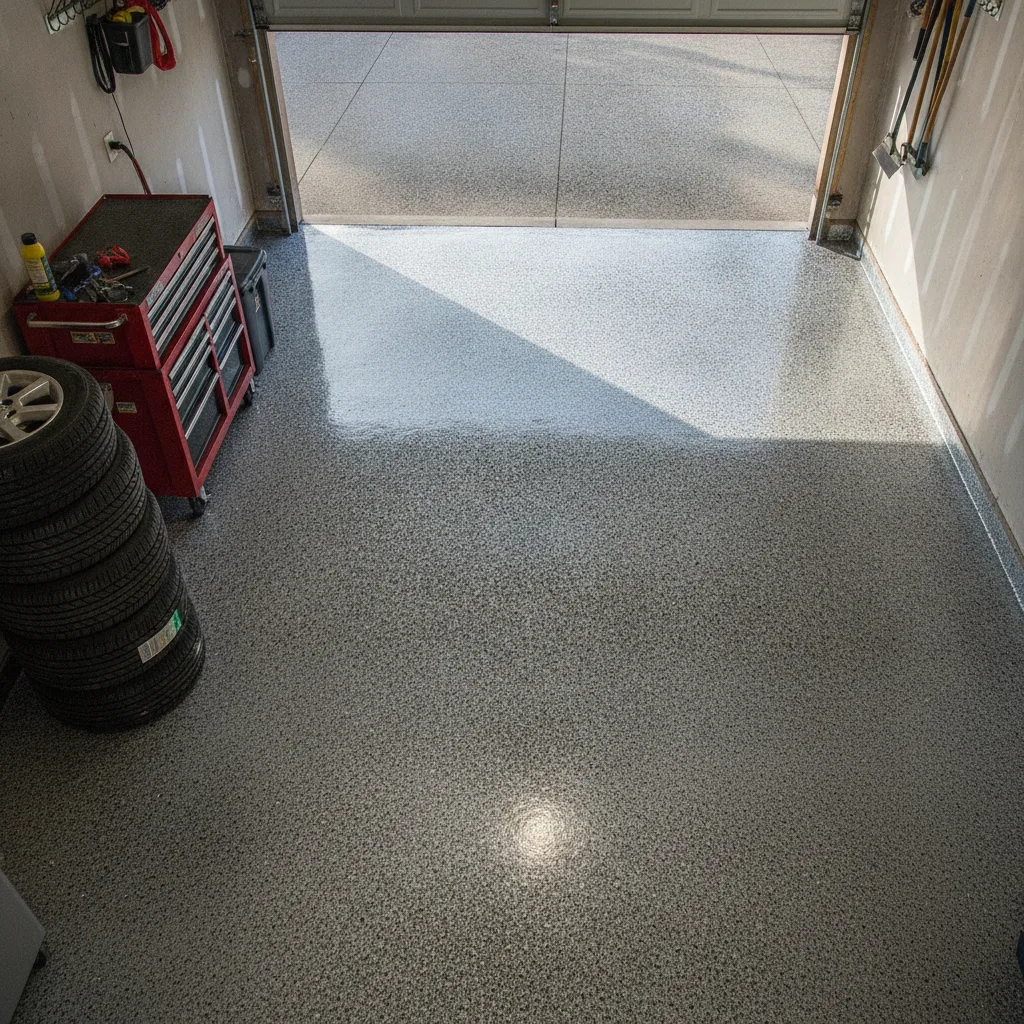
Garage Floor Ideas for Craigieburn Homes: Epoxy and Beyond
The best garage floor ideas for Craigieburn homes come down to three practical factors: how much abuse the slab takes daily, how easy the surface is to clean, and how long the finish will last in Melbourne’s variable climate. Epoxy and polyaspartic flake coatings lead the pack, but plain concrete sealing and floor tiles are also worth knowing about before you decide.
Why do so many Craigieburn homeowners upgrade their garage floors?
Most Craigieburn homeowners upgrade their garage floor because bare concrete is a dust factory. Unsealed concrete is porous, so oil, brake fluid and tyre marks soak straight in and become near-impossible to scrub out. A sealed or coated floor wipes clean in minutes, looks sharper, and actually adds to the perceived value of the home when it comes time to sell or rent.
Craigieburn is also a growth corridor. Plenty of homes here were built in the last ten to fifteen years, which means garages that were finished to a builder’s-basic standard: a broom-swept slab with nothing on it. That raw slab works fine structurally, but it stains, it dusts and it looks unfinished. Upgrading it is one of the cheaper cosmetic wins available to a homeowner.
There is also a practical side. Many Craigieburn blocks have double garages used as workshops, storage rooms and home gyms as much as car shelters. A good floor surface makes all of those uses safer and more comfortable underfoot.
What are the most popular garage floor coating options available?
The most popular garage floor coating options are epoxy base coat with decorative flake, polyaspartic topcoat systems, concrete sealers and interlocking floor tiles. Each suits a different budget and lifestyle. Epoxy flake systems are the most common choice for residential garages because they balance durability, appearance and cost in a way nothing else quite matches.
Here is a quick rundown of what each option actually involves:
- Epoxy flake coating. A pigmented epoxy primer is rolled onto the prepared slab, coloured vinyl flakes are broadcast into the wet coat, excess flake is scraped back, and a clear polyurethane or polyaspartic topcoat locks everything in. The result is a surface that looks a bit like terrazzo, hides minor surface marks between cleans, and can handle regular vehicle traffic without peeling when applied correctly.
- Solid colour epoxy. Same process but without the decorative flake. Cleaner and more industrial-looking. Popular in workshops where function matters more than aesthetics.
- Concrete sealer. A penetrating or film-forming sealer with no added colour or texture. The cheapest option and a big improvement over raw concrete. It does not hide surface imperfections, though, and the finish tends to dull over time in a busy garage.
- Interlocking PVC or rubber tiles. A DIY-friendly option that sits on top of the slab. Easy to replace individual tiles if damaged. The joints can trap grit and moisture, which is a mild maintenance headache, and they do not give the seamless look that a coating does.
For most Craigieburn garages, the epoxy flake system hits the sweet spot. It is durable enough for two cars, a pushbike fleet and a chest freezer, and it looks genuinely good without being high-maintenance.
How does surface preparation affect the final result?
Surface preparation is the single biggest factor in whether a garage floor coating lasts or peels. A coating applied to a dusty, oily or unground slab will fail at the bond line, often within months. Proper prep means mechanically grinding or shot-blasting the concrete to open the surface profile so the epoxy can grip, then repairing any cracks or spalling before the first coat goes down.
This is where a lot of DIY kits fall short. The big-box store kits typically rely on acid etching to prepare the slab. Acid etching can work on a brand-new, clean slab, but it struggles to cut through existing oil contamination, laitance (the weak paste layer on top of poured concrete) or any previous sealer. Professional applicators use diamond-cup grinders or shot-blast machines that physically remove the top layer of concrete and leave a consistent surface profile measured in CSP (Concrete Surface Profile) units. A CSP of 2 to 3 is the standard target for an epoxy coating.
Skipping or cutting corners on prep is why you see bubbled, peeling garage floors around Melbourne’s northern suburbs. The coating itself is usually fine. The failure is almost always underneath it.
What garage floor colours and finishes work best for Craigieburn garages?
Mid-tone flake blends in greys, beiges and charcoals are the most practical garage floor colours for Craigieburn homes because they hide the inevitable tyre marks and brake dust that come with regular use. Lighter blends look brilliant on the day but show every scuff. Very dark solids show water marks and footprints more than a flake system does.
A few things to think about when choosing a finish:
- Flake size. Standard flake is around 4mm. Larger flake (6mm to 12mm) gives a more dramatic look and adds a bit more slip resistance in the texture. Smaller micro-flake reads as a subtler, almost terrazzo-style pattern.
- Topcoat sheen. Satin finishes are the most forgiving day-to-day. High-gloss looks stunning in photos but shows every footprint and hose smear.
- Slip resistance. If the garage doubles as a workshop or if children play in it, ask about adding an anti-slip aggregate to the topcoat. It makes almost no difference to the look but a meaningful difference to safety on a wet floor.
The most consistently popular blend Metal and Flake installs in the Craigieburn area sits in the grey and silver family, a mix that photographs well and ages even better.
How long does a garage floor coating last and what maintenance does it need?
A professionally installed epoxy flake system with a polyaspartic topcoat will typically last ten to fifteen years in a residential garage under normal use. The lifespan depends heavily on the quality of surface prep, the product specified and how the floor is treated day-to-day. UV-stable polyaspartic topcoats resist yellowing from sunlight far better than older polyurethane products, which matters for garages with a lot of natural light.
Maintenance is straightforward. Sweep or blow out loose grit regularly, because fine particles underfoot act like sandpaper on the topcoat over time. Mop with a pH-neutral cleaner when the floor needs a wash. Avoid dragging heavy metal items across the surface. Clean up chemical spills promptly: most epoxy topcoats resist brief contact with oils and fuels, but leaving a pool of solvent sitting on the surface for hours will eventually cause softening.
If the topcoat starts to look dull after many years, a light recoat of the clear layer can refresh the floor without stripping back to the slab. That is a much cheaper job than a full reinstall.
Is a garage floor coating worth the investment for Craigieburn properties?
Yes, a garage floor coating is worth the investment for most Craigieburn properties. The cost of a professionally installed epoxy flake system on a standard double garage is a fraction of other home improvement projects, and the practical payoff is immediate. A coated floor is easier to clean, more comfortable to use, and more presentable when potential buyers or tenants inspect the property.
Craigieburn sits in a competitive property market where presentation counts. A polished, dust-free garage floor signals that the home has been cared for properly. That impression carries weight even if a buyer cannot put a dollar figure on it.
Beyond resale, the day-to-day quality-of-life improvement is real. Getting out of the car onto a clean, bright surface instead of a grey dusty slab is a small thing that makes using the garage a better experience every single day.
Ready to stop looking at that bare concrete slab? Book a garage floor coating in Craigieburn with Metal and Flake.