Concrete Floor Coating in Reservoir: Epoxy Options Explained
Concrete floor coating in Reservoir typically means applying an epoxy or polyaspartic system directly over your existing slab. These coatings seal the concrete, resist stains and abrasion, and transform a dull grey floor into something that actually looks the part. The right product depends on how the space is used, the condition of the slab, and the finish you want.
Why does concrete floor coating matter in Reservoir specifically?
Reservoir sits in Melbourne’s inner north, where a large proportion of homes were built between the 1950s and 1980s. That means a lot of garages, workshops and sheds are sitting on older slabs that have spent decades soaking up oil, salt damp and general wear. A quality concrete floor coating matters here because bare concrete in that condition is porous, stains easily and breaks down faster without a protective layer sealing it from traffic, moisture and chemicals.
Uncoated concrete also creates a fine dust that settles on everything in the garage. A coated floor is far easier to sweep, hose down or mop clean. For anyone who uses the space as a workshop or home gym, that alone is worth the investment.
Because Melbourne’s weather swings between cold wet winters and scorching summers, any coating you choose needs to handle thermal expansion in the slab. Epoxy and polyaspartic systems are both engineered to flex with the concrete rather than crack away from it, which makes them well suited to the local climate.
What concrete floor coating options are available for Reservoir garages and workshops?
The most common concrete floor coatings applied to residential and light-commercial slabs in Melbourne are solid-colour epoxy, flake epoxy systems, metallic epoxy and polyaspartic topcoats. Each has a different look, a different build thickness and a different price point.
Solid-colour epoxy is the most straightforward option. It lays down a consistent, single-tone finish and is a solid choice for workshops or utility areas where appearance is secondary to durability. It is hard-wearing and chemical-resistant, but it shows surface scratches more readily than textured systems.
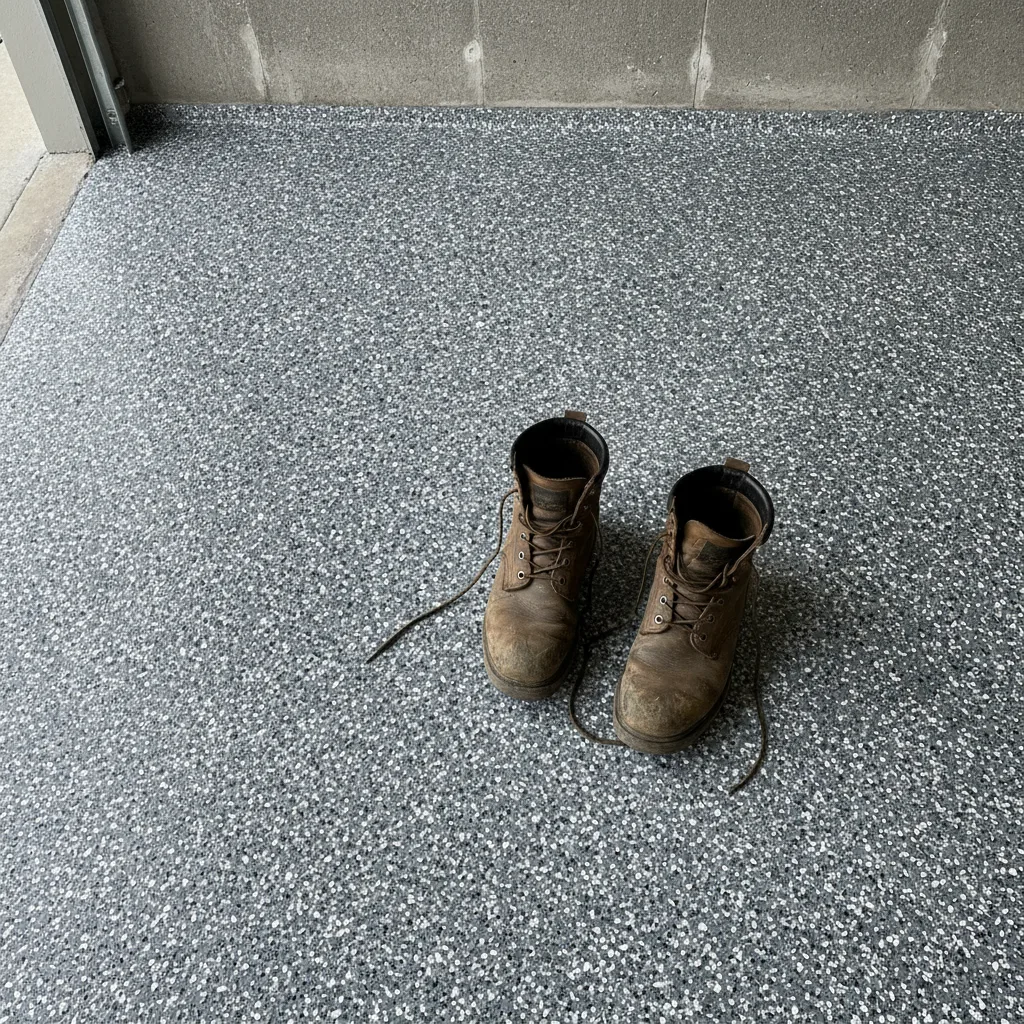
Flake epoxy systems are probably the most popular choice for Reservoir garage floors right now. A broadcast of coloured vinyl flakes is scattered into a wet epoxy base coat, then locked in with a clear topcoat. The result hides tyre marks, minor scuffs and dirt between cleans. The flake layer also adds a slight grip texture underfoot, which is useful when water or oil finds its way onto the floor. Full-flake systems, where flakes cover the entire surface edge to edge, give the most durable and visually consistent result.
Metallic epoxy is a premium finish that uses pigment suspended in a clear epoxy to create a deep, three-dimensional effect. No two floors look exactly the same. It is a popular choice for showrooms, man caves and feature garage spaces where the floor is meant to impress. It requires a skilled applicator to manipulate the pigment correctly before the epoxy sets.
Polyaspartic topcoats are often used as the final clear layer over a flake or solid base. Polyaspartic cures much faster than standard epoxy, meaning a floor can be back in use within 24 hours of the topcoat being applied. The material is also UV-stable, so it will not yellow if the garage gets direct sunlight through a window or open door.
How important is surface preparation for a concrete floor coating in Reservoir?
Surface preparation is the single most important factor in whether your coating lasts. A coating applied over a poorly prepared slab will peel, bubble or delaminate within months, no matter how good the product is. The slab needs to be mechanically abraded, usually by diamond grinding, to open up the surface so the epoxy can bond into the concrete rather than just sitting on top of it.
Oil contamination is a common problem on older Reservoir garage slabs. Oil that has soaked into the concrete over years needs to be cleaned and, in some cases, treated with a specific primer before the base coat goes down. Skipping this step is a sure way to get a patchy or failing finish.
Moisture is the other big factor. Concrete that is holding moisture vapour will push a coating off the surface from below. A simple plastic-sheet test left on the slab for 24 hours will show whether moisture is present. On slabs with active moisture issues, a moisture-tolerant epoxy primer is the correct approach before any decorative coat is applied.
Cracks and expansion joints also need attention before coating. Hairline cracks can often be filled with an epoxy crack filler as part of the prep process. Larger structural cracks are worth getting assessed properly, since no floor coating is a structural repair.
How long does a concrete floor coating last and how do you maintain it?
A professionally installed, properly prepared epoxy floor coating in a typical residential garage should last anywhere from ten to twenty years with normal use. The topcoat layer takes most of the daily wear, so the choice of topcoat matters. A polyaspartic or polyurethane topcoat is harder and more abrasion-resistant than a standard epoxy clear, and it is worth the small additional cost if you park a vehicle on the floor regularly.
Day-to-day maintenance is straightforward. Sweep or dust mop to remove grit (which is the main cause of surface scratching), then mop with a pH-neutral cleaner and warm water when needed. Avoid harsh solvents or bleach-based cleaners, as these can dull the topcoat over time.
If you drag metal shelving or equipment across the floor, use felt pads or a rubber mat underneath. Sharp metal edges under load are one of the few things that will gouge a cured epoxy surface. Outside of that, a coated concrete floor is genuinely low-maintenance compared to bare concrete or painted surfaces.
Touch-up is also possible on most flake systems if a section of the floor is damaged. A good installer can blend a repair patch into a full-flake floor without it being obvious, which is another reason the full-broadcast flake finish is popular for practical spaces.
What should you ask a concrete floor coating installer before you commit?
Before signing off on any quote, ask the installer what surface preparation method they use. Diamond grinding is the industry standard. If the answer is acid etching only, that is worth querying, as etching alone is not sufficient for older or contaminated slabs.
Ask how many coats are included in the system. A quality residential garage floor coating typically involves a primer coat, a base coat with flake or colour, and at least one clear topcoat. Some quotes look attractive because they cut one of these layers out, and the difference shows up in how quickly the floor wears.
Ask about the dry-back and cure times so you know when you can park on it. Ask whether the topcoat is UV-stable. And ask for photos of completed jobs, preferably in similar spaces to yours, so you can see the actual finish rather than a product sample.
Getting at least two detailed quotes and comparing what each system actually includes is the smartest way to make a confident decision on a job that is going to be on your floor for the next decade or more.
Get a concrete floor coating quote in Reservoir from Metal and Flake.