Metallic Epoxy Flooring: Finishes, Process and Costs in Melbourne
Metallic epoxy flooring is a decorative resin coating that blends metallic pigments into an epoxy base to produce flowing, three-dimensional effects that look different from every angle. It suits garages, showrooms, retail spaces and living areas. In Melbourne, installed costs typically range from around $80 to $150 per square metre depending on floor condition, size and the finish chosen.
What finishes are available with metallic epoxy flooring?
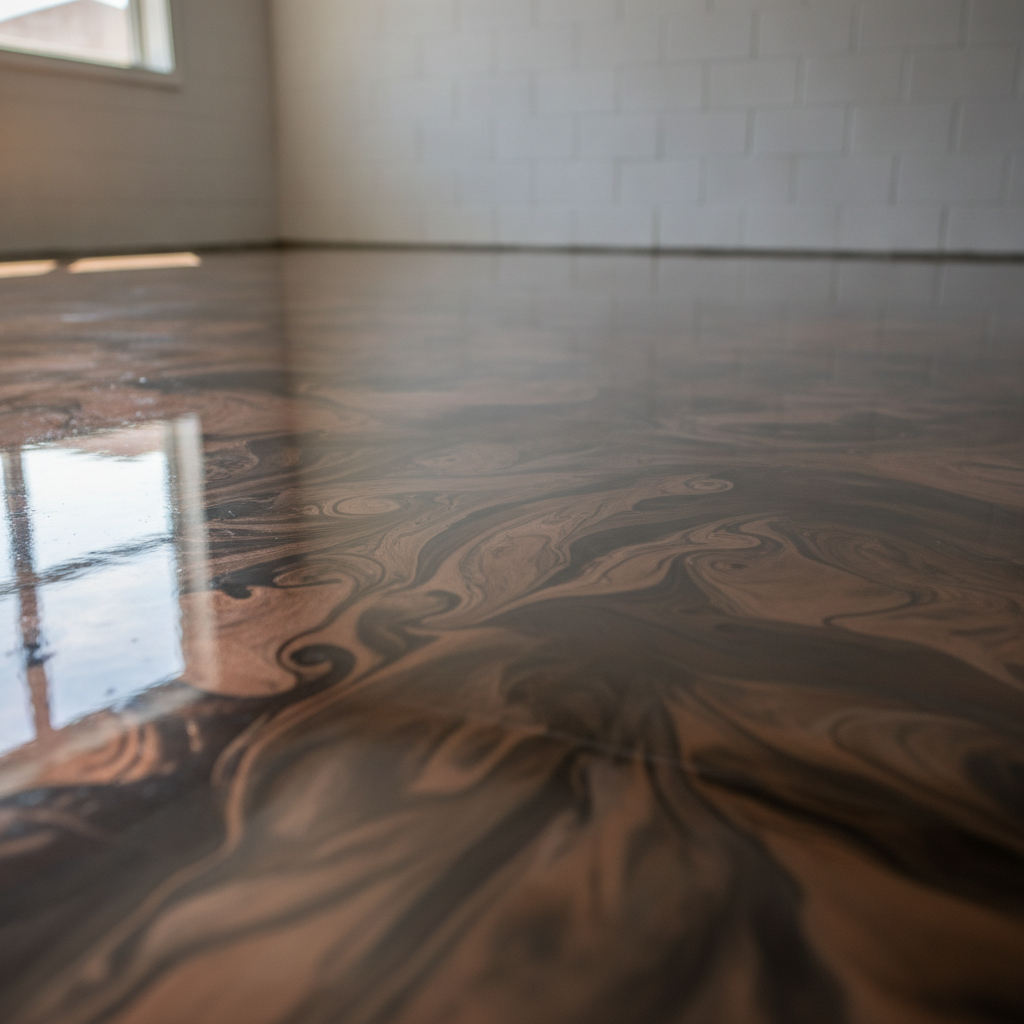
Metallic epoxy flooring comes in several distinct looks, all produced by manipulating the pigment while the resin is still wet. The most common are a pearl or oyster swirl, a deep lava or marbled vein effect, and a smoky, cloud-like wash. Colour options range from single-tone silvers and golds through to layered combinations of bronze, copper, charcoal and blue-grey.
The finish is shaped by how the installer works the surface. A foam roller laid in long, overlapping passes creates soft, wave-like movement. A heat gun or torch pulled across the wet coat causes the pigment to migrate and produce sharper, more dramatic veining. Some installers add a second contrasting colour mid-pour to build depth. The topcoat, usually a clear polyurethane or polyaspartic sealer, locks everything in and determines the final sheen level, from satin through to a high-gloss mirror finish.
Because every pour responds slightly differently to temperature, humidity and technique, no two metallic epoxy floors are exactly the same. That is genuinely one of the main reasons people choose the product. You end up with something that is one of a kind on your property.
What does the metallic epoxy flooring installation process involve?
The installation process for metallic epoxy flooring has four main stages: surface preparation, primer, the metallic base coat, and a clear topcoat. Each stage needs to cure before the next goes down. From start to walk-on ready, most residential jobs take two to three days. Larger commercial floors can run to four or five days.
Surface preparation is the most critical part of the whole job, and it is where shortcuts cause the most grief later. Concrete needs to be mechanically ground or diamond-ground to open the surface profile so the epoxy can bond properly. Any cracks, spalling or low spots are filled and levelled before the primer goes on. If the slab has moisture issues, a moisture-tolerant primer is used as a barrier coat. Skipping or rushing this stage is the number one reason epoxy floors peel, bubble or delaminate within a year or two of installation.
Once the primer has cured, the metallic epoxy base coat is mixed and poured. The installer works quickly because the pot life of most two-part epoxy systems is only 20 to 40 minutes at typical Melbourne temperatures. The pigment is manipulated into the desired pattern before the product gels. A second colour can be introduced at this point. After curing overnight, the surface is lightly abraded and the clear topcoat is applied in one or two coats depending on the specification. Polyaspartic topcoats cure faster than standard polyurethane and allow a quicker return to traffic, which matters on commercial sites.
How much does metallic epoxy flooring cost in Melbourne?
Metallic epoxy flooring in Melbourne generally costs between $80 and $150 per square metre fully installed, though complex jobs with significant concrete repair or very large areas can sit outside that range. The biggest cost variable is the condition of the existing slab. A new slab in good order costs far less to prepare than an old warehouse floor full of cracks, oil contamination and previous coatings that need stripping.
A standard double garage of around 36 square metres would typically come in somewhere between $2,900 and $5,400 all up, depending on finish complexity and prep requirements. A 100-square-metre showroom or retail space, where a more dramatic multi-colour effect is common, might sit between $9,000 and $14,000 once preparation, materials and labour are factored in.
A few things push costs up. Moving from a single-colour pearl finish to a layered, multi-tone lava effect takes considerably more material and time. Requesting a matte or satin topcoat rather than high-gloss uses the same materials but some finishes require additional coats. Deep concrete repairs, moisture mitigation primers and tight access areas all add to the ticket. A genuine way to keep costs reasonable is to get the slab assessed early so there are no surprises mid-job.
How long does metallic epoxy flooring last and how do you maintain it?
A properly installed metallic epoxy floor will last 10 to 20 years in a residential setting with basic care. In commercial or light industrial settings with higher traffic, a topcoat refresh every five to seven years can extend the floor’s life considerably. The main enemies are prolonged standing water, heavy point loads from steel feet and harsh chemical spills left sitting.
Day-to-day maintenance is straightforward. Sweep or dust-mop regularly to remove grit, which is the most common cause of surface scratching. Wet mop with a neutral pH cleaner and warm water. Avoid bleach, ammonia-based products and anything highly acidic, as these can dull the sealer over time. Felt pads under furniture legs prevent scuffing. In a garage, wiping up oil or fuel spills promptly keeps the topcoat looking sharp.
One practical tip: if the floor sees regular vehicle traffic, opt for a polyaspartic topcoat rather than a standard polyurethane. Polyaspartic systems are notably more resistant to tyre marks and hot tyre pick-up, which is the phenomenon where a hot tyre bonds briefly to a softened coating and pulls it away when the car moves. It is a common complaint on cheaper garage floor coatings and not something you want to deal with after spending good money on a premium metallic finish.
Is metallic epoxy flooring right for your space?
Metallic epoxy flooring suits spaces where appearance matters and the floor needs to be tough at the same time. It works particularly well in garage conversions, home theatres, open-plan living areas, retail boutiques, car showrooms and hospitality fit-outs. It is a harder ask in areas with very high moisture transmission through the slab, such as some basement slabs sitting directly on uncompacted fill, where moisture management needs to be sorted out first.
It is also worth thinking about slip resistance. A high-gloss metallic finish is beautiful but can be slippery when wet. Specifying a fine-broadcast anti-slip additive in the topcoat is a practical solution for kitchens, bathrooms or any area likely to see water. This does not noticeably change the look but changes the feel underfoot significantly.
The other consideration is heat. In Melbourne’s summers, a dark metallic floor in a garage or alfresco area exposed to direct sun will get warm underfoot. Lighter colour choices, or positioning the finish so direct sun is limited, addresses this. A good installer will walk through these questions with you before the job starts, because the best result comes from matching the product to the actual conditions on site.
Request a metallic epoxy flooring installation quote from Metal and Flake.